
Speaking to Farmer’s Weekly at Nampo Cape, held in Bredasdorp, Western Cape, last week, Maree said farmers were generally already managing costs well, but further gains could come from scrutinising whether additional yield justified the money spent achieving it. “We should not be chasing tons, but profit.”
This could mean accepting slightly lower yields where reducing inputs resulted in a better overall margin. Maree said this was the mind shift farmers needed to make to survive the coming season.
With pressure on grain margins and a looming drought, Maree said decisions about how much land to plant should similarly be based on the economics of the individual farm rather than what neighbouring farmers were doing.
“Farmers must ultimately determine what they can afford to plant while still generating a profit and meeting all their financial obligations.”
He noted that this approach needed to be supported by far more active financial management.
“Cash-flow projections should no longer be documents prepared once a year for the bank and then forgotten. It should be a weekly exercise, and a living document that is constantly adjusted.”
Fixed costs and household expenditure also needed closer scrutiny. Maree said farmers often focused heavily on production expenses while costs such as school fees and general household expenditure received less attention when calculating the farm’s total financial requirements.
He encouraged farmers to involve their spouses or business partners in these discussions so that both business and household expenditure were properly understood.
Spending trends highlight efficiency investments
Looking at the trend of agricultural debt over the last two years, Daneel Rossouw, head of sales agriculture at Nedbank, said that the bank had seen hardly any movement.
“The harsh operating environment caused by adverse weather, high input costs and trade disruptions has resulted in very little capital expenditure. Farmers are maintaining what they have.”
Where spending was taking place, Rossouw and Maree identified technologies that improved production and efficiencies as a trend that stood out.
“Investments in renewable energy continues to grow, even though load-shedding has declined drastically. Farmers are looking to reduce their reliance on Eskom, and what they spend on electricity,” Rossouw explained.
Investments in technologies that improved water usage was also steady.
Maree noted that escalating fuel prices were shifting farmers towards electric vehicles like trucks and forklifts.
“Precision agriculture is still a focus, although tractor sales have been flat. But farmers are now starting to look at the technology within the tractor and how it can reduce inputs while maximising yields,” Maree said.
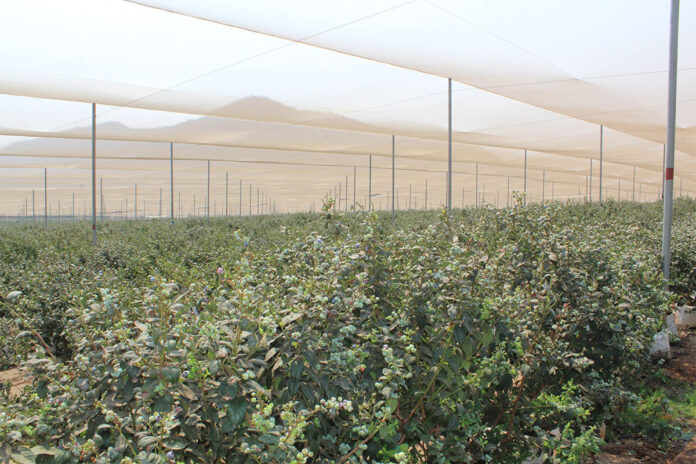
Rossouw noted that shade netting investment was also increasing, especially on high-value fruit.
“It is no longer an add-on later, but forms part of new orchards from inception.”
He however said that farmers were not giving data technology enough focus. This included the integration of localised weather data to manage specific climate zones on a farm.
“It is possible that farmers don’t yet have the confidence in these systems or don’t trust the data. Such data can help reduce the risk of adverse weather, especially as the weather becomes more erratic. It requires far more consideration from farmers.”
Investments that aided sustainability received a boost last year when FNB launched their Sustainable Agriculture Loan, which offered a lower interest rate for loans taken out to finance inputs that aided sustainability.
Maree however noted that farmers were not taking full advantage of this loan as yet. He advised farmers to look further than regular production loans and investigate where they could obtain more favourable financing.