For many South African beekeepers, the honey harvest is only part of the business equation. Diversification is key to building resilience in the face of rising risks and challenges.
“Diversification is not about moving away from honey. It is about making better use of everything that the hive produces,” Achmat Kazie, chairman of the Western Cape Bee Industry Association, tells Farmer’s Weekly.
As founder of The Bee Inspired Honey Company in Somerset West and owner of 35 hives, Kazie has first-hand experience of the realities of beekeeping. The industry faces myriad challenges, from fires, theft, vandalism, and pesticide poisoning to competition from imported honey.
South Africa produces up to 2 500t of honey a year but consumes nearly twice that amount, leaving a gap for imports of cheaper, often adulterated honey. China supplies about 80% of honey imports, and local producers cannot compete on volume or price.
This brings provenance and quality to the forefront. Pure honey with a strong provenance story – about its floral source, the foraging landscape or the farming practices – can attract a premium price.
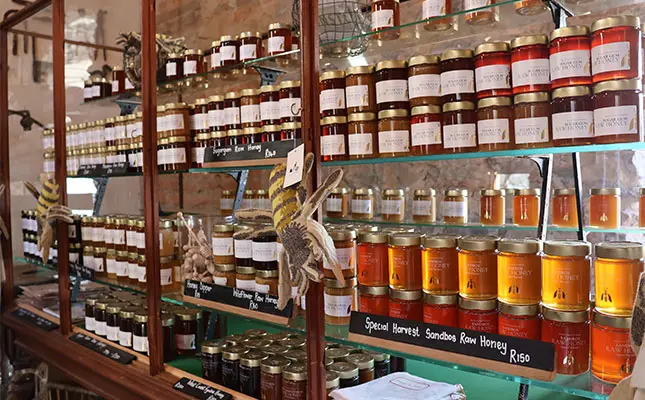
“Telling an authentic story around real South African honey is key to differentiating it from bulk honey. What you see on retail shelves is so bland. It has the same golden colour. When you walk into my shop, you will see a multitude of colours, tastes and aromas,” says Kazie.
With just 35 hives, Kazie keeps bees on a hobby scale, yet he has built a thriving business around honey and value-adding.
“One hive produces 30 to 35kg of honey a year, or roughly 70 jars. But the bees don’t just make honey. We get other products too. The real opportunity lies in what the beekeeper does with that.”
Kazie sells a range of beeswax and propolis products, including candles, lip balms and wraps, wood and leather polish, creams and ointments, through his website and physical shop in Strand. He supplements his honey harvest with honey from trusted beekeepers, which has allowed him to tap into the lucrative gifting market, particularly corporate gifts.
“When people buy honey as a gift, they tend to spend more than if they are buying it for themselves. Over the past two years, I have sent out more than 10 000 jars of honey as gifts,” says Kazie.
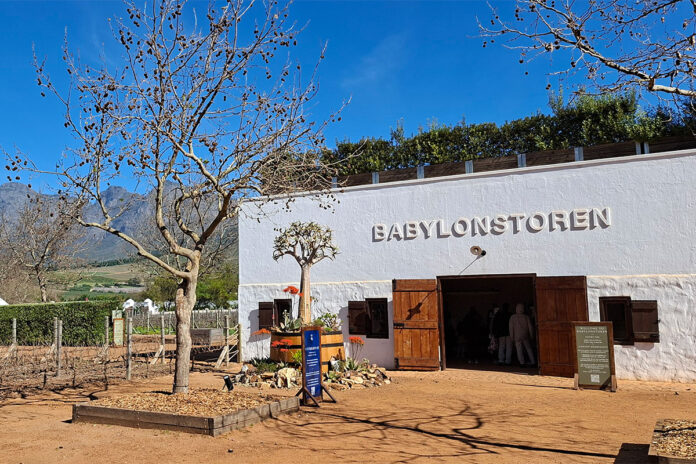
In Franschhoek, a small apiary on Babylonstoren wine farm is also punching above its weight.
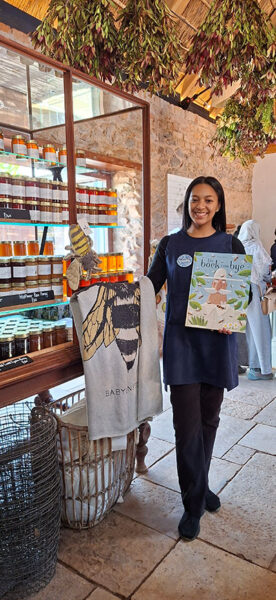
“Bees can form the basis of a diverse business built around products, services, experiences, and expertise,” said Babylonstoren beekeeper and entomologist Arné Stander, who manages the farms’ 35 hives and apitourism experiences.
Babylonstoren offers popular, immersive visitor experiences, including beekeeping workshops and children’s exhibitions. It continues the story of the bee in its farm shop, where raw and unfiltered South African honey is merchandised alongside bee-themed blankets, dishcloths, books and toys.
Pollination as a service
“Beekeepers can create additional income streams through pollination services, queen rearing, nucleus colonies, swarm removal, equipment sales, training and mentoring,” says Stander.
Pollination services are one of the most important.
“A beekeeper with strong, well-managed colonies can provide a valuable agricultural service to fruit, nut, vegetable, and seed producers,” says Stander.
Providing pollination services, however, comes with its own challenges.
“It’s a cut-throat business,” says Kazie. “It takes a lot of time to build, move, and monitor colonies, and farmers often expect the service to be provided for free.”
Other serious challenges include irresponsible pesticide use, theft, vandalism and fires.
“The Western Cape lost over 2 000 hives in the fires from October 2025 to February 2026. Beekeepers have also lost hundreds or even thousands of colonies due to irresponsible pesticide use,” says Kazie.
For beekeepers under pressure from threats to their colonies and falling honey prices, the answer may not be to produce more honey but to extract greater value from every hive.
For more information, email The Bee Inspired Honey Company at [email protected].