
The concerns come as outbreaks continue to spread nationally and amid growing debate over whether government should retain tight control over vaccine procurement and administration, despite acknowledged logistical constraints.
During a briefing to Parliament’s Portfolio Committee on Agriculture on 26 May, the Department of Agriculture reported that FMD outbreaks had risen sharply, increasing “from 932 in March to 2 034 by 22 May 2026”, with outbreaks reported across all nine provinces.
Parliament flags operational bottlenecks
Yet it was the pace of vaccination and the apparent disconnect between doses secured and animals vaccinated that triggered concern among MPs.
According to Parliament’s official statement, committee members questioned “why vaccination progress remained slow despite the availability of vaccines”, and pointed to “operational shortcomings, including shortages of ear tags, syringes, vehicles and travel budgets, as well as limited capacity among animal health technicians”.
The committee further warned that “weaknesses in implementation, livestock traceability and coordination continue to undermine containment efforts”.
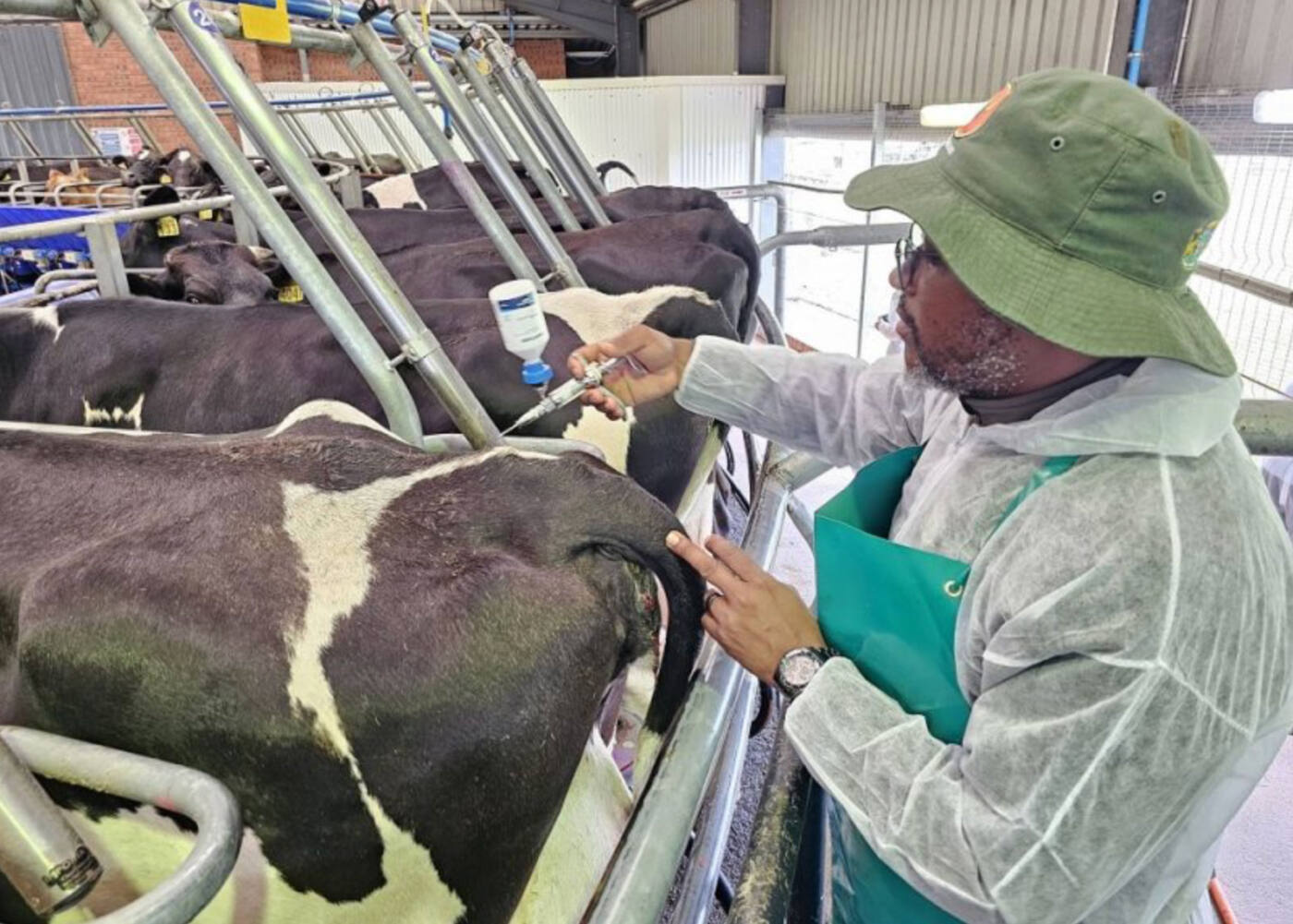
The department told Parliament that “over five million vaccine doses had been secured to arrive soon through imports from Argentina and Turkey, while more than 3,3 million animals had already been vaccinated nationally”.
However, in a statement issued after the parliamentary meeting, ActionSA parliamentary leader Athol Trollip and a member of the agricultural portfolio committee argued that the scale of imported vaccines appeared inconsistent with rollout progress, citing figures discussed at committee level.
“While 9,5 million vaccine doses have already been imported into South Africa, only 3,8 million have been administered to date,” he said.
Parliament’s agriculture committee pointed to several practical obstacles. MPs cited shortages of syringes, ear tags, transport and travel budgets alongside limited technical capacity.
Calls for broader producer participation
Trollip, in comments to Farmer’s Weekly, argued that these constraints strengthen the case for broader producer participation in vaccination.
“The courts have recognised that the State’s obsessive bureaucratic control is untenable and not required by any national or international laws,” Trollip said, referring to the recent interim court order allowing farmers access to “lawfully produced or acquired” vaccines.
“If the department wants to get ahead of the outbreak as opposed to chasing it and being behind the curve, then they should release the available vaccines to livestock owners to vaccinate their livestock,” he said.
Trollip further alleged that “the current Section 10 gazette has more onerous conditions expected of farmers than what the department expects of its officials”.
He argued that “this stalemate between the litigators and the people they represent and the Minister should be set aside in the interest of dealing with this national disaster”.
Trollip also linked implementation failures to provincial execution problems, pointing to concerns raised in internal parliamentary discussions. Referring to a message circulated within the agriculture portfolio environment, he highlighted allegations of weak traceability, poor vaccine deployment and inconsistent provincial enforcement.
According to the forwarded message shared by Trollip, concerns included claims that vaccination in parts of Limpopo was occurring “without any traceability, no ear tags, no documentation, nothing”; that in Gauteng “over 300 000 doses [were] unused for weeks at end and [not] reallocate[d]”; and that
in the Free State, there had been “zero attempt to [implement] any movement control”.
The message called for provincial agriculture MECs to be summoned before Parliament to account.
These claims could not be independently verified by Farmer’s Weekly at the time of publication.
The parliamentary committee itself signalled concern about provincial implementation, indicating that MECs responsible for agriculture in affected provinces may be called to explain “the slow pace of vaccine administration and provincial implementation failures”.
Economic cost of delays
The economic implications of delays are increasingly difficult to ignore.
Neither Parliament nor the Department of Agriculture has publicly quantified losses associated with vaccine spoilage, cold-chain failures, breakages or unused stock. But as outbreaks spread, movement restrictions tighten and disease risk intensifies, producers are increasingly asking whether delayed administration carries a larger economic cost than wider participation in vaccine delivery.
Government has defended a coordinated approach to vaccine rollout and maintains that the Section 10 Animal Health Scheme provides a structured mechanism for participation while preserving oversight and biosecurity.
Minister expected to address discrepancies
In a media invitation issued on 29 May, Minister John Steenhuisen of the Department of Agriculture announced that he would provide an update on government’s response to FMD on Monday, 1 June, including “updates on funding allocations, the number of vaccinated animals, and procurement processes”.
According to the ministry, Steenhuisen will also outline government’s position on the recent interim Gauteng High Court order relating to FMD vaccine procurement and administration, while
reaffirming government’s commitment to vaccine distribution and eradication of the disease.
The briefing could clarify several issues now under scrutiny, including the distinction between vaccines procured, imported, allocated and administered; the pace of provincial rollout; and implementation constraints raised in Parliament and industry reporting.
It may also provide an opportunity for government to clarify apparent discrepancies between ministerial statements, parliamentary figures and operational dashboard reporting on vaccine deployment.