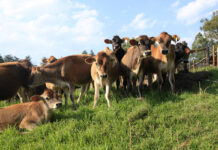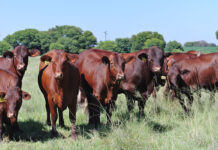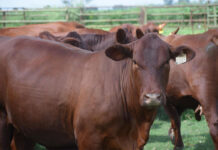

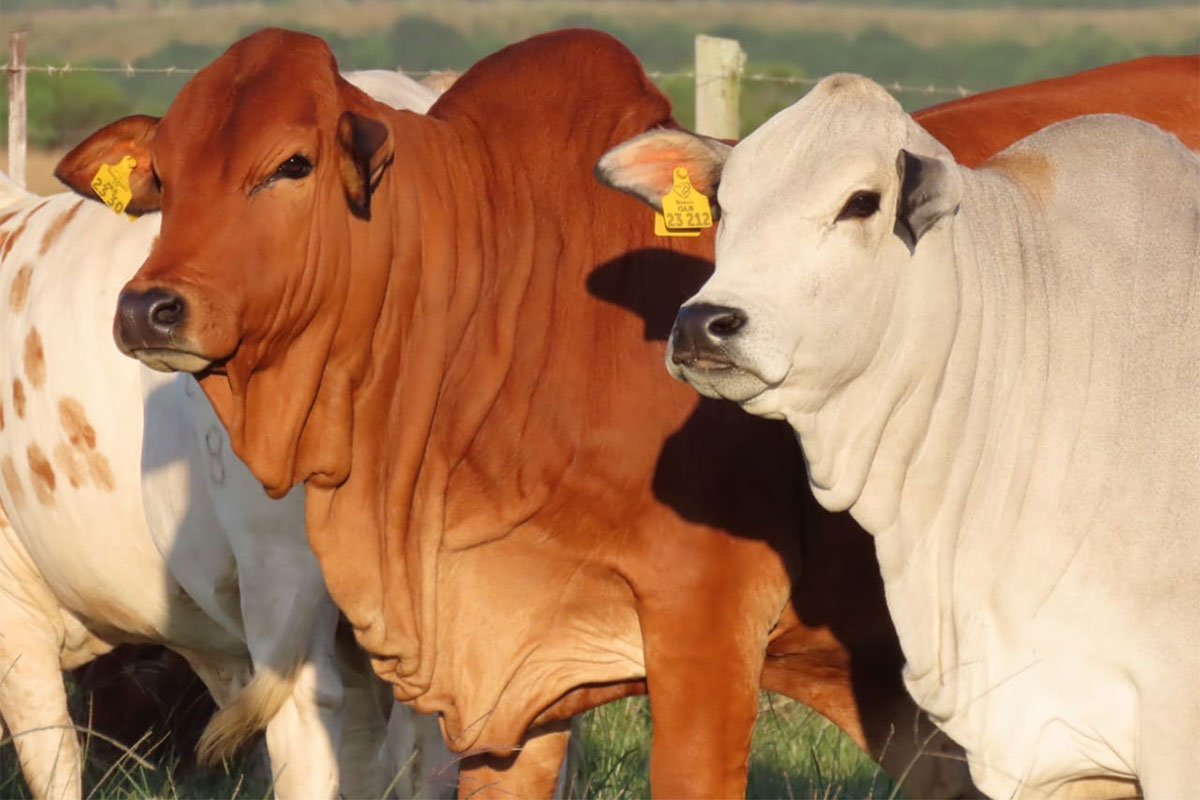
Situated about 20km outside East London in the Eastern Cape, Keith Peinke’s stud operation focuses exclusively on cattle farming, comprising 80 registered Boran cows, 40 registered Droughtmaster cows, and 150 commercial crossbred cows.
Peinke says the Boran breed appealed to them from the outset because of its exceptional adaptability and functional qualities.
“As a medium-framed African breed, the Boran combines outstanding temperament, strong herd instinct and remarkable mothering ability. These are traits perfectly suited to our farm size, coastal conditions, and management approach,” he says.
“These qualities continue to strengthen our passion and commitment to this magnificent breed. The Boran truly embodies what many regard as ‘God’s gift to cattlemen’.”
‘Quality comes first’ has remained the foundation and guiding vision of the stud since the very beginning.
“With God’s guidance, that commitment has remained unchanged. Our primary focus has always been to consistently produce and offer cattle of the highest quality year after year,” says Peinke.
“While maintaining these standards has not always been easy, our dedication to quality remains at the forefront of our business and breeding philosophy. We give thanks to our Lord Jesus Christ for His Grace and the opportunity we have to farm with His creation,” he adds.
Built for challenging environments
According to Peinke, the Boran has consistently demonstrated exceptional adaptability across a wide range of environments in South Africa. “Our farm experiences extremely high tick pressure and consists predominantly of sour veld grazing conditions, yet the Boran continues to perform exceptionally well under these challenging circumstances.”
“Their ability to maintain productivity, fertility, and overall functionality with minimal input has further reinforced our confidence in the breed and its suitability to sustainable cattle production in demanding environments,” he says.
Peinke says foot-and-mouth disease (FMD) has created significant challenges for the livestock industry across South Africa, although their farm has remained unaffected by FMD to date.
“At the same time, we have endured an exceptionally dry summer season, receiving only 300mm of rainfall over the past 12 months. We believe these dry conditions may have contributed to slowing the spread of the disease in our region. However, the drought has brought its own set of challenges and pressures on farming operations,” explains Peinke.
Despite these difficult conditions, the Boran breed has once again proven its resilience and value, continuing to perform and produce under tough environmental circumstances with remarkable consistency.
Profitability per hectare
Peinke believes commercial cattle farming is ultimately measured by profitability measured as kilogram produced per hectare. “In this regard, the Boran continues to distinguish itself as one of the most cost-effective and efficient breeds in the beef industry,” he says.
“With its adaptability, fertility, hardiness and ability to perform under low-input conditions, the Boran offers commercial farmers the opportunity to maximise productivity while maintaining lower production costs.”
The stud’s primary breeding focus is on selecting functional, productive females with the ability to calve consistently every year and successfully rear a calf to at least 50% of their own body weight at weaning.
“This selection approach places strong emphasis on the economically important traits of fertility, maternal ability, and milk production, ensuring efficient and sustainable performance within the herd.
Performance testing and genetics
The herd has been involved in performance testing for several years. More recently, 12-month-old bulls have undergone a Phase D performance test under semi-extensive conditions over a four- to six-month period. “This enables us to assess growth, adaptability, efficiency, and overall functionality in a practical production environment,” says Peinke.
The operation has also implemented genomic testing on all herd sires and selected senior females within the herd. “In addition, we have implemented genomic testing on all herd sires and selected senior females within our herd. We regard Estimated Breeding Values (EBVs) as an important and valuable selection tool. However, our breeding decisions are never based solely on EBVs.”
“We believe that combining phenotype, proven production performance, functional efficiency, and practical on-farm observations alongside EBVs provides a far more complete and accurate evaluation of an animal’s true genetic value and long-term potential,” he adds.
Fertility undoubtedly remains one of the most important production traits within the herd.
“We strive for our breeding females to maintain an average Inter-Calving Period (ICP) of 390 to 400 days, reflecting both reproductive efficiency and long-term productivity.”

Maternal strength in crossbreeding
Peinke says one of the key advantages of the Boran in commercial breeding programmes is the improvement of maternal lines, and the retention of heifers from crossbreeding programs ultimately forms the foundation of highly productive commercial herds.
“These medium-framed, low-input cattle are renowned for their exceptional fertility, strong milk production, and outstanding maternal instincts, making them ideally suited to efficient and sustainable beef production systems, maintains Peinke.
Only a relatively small percentage of calves are marketed directly into the feedlot system. “In general, Boran-type calves perform exceptionally well under well-managed backgrounding systems before being finished for the final 60 days to achieve the fat cover required for premium carcass grades,” he adds.
All of our commercial females are utilised as embryo transfer recipients, playing a vital role within our breeding program. This ensures that only the most productive, fertile, and consistently performing genetics are multiplied within the herd.
All commercial females in the herd are used as embryo transfer recipients.
“This ensures that only the most productive, fertile and consistently performing genetics are multiplied within the herd.”
Temperament is crucial
Temperament and maternal ability also remain key selection criteria.
“Cattle with calm, manageable temperaments are easier and safer to work with, creating a more efficient and enjoyable working environment,” says Peinke.
“Equally important are females with strong maternal instincts – cows that are attentive and protective of their calves from birth through the first four weeks of life, ensuring optimal calf survival and performance.”
Peinke says the stud has enjoyed strong support from fellow breeders across South Africa and neighbouring countries. One relationship that stands out is with the Mosdene Boran Stud.
“At one stage, Mosdene was utilising five herd sires bred by our programme,” he says. He cites BOLT PRB 16 7 as a notable example.
“The bull was successfully used within their herd for five years before being sold on their first Production Auction last year for more than four times his original purchase price from us. This serves as a testament to the value, longevity and impact of proven genetics within a progressive breeding programme.”
Kenyan genetics strengthen herd
In 2018, the operation also had the opportunity to visit Kenya and personally select donor females from the renowned Woragus Boran Herd in East Africa, owned by Mark Myatt-Taylor and Nicky Myatt-Taylor.
“After seven years of anticipation, our first direct Kenyan calves were finally born on the farm,” says Peinke. “We are incredibly excited to watch these genetics develop and perform, and we believe they will make a significant contribution to the strength, diversity and long-term value of our current breeding programme.”
Role in food security
Looking ahead, Peinke believes the Boran breed will continue to play an important role in South African beef production and food security. “Their ability to adapt to changing climatic conditions and withstand production challenges, including diseases such as FMD, sets them apart from many other breeds.
“The Boran is an efficient, low-input breed that excels at converting natural grazing into quality beef without excessive production costs, making it exceptionally well suited to sustainable and profitable beef production systems.”
For more information, contact Keith Peinke on 084 941 1341.
@farmersweeklysaKeith Peinke (right) and Stephen Johnson (Frontier Borans) reflect on the Pioneer Cattle Breeders Sale at Peinke Cattle Ranch in East London, highlighting the strong showing of Droughtmaster and Boran cattle and sharing key takeaways from a successful event.