
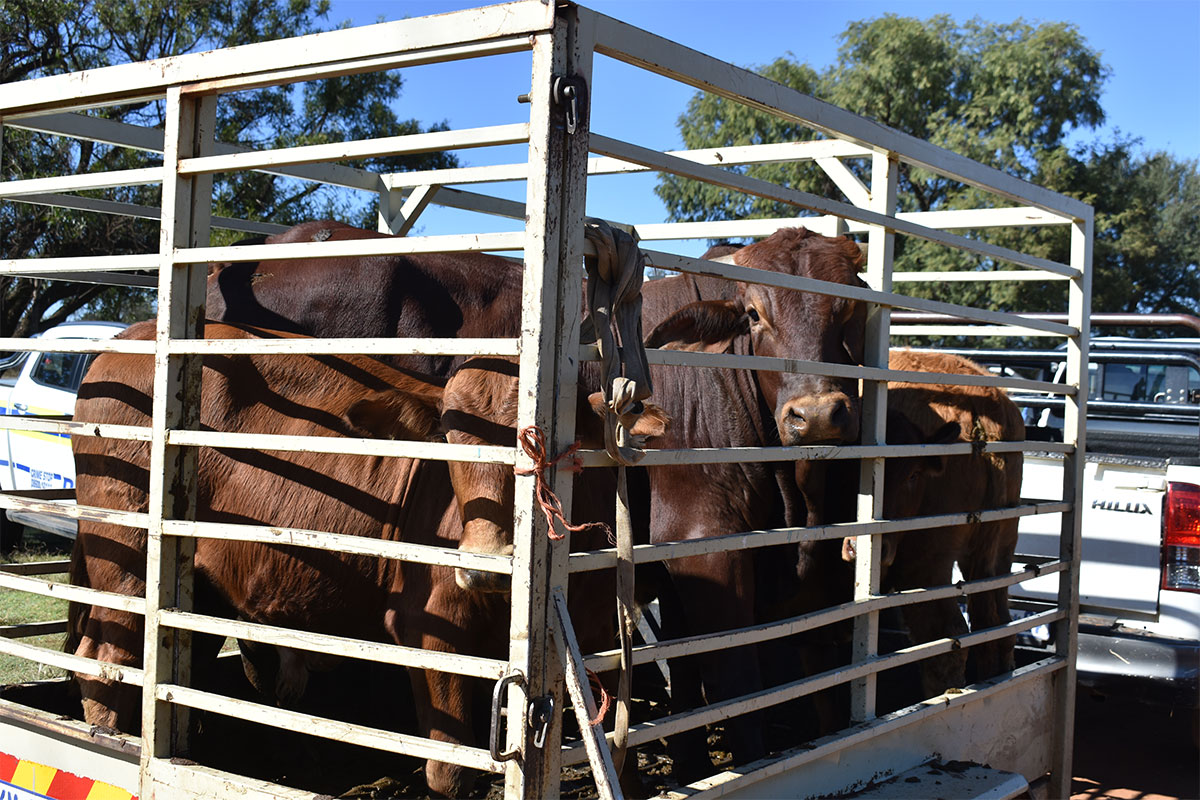
The Garden Route District Municipality and Agri Western Cape confirmed to Farmer’s Weekly that the farm, located north of Oudtshoorn, has been identified as the index property after two animals tested positive. The farm has since been placed under quarantine, with a biosecurity perimeter established.
State veterinarian Cathy Fox confirmed to Farmer’s Weekly that movement control was being strengthened, with vehicle checkpoints deployed to regulate access to and from the affected area.
The latest cases come amid an ongoing outbreak in Mossel Bay, where seven farms have tested positive since earlier this year, raising concerns about wider regional spread.
Province activates full containment plan
Western Cape Premier Alan Winde said the province had escalated its response, implementing a comprehensive 21-point containment plan supported by a R100 million contingency fund.
The strategy prioritises strict movement control, surveillance, vaccination, and enforcement, including 24-hour roadblocks, permit-based livestock movement, and targeted vaccination in high-risk zones.
“We cannot afford to take risks,” Winde told Farmer’s Weekly, noting that the dairy and meat industries contribute an estimated R13,5 billion annually to the provincial economy.
Traffic officials have already been deployed on a 24/7 basis to monitor compliance, with authorities warning that unauthorised animal movement could undermine containment efforts.
Fox shared operational data from recent enforcement shifts with Farmer’s Weekly, which indicates that while hundreds of vehicles are being stopped at checkpoints, no livestock movements were detected during monitored periods, suggesting either compliance or reduced movement in affected zones.
Vaccine shortages remain a concern
Despite the intensified response, vaccine availability remains a critical constraint.
Winde acknowledged a “significant shortage” of vaccines, with limited supplies currently prioritised for outbreak areas. Standard protocol involves vaccinating within a 10km radius of confirmed cases while additional doses are procured, followed by a risk-based roll-out focusing on high-density livestock systems such as dairy herds.
Authorities have emphasised that vaccines must match the circulating virus strain, warning that mismatched vaccines could exacerbate the outbreak.
Industry on high alert
Although the Western Cape has historically not been a primary FMD hotspot, recent cases in areas including Heidelberg, Khayelitsha, Philippi and Masiphumelele have underscored the growing risk.
Winde, on behalf of the provincial government , has called for a “whole-of-society” response, involving farmers, municipalities, law enforcement, and industry stakeholders. Biosecurity compliance on farms remains critical, with producers and input suppliers urged to limit farm visits, enforce strict hygiene protocols, and ensure all animal movements are properly permitted.
With traceability, surveillance, and enforcement now intensified, the focus remains on rapid containment to prevent further spread into the broader Garden Route and Little Karoo livestock sectors.