
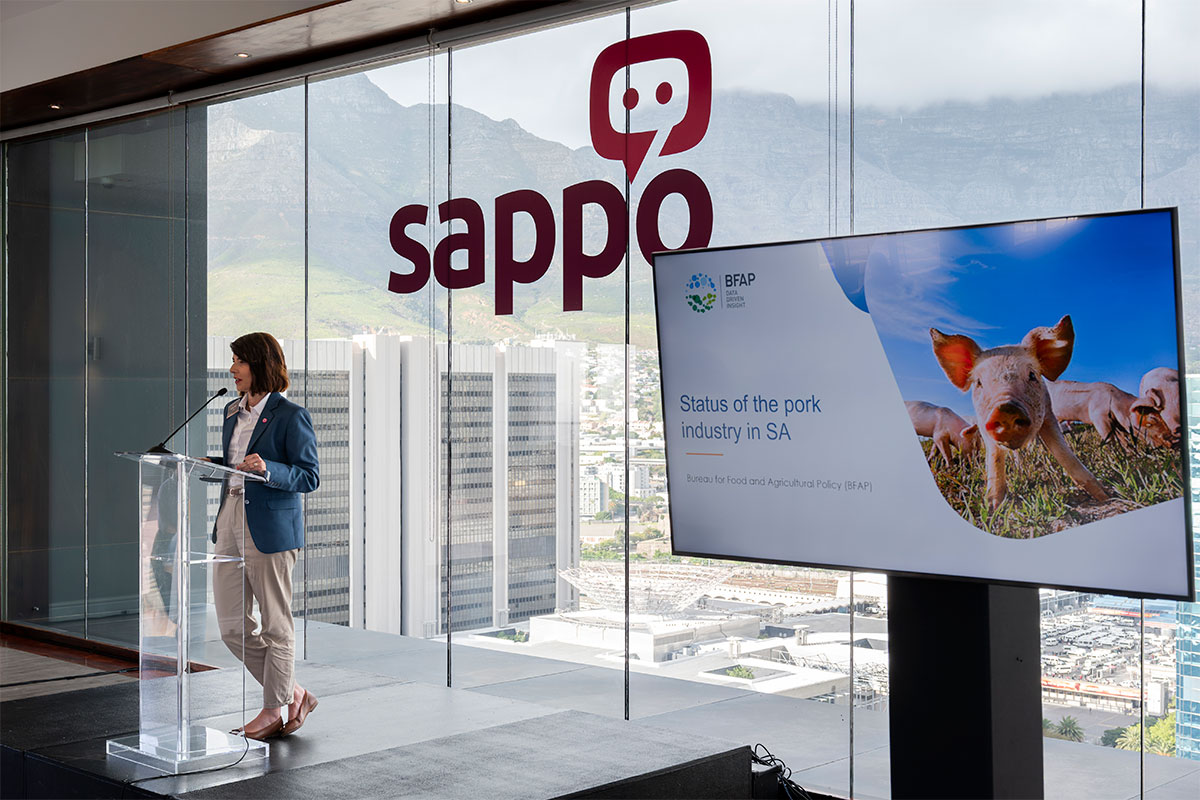
Dr Marlene Louw, CEO of SAPPO, outlined the macroeconomic factors influencing pork production and contextualised current consumer trends and production figures.
“Production over the last eight years has been challenging, but medium-term projections for pork producers remain promising, despite disease risks and economic constraints on consumers,” she said.
Limited real income growth has had a significant impact on consumer spending power, which Louw noted has influenced pork consumption trends in South Africa.
According to data from the Bureau for Food and Agricultural Policy presented by Louw, meat prices rose steadily across the board from the first quarter (Q1) of 2025 to Q1 2026. Pork recorded the lowest increase at 10%, compared with beef, lamb and mutton, and poultry.
Between 2019 and 2024, pork was the only meat to record an increase in per capita consumption, rising by 4%.
Louw said pork has remained in steady demand as a relatively affordable meat option, particularly among consumers seeking alternatives as beef prices remain high amid supply constraints.
However, she added that rising cases of foot-and-mouth disease (FMD) and African swine fever (ASF), along with the high cost of expanding pork operations, pose risks to supply and could affect pork price stability.
The five ASF outbreaks and 17 FMD outbreaks in commercial herds have placed immense pressure on producers’ cash flow, creating slaughter backlogs.
“In practice, most piggeries are forced to wait six weeks post-day zero following an FMD outbreak (more than 12 weeks after an outbreak) before pigs may enter the abattoir system,” Louw said.
She explained that a 1 000-sow unit incurs cumulative losses of R9 500 per sow due to slaughter delays and the wait for clinical FMD results. This amounts to a total loss of R9,5 million, excluding mortalities and reduced growth rates.
SAPPO is working on a contingency plan that will allow for controlled slaughter during an outbreak, with six designated FMD abattoirs.
Louw added that pig producers need regulation tailored to the pork industry, rather than an umbrella framework.
Although the pork value chain faces these risks, producers have benefitted from improved profitability due to a 10% price increase and lower feed costs in 2026.
Louw noted that feed prices are expected to remain steady, as another strong summer crop is anticipated.
“As pork continues to carry its reputation as a value alternative, we strive to expedite the process of introducing a sense of comfort to producers through changing the narrative about the welfare and biosecurity trends related to pig farming,” she said.
“Pork is safe to eat, and pork operations take the utmost care to exercise biosecurity protocols.”
Vaccination challenges and welfare developments
Speaking on vaccination constraints, Dr Thandi Chiappero, head of consumer assurance at SAPPO, said, “We are able to use the Biogénesis and Dollvet vaccines on pigs, but there are significant supply constraints. We have only vaccinated in the face of an outbreak to protect the remainder of the herds, but there are producers who want to vaccinate pre-emptively.
“However, piggeries have large herds, which makes vaccinating entire herds challenging.”
Chiappero spoke about the factors that drive public perception of pork and how welfare codes are being revised to align with international standards.
She announced that the SAPPO welfare code revision initiated in 2023 has progressed to a final version, approved by the National Council in July 2025.
Welfare standards will reflect the frameworks implemented by some of the major international pork producers, such as the EU states, the UK, New Zealand, and the US.
While the 2023 code allows sows to be kept in gestation crates for a maximum of eight weeks, the 2025 code phases out crates by 1 January 2032 and requires all new units to obtain environmental impact assessment approval for the shift to full group housing.
The revised code also states a required 2,25m2 space allocation per sow, which is a 33% increase.
Chiappero noted that the changes will have a significant impact on production. Conversions will likely require downtime and are estimated to cost R2 500 per sow. The process also offers an opportunity for depopulation and repopulation to improve overall herd health.