
Recently released results from a survey conducted by Komet Irrigation at last year’s Agritechnica trade fair, held in Germany in November, show that water efficiency, energy savings, and adaptability are becoming as important to farmers as productivity when they are considering investing in irrigation.
Locally, discussions at the South African Irrigation Institute (SABI) Congress, held in Gqeberha, Eastern Cape, in early August, pointed to the same shift.
Riana Lombard-Smit, general manager of SABI, said the cost and reliability of electricity supplied by Eskom had emerged as major concerns for irrigation farmers, while growing pressure on water supply was raising the stakes.
“Then there is the increasing competition for water and the declining quality of water. All this is leading to both an increase in investment and a need for more diligent and skilful irrigation management to mitigate the impacts of these challenges,” she told Farmer’s Weekly.
Komet Irrigation’s survey of growers, original equipment manufacturers, and irrigation professionals shows how widely water pressures were being felt. Thirty-three percent of respondents identified increasing regulation around water as the biggest business pressure, while 29% said it was input price volatility. For 23%, rising energy, fertiliser, and water costs were the biggest concerns, while 15% pointed to labour shortages.
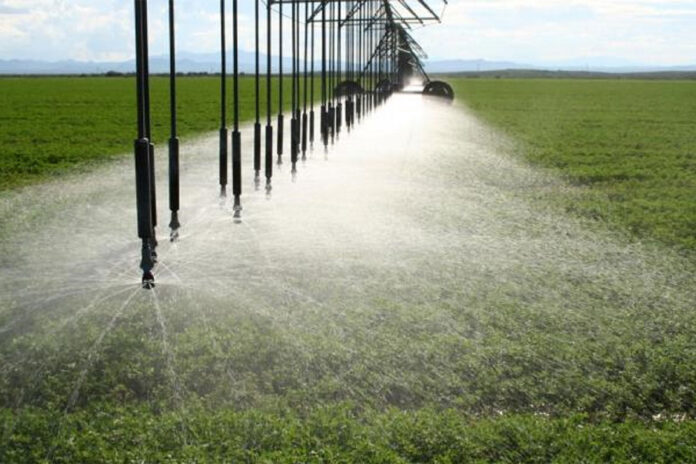
More than 50% respondents ranked water efficiency, energy savings, droplet uniformity, and adaptability as equally important considerations when evaluating pivot irrigation technologies.
Andree Groos, CEO of Komet Irrigation, said the role of irrigation was consequently changing.
“For decades, irrigation was about moving water. Today, it’s about helping farmers make better decisions about water.”
This means irrigation systems are increasingly being viewed not simply as equipment but as investments that can influence profitability, resource efficiency, and a farm’s ability to withstand greater uncertainty.
Groos noted that the survey findings reflected broader shifts taking place across global agriculture. Water security had become a strategic priority, climate variability was increasing pressure on every growing season, input costs remained volatile, and environmental regulation continued to evolve. Together, these forces were changing what growers expected from irrigation, and what the industry must deliver.
“We need to help customers make smarter decisions, use water more effectively, and unlock greater value from every irrigation system. Technology, engineering, and practical field knowledge are becoming inseparable, with data and performance intelligence playing a growing role in helping farmers navigate uncertainty,” Groos said.
Soaring electricity prices are making that efficiency particularly important.
Lombard-Smit said rapid and continuous electricity price increases were already changing irrigation design rules and norms, increasing the importance of getting system design right from the outset.
“It is critically important that farmers make use of qualified and competent designers who are abreast of the latest developments, equipment, and technologies, as well as the updates to the design norms and standards,” she said.