
This year, South Africa overtook Spain as the largest exporter of citrus fruit in the world. Local producers are expected to increase exports to 209 million 15kg cartons in 2026, up from 204 million in 2025.
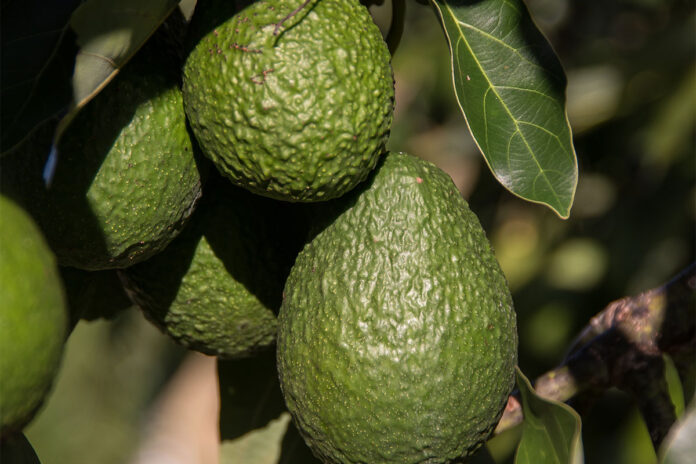
Meanwhile, the avocado industry is expected to export 22 million 4kg cartons this year, up from 19 million last year.
Shelly Vorster, managing director of the World Avocado Organisation (WAO), told Farmer’s Weekly that over the past decade, the avocado industry has undergone a fundamental shift due to growing volumes from around the world.
“Avocados have benefitted from extraordinary diversification of supply, which keeps them available year-round. But it also means that demand must continue expanding to absorb larger volumes throughout the year.
“Demand generation has become just as important as production efficiency. The industry has invested enormously in improving farming practices, but the current and next stage of growth require an equally sophisticated understanding of consumers,” she explained.
Vorster emphasised that consumer demand cannot be left to chance. The WAO has, therefore, invested in extensive research.
“Research sits at the centre of every strategic decision we make and drives how we approach consumers at every touch point. We monitor behaviour throughout the different supply seasons, comparing summer and winter consumption patterns, retail performance, promotional effectiveness, and changing purchasing habits.
“This year, we have also introduced an additional layer of qualitative research, spending time directly with consumers to understand not only how they buy avocados, but why they hesitate, what barriers still exist, what motivates trial, and what ultimately drives repeat purchase.
“Research is therefore much more than validating creative ideas. It enables us to prioritise markets, select retail partners, optimise investment, and ensure that every campaign is grounded in real consumer behaviour rather than assumptions.”
Diverse strategies for a diverse Europe
WAO’s research is, to a large extent, focused on Europe, which is the biggest market for South African avocados. While signs of saturation in this market are emerging, the organisation believes there is still much room for growth.
Its research has shown that while 80% of consumers in mature markets like Spain and France have bought avocados at least once in the last year, in other strategic markets, this figure sits at 50%. This means that marketing campaigns need to be tailored to the respective markets rather than following the same approach.
“Countries like Italy, Germany, Sweden, and several Eastern European countries represent significant opportunities to recruit new consumers, while more mature markets require a different strategy focused on increasing purchase frequency and creating new consumption occasions,” Vorster explained.
Marketers wishing to fully capitalise on the European market should learn from Vorster’s insights, that “there is no such thing as the European avocado consumer”.
“Every market has its own cultural context, purchasing habits, and stage of category development. Even within individual countries, urban and rural consumers display very different consumption occasions and shopping behaviours. These markets naturally require very different strategies.
“In the UK, consumers already understand the product, so the challenge is encouraging more frequent consumption beyond avocado toast. In Italy, the priority is still recruitment, education, and demonstrating how avocados naturally fit within Italian cuisine,” she said.
The same principle applies across generations. In Italy, the WAO has observed that Gen Z represents the fastest-growing consumer segment, while in the UK, Millennials remain the core audience driving category growth.
Therefore, marketing channels and strategies need to target the right social media platforms, retailers, and media channels. A single European campaign is no longer sufficient unless it is deeply adapted to each consumer and market.
The power of branding
While the WAO provides generic marketing for all avocados, regardless of brand or origin, in the citrus industry, Fruitalyst has taken a more direct approach through branding to secure demand for growing volumes of citrus.
Fruitalyst CEO Nico van Schalkwyk explained that the company realised two decades ago that the real value lies in creating preference for specific products in an increasingly competitive marketplace.
“This is done by establishing a memorable brand with a promise of consistent quality, and showing up on shelves for as close to 12 months as possible.
“By giving premium mandarins a recognisable identity through the ClemenGold and Sweet C brands, we shifted the conversation from selling commodities to building consumer demand. It has enabled premium pricing, stronger retailer relationships, and greater stability for producers by reducing reliance on short-term commodity market fluctuations,” he explained.
Van Schalkwyk agreed that broad, generic campaigns are ineffective at sufficiently shifting demand.
“Consumer research sits at the centre of successful fresh produce marketing. Today’s consumers are diverse, with different motivations depending on their age, lifestyle, culture, and market. Families may prioritise convenience and easy-peeling fruit, while health-conscious consumers respond to nutritional benefits, and younger consumers often engage through digital platforms and interactive brand experiences,” he said.
He noted that interactive retail activations, games, and family-focused events have, for example, proven highly effective in building familiarity and loyalty in China.
Another culturally relevant branding move involved developing a mascot for Fruitalyst’s Sweet C mandarin brand: Sunny the Lemur. Van Schalkwyk explained that in some markets, Sunny acted as a relatable brand ambassador, helping to create emotional connections with both children and adults.
“In crowded retail environments where shoppers are bombarded with competing messages, memorable characters help brands stand out and become more recognisable,” he said.
In motivating consumers to purchase more of a particular commodity, Van Schalkwyk noted that while price remains important, it is no longer the only factor influencing purchasing decisions.
“Consumers increasingly expect fruit to deliver a complete experience. Health benefits remain highly relevant, but flavour, juiciness, convenience, appearance, consistency, and sustainability all contribute to purchase decisions.”
Focusing on the ‘why’, not the ‘what’
Fruitalyst’s research and experience in Asia have reinforced another important lesson: understanding why consumers buy is just as important as understanding what they buy.
In China, premium presentation and gifting play a much greater role than in many Western markets. Rather than applying the same marketing campaign everywhere, the messaging, packaging, and retail experiences of ClemenGold and Sweet C were adapted to reflect local purchasing behaviour and cultural expectations.
Vorster added that WAO’s research also started with understanding people rather than products.
“Who is buying today? Who isn’t? What motivates purchase? Which barriers still exist? Which occasions offer the greatest opportunity for growth? Which communication channels genuinely influence behaviour?
“Consumers do not simply buy products; they adopt habits. Understanding how those habits are formed is what allows an entire category to grow sustainably over time,” she said.
For the organisation, these strategic marketing decisions are paying off. Vorster noted that they are already witnessing a transition in how avocados are being consumed.
“A few years ago, avocado consumption was largely associated with salads, guacamole, and avocado toast. Beyond that, we are seeing growing interest in smoothies, healthy snacks, and desserts, as well as pre- and post-workout and recovery recipes that support overall well-being and active lifestyles.
“At the same time, avocados are finding their place in traditional local cuisine, helping to make them part of everyday eating habits. Increasing consumption frequency will be one of the industry’s greatest growth opportunities over the coming decade,” she added.
Van Schalkwyk believes that fresh produce industries needing to grow demand must think like consumer brands rather than simply producers of agricultural commodities.
“Consumers buy stories, experiences, and trust. ClemenGold demonstrates that fresh produce can compete in exactly the same way as leading [fast-moving consumer goods] brands by combining exceptional fruit with a strong visual identity, compelling packaging, retailer partnerships, and a clear promise around quality and convenience,” he noted.
South Africa and its global competitors have become exceptionally good at producing high-quality fruit and delivering it efficiently around the world. To ensure demand matches this increasing supply, successful marketers have realised that consumer research and demand creation is every bit as strategic as investment in orchards, genetics, and logistics.
The competitive advantage is already being based on understanding consumers better than anyone else.