
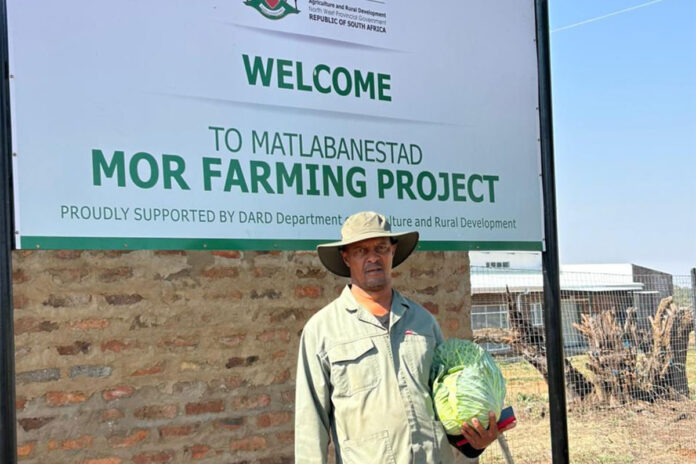
Mor Farming, established in 2020, produces butternut, pumpkin, beetroot, watermelon, green beans, and green peppers at its Matlabane Stad farm. The produce is sold to informal markets in the Matlabane Stad and Bloemhof areas, while bulk consignments are supplied to markets in Gauteng, the Free State, and the Northern Cape.
“During harvesting, we are under a lot of pressure to sell and, in some cases, we have just 24 hours to sell the produce because we don’t have cold room facilities,” he says.
However, this situation could change with the completion of a packhouse at the farm. The facility was officially handed over by the North West Department of Agriculture and Rural Development (NWDARD) in late August.
Repurposed from a 600m² farm building, the packhouse’s new cold room could help relieve Mor Farming’s immediate post-harvest storage pressures. The facility is also intended to serve a broader purpose, including local economic development and job creation.
Moroeng says most of the equipment is new, including the forklift, sorting bins, steel packing tables, cold room, and the chiller.
He explains that harvested produce will enter the facility before being washed and moved through the packing area. Once operational, the packing tables, arranged in an L-shape, will facilitate the movement and handling of produce through the facility.

A new business model
At the back of the packhouse is a processing room, which will serve as the centre of the farm’s value-addition activities, including the cutting and preparation of pre-packed vegetables.
“The packhouse will help us change our business model, which previously centred on bulk sales because we didn’t have a storage facility and couldn’t process our products quickly,” says Moroeng.
He says the processing room will not only change how Mor Farming handles its produce but also which crops it grows.
“This processing room is going to change what we plant. Instead of going for bigger produce such as watermelons, we’ll go for produce that we can cut and pack into small, prepacked products.”
According to Moroeng, this shift in crop selection will allow the farm to target specific market segments more deliberately.
He adds that the farm will consider crops that can be cut and packed into smaller portions that command higher prices.
“We’ll go for [produce] that we can cut, such as baby gem squash and baby marrow, which fetch higher prices on the market.”
Access to new markets
With the new packhouse, Mor Farming intends to supply large retail chains like Shoprite, Pick n Pay, and Boxer, which sell large volumes of pre-packed vegetables.
The farm also plans to increase its field vegetable production from the current 6,5ha to about 12ha by the end of October 2026, with a long-term target of around 20ha as the business grows.
The planned expansion of field production will place greater demands on the packhouse, which Moroeng says has been designed to accommodate the farm’s growing production needs.
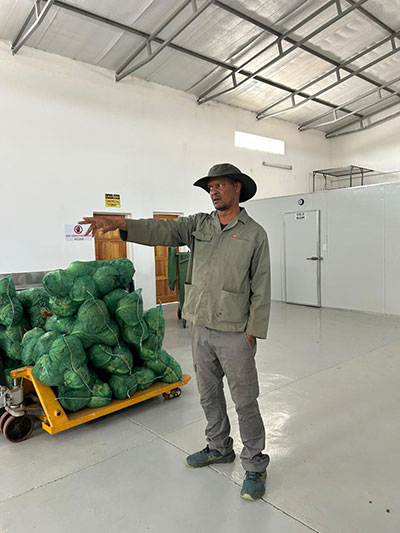
He adds that the packhouse is designed to process up to 3t/hour, depending on the level of mechanisation. In its current basic, and largely manual form, however, its processing capacity will be lower.
Moroeng expects the facility to employ up to 20 people once fully operational.
Benefit beyond the farm gate
Funded through government’s Comprehensive Agricultural Support Programme, Mor Farming’s packhouse is expected to benefit farmers beyond the farm gate, says Tebogo Badukanye, an agricultural economist at the NWDARD.
“This facility is of strategic importance to the department because it is going to open doors for other vegetable producers to access the market,” he explains.
Badukanye adds that potential users of the packhouse, who will have to pay for its services, could also benefit indirectly from the facility’s accreditation and certification status. These include South African Good Agricultural Practice (SA GAP) accreditation, administered by the Perishable Products Export Control Board, as well as Perishable Product Exporter’s Registration (PUC) and Perishable Product Handling and Use Certificate (PUHC) statutory registrations, which can help farmers meet market requirements when supplying fresh produce.
“This is a game-changer, because the market determines the requirements for the produce it sources from suppliers, and buyers need to know that the [packhouse] has the systems in place to track and trace their products,” he explains.
According to Badukanye, five packhouses have been planned for the province. Two have been completed, including the Mor Farming packhouse, while another is due to be launched in Rustenburg.
The remaining three, located in Mahikeng, are expected to be completed between September and October this year.
“We are deliberately investing in infrastructure that enables farmers to grow and expand their businesses,” North West MEC for Agriculture and Rural Development Madoda Sambatha said in a media statement.
“When farmers grow, they create jobs, strengthen local economies, and contribute meaningfully to provincial economic development,” he concluded.