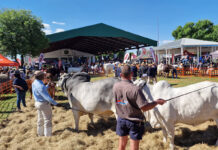


Held at Silverlakes Farm Hotel in Pretoria on 2 and 3 September, the South African Pork Producers’ Organisation’s (SAPPO) AGM & Expo 2026 brought producers, processors, retailers, financiers, government representatives, and service providers together for a programme covering biosecurity and traceability, consumer markets, leadership, sustainability, and the future of work.
The theme of the event was ‘Stewardship in Action’, reflecting a year dominated by African swine fever (ASF), foot-and-mouth disease (FMD), livestock cullings, quarantines, and vaccine logistics.
This was particularly evident in the report presented to producers during the AGM, which showed how the industry is responding to simultaneous challenges around disease control, animal welfare, farm viability, and public confidence.
Unprecedented disease pressure drives industry response
SAPPO described the period since November 2025 as the most demanding time for animal health in the history of South Africa’s pork industry. During this period, the organisation said it helped manage the largest ASF outbreak ever recorded in the country, and FMD was detected in a commercial piggery for the first time, with the industry subsequently dealing with 17 FMD incidents in commercial units.
The outbreaks brought immediate production and welfare consequences, but they also exposed the cost of applying control measures that were not sufficiently adapted to commercial pig production. SAPPO said sustained engagement with government contributed to revised control measures under Section 9 of the Animal Diseases Act. The revised measures, published in July 2026, are intended to reduce the welfare and commercial impact of FMD outbreaks in piggeries.
SAPPO CEO Dr Marlene Louw said the organisation had tried to use the crisis to secure practical change rather than merely endure it.
“We chose not to let a crisis go to waste. We moved from arguing for proportionate, risk-based control measures, to implementing them, to adapting our systems for a reality in which producers farm under ongoing FMD risks. The industry that came out of this year is more resilient than the one that went in,” she said.
Approximately 200 000 FMD vaccine doses were allocated, distributed, and recorded on SAPPO’s World of Pork (WOP) digital platform.
In KwaZulu-Natal, the organisation worked with Kwanalu and the Red Meat Producers’ Organisation to subsidise a permit office that enabled livestock movements within the province’s disease management areas.
The disease response placed the WOP platform at the centre of day-to-day industry management. The protected digital environment combines producer profiles, slaughter, trade, price, and feed information with operational records such as pig movements, Pork 360 audits, and vaccine administration.
FMD vaccines were distributed under a research permit for a controlled disease, which meant every dose had to be accounted for.
SAPPO developed a vaccine-recording module to meet this requirement and support continued vaccine allocations. The functionality was also extended to allow pig producers to record cattle vaccinations, while integration with the Red Meat Industry Services Traceability Platform is under way.
SAPPO acknowledged that adoption still needs to improve. Movement logging peaked at about 60% late in 2025 and was linked largely to the Pork 360 audit cycle. WhatsApp-based communication filtered according to users’ roles and geographic areas is planned for 2027.
The next step is to give production locations a common identity. SAPPO is promoting the registration of global location numbers (GLNs), which are internationally recognised identifiers for farms, production sites, and facilities within the GS1 standards system, a global framework that assigns unique identification numbers to locations and organisations in supply chains. SAPPO is sponsoring producers’ once-off registration fees and the first year of their GLN costs.
In an outbreak, a standard location identifier can help veterinary and biosecurity teams identify affected premises and trace the movement of animals, feed, and equipment more quickly. The system is not limited to pig production, creating the possibility of a common traceability framework across pork, poultry, beef, dairy, and other livestock industries.
Welfare commitment moves onto the platform
Disease control was only one part of the stewardship agenda. Pork 360, SAPPO’s farm-to-fork quality assurance and traceability certification scheme, audited 154 units in 2025. These units represented 61% of the commercial sow herd registered on the WOP platform.
Building on the welfare code adopted at its 2025 AGM, SAPPO introduced Social Sows, a programme designed to monitor producers’ transition away from gestation crates. Pledges and milestones will be recorded on the WOP platform, turning the commitment into a process that can be tracked. The programme is due to become operational in the fourth quarter of 2026.

Disease shock reaches the market
Animal health disruptions also moved beyond the farm gate. Uncertainty and price movements contributed to a rapid rise in pork imports from the beginning of 2026, according to SAPPO. The organisation responded with consumer education and retail marketing intended to support demand for locally produced pork.
The scale of the market challenge was illustrated during the event’s Pork & Pinotage Experience. Information supplied for the expo indicated that only 9% of South African households buy whole fresh pork, while 67% buy polony. Around 70% of pork demand is explained by taste, perceptions, and eating occasions rather than price.
Beyerskloof winemaker Beyers Truter’s presentation on rebuilding the reputation of Pinotage offered a deliberate comparison. Pinotage recovered from a period of poor quality and a damaged reputation after producers established shared benchmarks and a public quality standard.
South Africa’s pork industry similarly addressed earlier quality and safety concerns through auditable standards, including the national rollout of Pork 360 in 2011, but consumer perceptions have not changed at the same pace.
The Pork & Pinotage Experience linked pork to an established consumption occasion – having a braai – and demonstrated how marketing can build value around quality, use, and experience instead of relying primarily on price promotions.
“Consumer confidence in pork is built through consistent, credible engagement. That is the work we take into 2027,” Louw said.
Stewardship across the value chain
The wider programme extended the stewardship theme beyond disease response. Michele Thackwray, CEO of AmaKonekXin, focused on South Africa’s informal economy and the importance of understanding where much of the country’s food is bought. The discussion placed market access and consumer relevance alongside the industry’s technical priorities.
A presentation by Vulpro General Manager Alistair Sinclair explored the role of vultures in removing carcasses from the environment and reducing disease risk. It also drew attention to the value of audited treatment histories and withdrawal periods in determining whether pig carcasses supplied for conservation feeding are safe. Vulpro manages its rescued vultures’ dietary balance and supplementation because carcasses alone do not provide the birds with a complete diet.
Day two of the expo shifted towards people and long-term decision-making. Author and keynote speaker Dr Justin Cohen considered the human advantage in the age of artificial intelligence; Statistician-General Risenga Maluleke examined the social and economic trends shaping business; organisational behaviour specialist and author Siphiwe Moyo addressed leadership during crises; and theoretical physicist Dr Adriana Marais placed stewardship in the context of resilient living and future technologies.
Exhibitors were challenged to do more than promote their products and services at this year’s expo. They were asked to demonstrate how their innovations contribute to responsible production, animal welfare, environmental sustainability, resource efficiency, and industry resilience.
SAPPO introduced the FNB-sponsored Sustainability Showcase Award in recognition of solutions that showed measurable impact and meaningful innovation.
Bupo Animal Health was named the winner of the FNB-sponsored SAPPO Sustainability Showcase Award for its showcase titled ‘Digestabile S – Stewardship in Action: People, Pigs & Planet’.
Building capability beyond commercial units
SAPPO also reported progress among small-scale and developing producers. Its mentorship programme completed 619 farm visits and 359 biosecurity assessments during 2025. Assessment pass rates improved by seven percentage points compared with 2024.
The SAPPO Academy recorded the completion of 131 online learning modules. Business skills training was delivered with the Agricultural Sector Education Training Authority, and a leadership programme was completed through Stellenbosch Business School.
These activities matter because a weakness in one part of the livestock system can create a risk of disease spreading beyond a single farm or production sector. Wider access to biosecurity knowledge, location identification, and reliable communication is therefore part of national disease resilience.
Preparing for continued disease risk
SAPPO’s plans for the coming year recognise that the FMD risk will not disappear quickly. The organisation has commissioned research to refine control measures, validate diagnostic tests, explore routes for reinstating compartment status after vaccination, and evaluate the effect of vaccination in pigs.
Veterinarian Dr Thandi Chiappero, head of consumer assurance at SAPPO, has been joined by Dr Lisa Pretorius, who will be the veterinarian responsible for One Health Consumer Assurance, while animal health has been designated as a specific organisational focus area.
GLN registration will be driven during the remainder of 2026, while the Social Sows programme and further development of the WOP platform will add new measures of traceability, welfare progress, and communication.
The SAPPO AGM & Expo did not present stewardship as a claim that the industry’s problems had been solved. Instead, it showed how the industry intends to work under continuing pressure: use evidence to argue for proportionate controls, build systems capable of recording every dose and movement, support producers who must implement the rules, and communicate consistently with the people who buy pork.