For many communal livestock farmers, keeping animals healthy comes at a staggering cost.
An analysis by the Agricultural Research Council (ARC) of 457 livestock-owning households in communal areas of KwaZulu-Natal, Limpopo and the Eastern Cape found that farmers spend, on average, about 70% of their monthly farming income on livestock remedies (see the farmers behind the research for more information about the participants).
The findings, published in the South African Journal of Agricultural Extension in 2025, found that most of the households spent between R1 and R55 per animal. Average yearly spend on animal health was found to be the highest for sheep remedies (R3 364), followed by cattle (R2 749) and goats (R1 912).
According to Dr Siphe Zantsi, agricultural economist at the ARC and lead author of the study, the high costs leave many farmers with little money to improve the productivity of their herds.
“If such a large proportion of your income goes towards medicines and treatments, there is very little left to invest in better genetics, supplementary feed or infrastructure,” he says. “Many farmers, in effect, remain trapped in a cycle where they are constantly spending money to solve health problems without building the productive capacity of their farming enterprises.”
The farmers behind the research
The ARC study was based on interviews with 457 livestock-owning households in communal areas of KwaZulu-Natal, Limpopo and the Eastern Cape. While the farmers differed in age, education and herd size, the survey painted a picture of a sector dominated by older, small-scale producers.
About two-thirds of the households were headed by men, while the average age of the household head was 58 years. The youngest participant was 26 years old and the oldest 76.
Education levels also varied considerably. Around a third of the respondents had only primary education, just over a quarter had secondary education, and fewer than one in five had tertiary qualifications. Ten percent had received no formal schooling.
According to Dr Siphe Zantsi, these demographics have important implications for the way animal health programmes and extension services are designed.
“Older farmers are often more cautious about adopting new practices, while limited literacy can make it difficult to understand medicine labels and prescriptions. Previous research has also shown that the incorrect use of commercial animal remedies can reduce their effectiveness and increase production costs,” he explains.
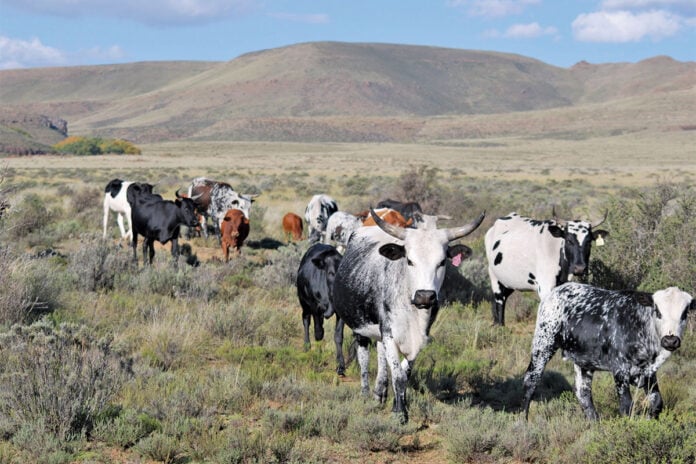
The study further found that communal farmers generally manage smaller herds and flocks. Goats were the most common species, being kept by 82% of respondents, with an average flock size of 38 animals. Sheep flocks averaged about 70 animals, while more than 80% of cattle owners kept fewer than 50 head.
The researchers suggest that smaller cattle herds may be linked to the higher cost of maintaining large ruminants, as well as recurring droughts and pressure on communal grazing land.
Why communal farmers pay more
According to Zantsi, animal health costs account for a far smaller share of production costs in commercial livestock systems.
The reasons for this imbalance are complex. Commercial farmers generally benefit from economies of scale. They buy vaccines and animal remedies in bulk, often at lower prices, and can use entire containers before they expire.
Communal farmers, however, typically own much smaller herds and flocks.
“The challenge is that some products have to be used immediately once they are opened,” explains Zantsi. “If you only have a few animals, you still have to buy the same container as someone with a much larger herd.”
As a result, some of the medicine may go to waste, increasing the effective cost of treatment.

Infrastructure and the nature of communal grazing systems add another layer of complexity. Limited handling facilities make routine health management more difficult, while animals from different owners often graze together.
Many diseases and parasites move freely between neighbouring herds grazing on common land. Hence, animal health interventions are often only effective if they happen across the entire community.
“It does not help to dip, vaccinate or treat your animals preventatively if everybody in the communal area does not do the same,” says Zantsi.
He adds that shrinking government budgets have reduced the resources available for area- wide animal health campaigns, while many communities lack the social cohesion needed to organise collective treatment programmes or maintain shared infrastructure.
The result is that communal farmers often spend proportionally far more on animal remedies than their commercial counterparts, but without the coordinated disease control systems needed to get the full benefit from that investment. Education levels also have a significant impact on animal health programmes.
Knowledge gaps add to the problem
Zantsi points out that 33% of the household heads that participated in the study only had primary education, while another 10% had no formal education.
Lower literacy levels can make it difficult to understand product labels and instructions, increasing the risk that remedies are stored incorrectly, mixed improperly, or administered at the wrong dosage.
Practical constraints often compound the problem. Many communal farmers do not have access to weighing scales and therefore have to estimate the weight of their animals when calculating dosages.
This can result in underdosing, which reduces the effectiveness of treatments and may contribute to resistance, or overdosing, which wastes already scarce resources.
“Even when farmers make substantial investments in animal health products, they may not receive the expected benefit if those products are not used correctly,” he says.
For Zantsi, this highlights the need for extension services, and animal health technicians and veterinary support programmes that are designed around the realities of communal farming, rather than assuming that all farmers have the same educational background.
“There is a need for a practical, low- education approach to animal healthcare support in this sector,” he says.
Too many sales pitches
Access to professional animal health advice is another major challenge.
State veterinarians and animal health technicians often cover vast geographical areas, making it difficult for them to provide regular support to every community.
In the absence of these services, farmers frequently rely on agricultural retailers and sales representatives for advice.
According to Zantsi, this creates its own problems: “A salesperson is there to sell products. They are not necessarily trained to make a proper diagnosis, and there can be a commercial incentive to promote a particular remedy.”
Without expert guidance, farmers may end up treating the wrong problem or using products that are unnecessary or ineffective. The result is higher costs without corresponding improvements in animal health.
Could indigenous knowledge reduce costs?
The original aim of the research was to investigate whether ethnoveterinary medicine, which refers to the use of indigenous knowledge and traditional practices to treat animal disease, could help reduce the financial burden of conventional livestock treatments. Previous studies have shown that many communal farmers regard commercial animal remedies as too expensive and therefore continue to rely, at least partly, on traditional alternatives.
Research from across Africa and Asia has documented a wide range of indigenous treatments, while some studies have found evidence that certain traditional remedies may help control internal parasites and ticks.
Zantsi stresses, however, that the issue is not about replacing conventional veterinary medicine with traditional practices. Instead, more scientific work is needed to determine which indigenous remedies are effective, safe and suitable for wider use.
If some of these treatments can be scientifically validated, they may provide farmers with more affordable options.
“This significantly reduces dependence on expensive commercial products,” he says.

Why the whole industry should care
The findings are not only relevant to communal farmers alone. Zantsi points out that South Africa’s livestock industry is increasingly interconnected: “Uncontrolled diseases in one area can threaten neighbouring production systems, affect market access, and undermine national disease control efforts.”
Communal livestock farming also plays a critical role in rural livelihoods, household food security and local economies.
Helping these farmers use animal health products more effectively could therefore deliver benefits that extend well beyond individual communities.
Better extension services needed
For Zantsi, the solution does not lie in simply making medicines cheaper. It requires better extension services, improved access to veterinary support, stronger community co-operation and more research into affordable animal health strategies, including scientifically validated indigenous practices.
“The amount of money that communal farmers are spending shows that they are committed to looking after their animals,” he says. “The challenge is making sure that this investment actually delivers better animal health and better livelihoods.”
Ultimately, the research suggests that animal health is not only a veterinary issue. It is one of the biggest obstacles standing between survival and a sustainable livestock enterprise.
Source: ‘View of Livestock Remedy Expenditure Patterns of Communal Farmers in South Africa: Implications for Animal Healthcare Policies and Ethnoveterinary Medicine’.
For more information, email Dr Siphe Zantsi at [email protected].