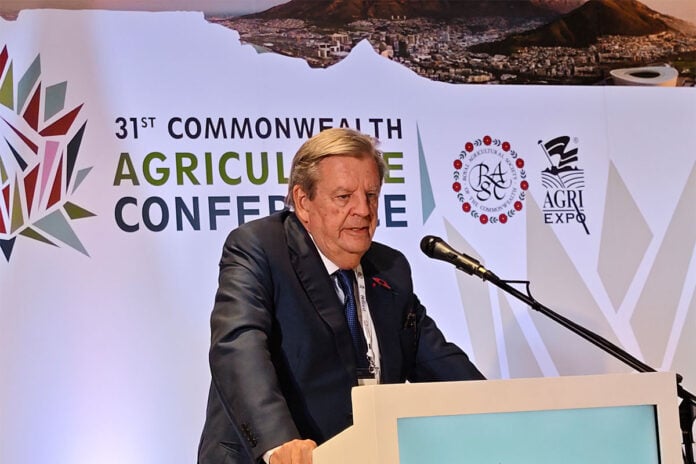
Speakers called for empathy, practical innovation, and stronger partnerships to help farmers sustain their livelihoods, feed communities, and manage natural resources.
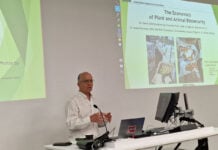
South African business leader, conservationist, and philanthropist Johann Rupert outlined the pressures facing producers, from adverse weather and logistical disruptions to market fluctuations and geopolitical events affecting sales and input costs.
As price takers, farmers had limited control over many of these pressures. A port strike, for example, could prevent produce from reaching markets despite an otherwise successful season. Their investment in immovable assets also left them vulnerable to taxation, while technology businesses had greater freedom to relocate, he pointed out.
Rupert’s concerns extended to widening inequality, mounting public debt, and the implications for future generations. Artificial intelligence added to that uncertainty by disrupting skilled employment, raising questions about whether technological progress was being matched by concern for those affected.
He cited Microsoft’s recent voluntary exit offer, reportedly open to about 60 000 employees, as an example of changes taking place in the technology sector.
What kept him awake at night, he said, was humanity developing linearly while its capacity to destroy people and the Earth grew exponentially.
His call for empathy and curiosity reflected values he had sought to instil in his children and embed in his business group’s culture, with a responsibility towards future generations guiding decisions.
Feeding humanity
Responding to Rupert’s call for empathy, Her Royal Highness Princess Anne, who is the president of the Royal Agricultural Society of the Commonwealth, connected it to farmers’ responsibility to feed people, sustain rural communities, and care for natural resources.
Humanity had progressed because people were prepared to produce its food. ‘That is still true, and it will continue to be true,’ she told delegates, thanking those who continued to farm.
That enduring responsibility now had to be fulfilled amid rapid technological, economic, and social change, alongside the persistent uncertainty of weather and environmental pressures. The challenge was to keep agriculture productive, profitable, and sustainable while adapting to those demands.
Commonwealth farmers could draw on one another’s experience, but shared challenges did not necessarily call for identical solutions. Each approach needed to reflect local conditions.
“It is about keeping your eyes and ears open and understanding the patch that you happen to live on,” she said.
This practical understanding also had to guide innovation. Technology and scientific research needed to benefit farmers and rural communities, building on the knowledge accumulated through generations of working the land.
“Knowledge of the past is never irrelevant,” Princess Anne said.
Passing on that experience, while learning from younger people, would help equip the next generation for careers across agricultural science, technology, business, and engineering.
She encouraged delegates to carry those exchanges beyond Cape Town through friendships and partnerships that would continue after the conference.
Leading change
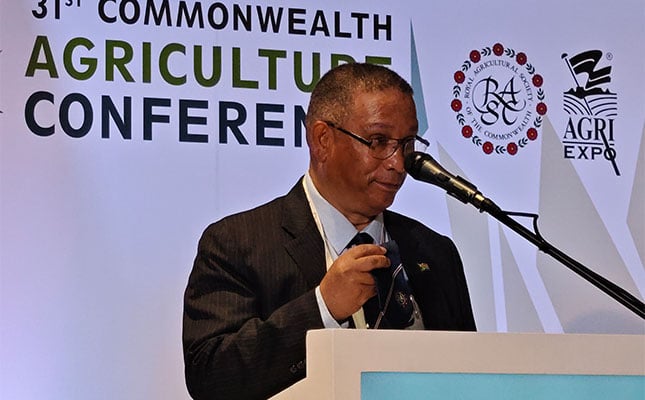
Western Cape Agriculture, Economic Development, and Tourism Minister Dr Ivan Meyer described agriculture as “the foundation of food security” and a source of dignity, employment, and economic growth.
His address placed the sector’s challenges within a wider responsibility to sustain communities and create opportunities. Water scarcity, rising input costs, climate change, and disruptions to global supply chains demanded continual adaptation, while advances in precision agriculture, biotechnology, and research offered new ways to respond.
“The question before us is not whether agriculture will change; the question is whether we will lead that change.”
Turning those advances into practical benefits required cooperation between government, producers, researchers, and businesses. Meyer urged delegates to use the conference to exchange knowledge, challenge assumptions, and develop partnerships that could strengthen food systems and rural economies across the Commonwealth.
The Western Cape’s diverse agricultural sector illustrated the potential of combining resilience, innovation, and entrepreneurship. He reaffirmed the provincial government’s commitment to supporting agricultural exports, infrastructure investment, and skills development, while welcoming partnerships that could create further opportunities.
“The Western Cape is open for business.”
Meyer highlighted conference host Agri-Expo as an example of the lasting contribution agricultural organisations could make. Beyond bringing Commonwealth delegates together, its work in agricultural education, youth development, and local shows helped connect farming communities with knowledge and opportunity. He also credited the organisation with helping establish the provincial agriculture department.
Connected data
In a recorded message, Commonwealth secretary-general Shirley Botchwey linked agricultural resilience to reliable, connected data systems.
“There can be no connected world without connected data systems.”
Connecting farmers to markets, innovation to investment, and data to decisions required countries to treat agricultural information as a strategic resource. This meant investing in infrastructure and institutions capable of exchanging trusted data, supported by the Commonwealth Secretariat’s work on national data systems.
Botchwey called for cooperation across government, farming, research, and business to translate those connections into more resilient food systems.