
Dr Jack Bloom, Deputy Minister of Water and Sanitation, used the above comparison during the Sustainable Vegetable Farming Seminar at Nampo Cape in Bredasdorp to highlight the scale of losses from poorly maintained municipal systems.
He used eThekwini as another example, saying the amount of water wasted there was equivalent to all the water used in Limpopo.
Bloom said figures from the auditor-general showed that municipalities had lost about R15 billion worth of water during the 2023/24 financial year (read the full report at agsa.co.za).
He added that only 23 of the country’s 144 water service authorities had achieved clean audits and sound financial management, with most of these located in the Western Cape.
The scale of these losses was particularly concerning with El Niño developing. Bloom said the expected warmer conditions would drive up water use, placing additional pressure on supply systems already struggling with leaks and ageing infrastructure.
“I can’t ask people to save water when there’s water gushing down the streets,” he said.
Municipal failures under scrutiny
Bloom said municipalities were expected to spend at least 8% of the value of their infrastructure assets on repairs and maintenance, but years of underinvestment had allowed water systems to deteriorate. The result was leaking pipes, supply interruptions and large volumes of water being lost.
He added that revenue generated from water services was too often spent elsewhere instead of being reinvested in maintaining and repairing the infrastructure that supplied it.
“It’s not glamorous to fix the pipes,” Bloom said, but the consequence of neglect is extremely serious.
The problem extended beyond leaking pipes. Bloom said failing wastewater systems were increasingly contributing to pollution, with the Green Drop report showing that 47% of wastewater treatment plants were in a critical state.
This meant many plants were no longer treating wastewater effectively before it entered rivers and other water sources.
Bloom said the situation had become serious enough for the Department of Water and Sanitation to institute 96 criminal cases against local authorities for pollution.
He stressed that criminal charges were a last resort. Municipalities were first informed that they were contravening water legislation and issued with directives and corrective action plans to address the problem.
In one case, Bloom said the department was pursuing contempt-of-court proceedings against the Rand West City Local Municipality after it allegedly failed to comply with an order to address pollution.
He also referred to a municipality in Mpumalanga that had been fined R650 million for pollution.
Bloom said stronger accountability was needed. Proposed amendments to water legislation would make it possible to hold responsible officials criminally liable for failures.
Another proposed change would ring-fence revenue generated from water services so that it could be reinvested in maintaining and repairing water infrastructure.
Municipal failures affect farm water supply
Bloom stressed that these problems did not remain within municipal boundaries.
“What starts in the cities and towns doesn’t stay in the cities and towns,” he said.
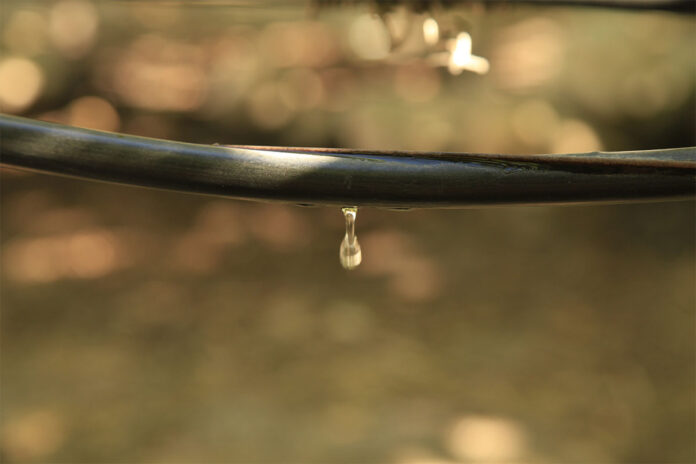
For agriculture, the first concern was water availability. Water lost through leaking and poorly maintained systems placed further pressure on an already limited resource.
The second was water quality. Sewage and other pollutants entering rivers could ultimately reach water sources used by farmers downstream, affecting crop and livestock production.
Bloom said water quality was particularly important for producers supplying export markets, where certain standards had to be met. Where water did not meet these requirements, farmers could be forced to treat it themselves, adding another cost to production, or lose their markets.
He added that polluted water could also affect livestock performance, including animal growth.
‘A governance crisis’
Bloom said South Africa could not control rainfall or the impact of El Niño, but it could address infrastructure failures, pollution and unnecessary water losses.
“In many instances, our water crisis is a man-made crisis. It’s a governance crisis,” he said.
The fact that many of these problems were caused by people also meant they could be fixed.
Bloom said partnerships between government and other role players would be important, pointing to the repair of canals and clearing of invasive alien vegetation as practical measures that could help improve water availability.
With El Niño adding to pressure on water resources, he said South Africa needed to act urgently on the problems it could control.
“We must fix what we can fix,” he said.