
The polled gene is located on chromosome 1 of the bovine genome. The first identified mutation, known as the Celtic variant, was discovered in Brahman cattle. This variant is the primary mutation associated with polledness in both beef and dairy cattle worldwide. It has been confirmed in the Bonsmara and Drakensberger breeds by Grobler et al. (2018) and is the mutation currently reported through the Genomic and Advisory Services offered by SA Stud Book.
A few researchers observed that some cattle were phenotypically polled despite being homozygous horned (HH) for the Celtic variant. This suggested that a different mutation within the polled gene may also be responsible for polledness.
Further research has revealed three additional variants in the polled gene, including the Friesian variant in Holsteins, the Mongolian variant in Kazakh breeds, and more recently the Guarani variant in Nelore and Gyr breeds (Nicholas et al., 2023). Together, these four known polled gene mutations are associated with polledness across a range of cattle breeds.
The naturally polled Tuli
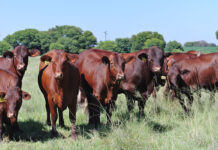
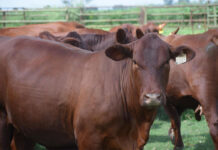
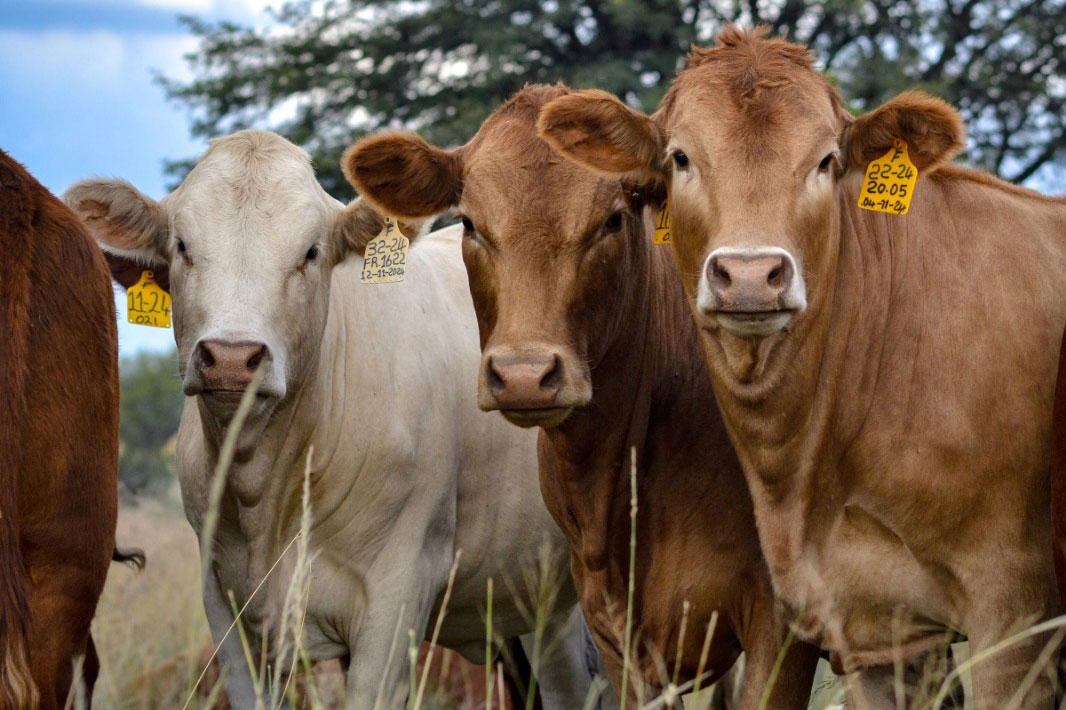
The Tuli, an indigenous Sanga breed originating from Zimbabwe, is suited to extensive farming systems. Selected for hardiness and adaptability, the modern Tuli cow excels in fertility, milk production, and low calf mortality, while producing calves with good growth, feed efficiency, and excellent carcass quality.
Tulis are known for their natural polledness, and the latest genomic technologies allow breeders to assess the genetic inheritance of this trait.
Tulis carrying the Celtic mutation are phenotypically polled, indicating that this mutation is associated with polledness in the breed.
Recently, Tuli stud breeders have observed that the Celtic variant doesn’t always align with the phenotype of individual animals. In some cases, animals that are HH for the Celtic mutation are still phenotypically polled. This suggests that an additional, possibly unique, mutation, likely located within the polled gene, may also influence horn status in the Tuli Sanga breed.
A genome-wide association looks at genetic variants across the genome that may be associated with a specific phenotype. We focused on phenotypically polled Tuli animals with genotypes including HH, heterozygous polled (carrier), and homozygous polled for the Celtic variant, as we assume that this variant is not the sole mutation responsible for the polled phenotype.
The resulting peak of association on chromosome 1 (see Figure 1), directly within the polled gene region, indicates that a unique, breed- or Sanga-type-specific mutation may be present at the polled gene region.

The analysis indicates that the mutation underlying polledness in Tuli Sanga cattle is located in the polled gene region, as is the case for all four currently known mutations across different breeds and types. This suggests that an additional mutation may influence the phenotypic expression of horned/polled status.
These findings warrant further research of this unique occurrence at the whole-genome level to identify the true underlying genetic mechanism for polledness in Tuli Sanga cattle.
In summary, polledness in cattle is the result of mutations within a single gene, the polled gene. Different mutations in this gene can all result in the polled condition, although a unique mutation within the Tuli Sanga breed is possible, as the Celtic variant does not appear to be the sole determinant of polledness in some Tuli animals.
References
Grobler, R, et al. 2018. ‘Validation of the Polled Celtic variant in South African Bonsmara and Drakensberger beef cattle breeds’. Livestock Science, 217, 136–139.
Nicholas, JE, Tammen, I & Sydney Informatics Hub. 2023. OMIA:0004839913: Online Mendelian Inheritance of Animals (OMIA).