
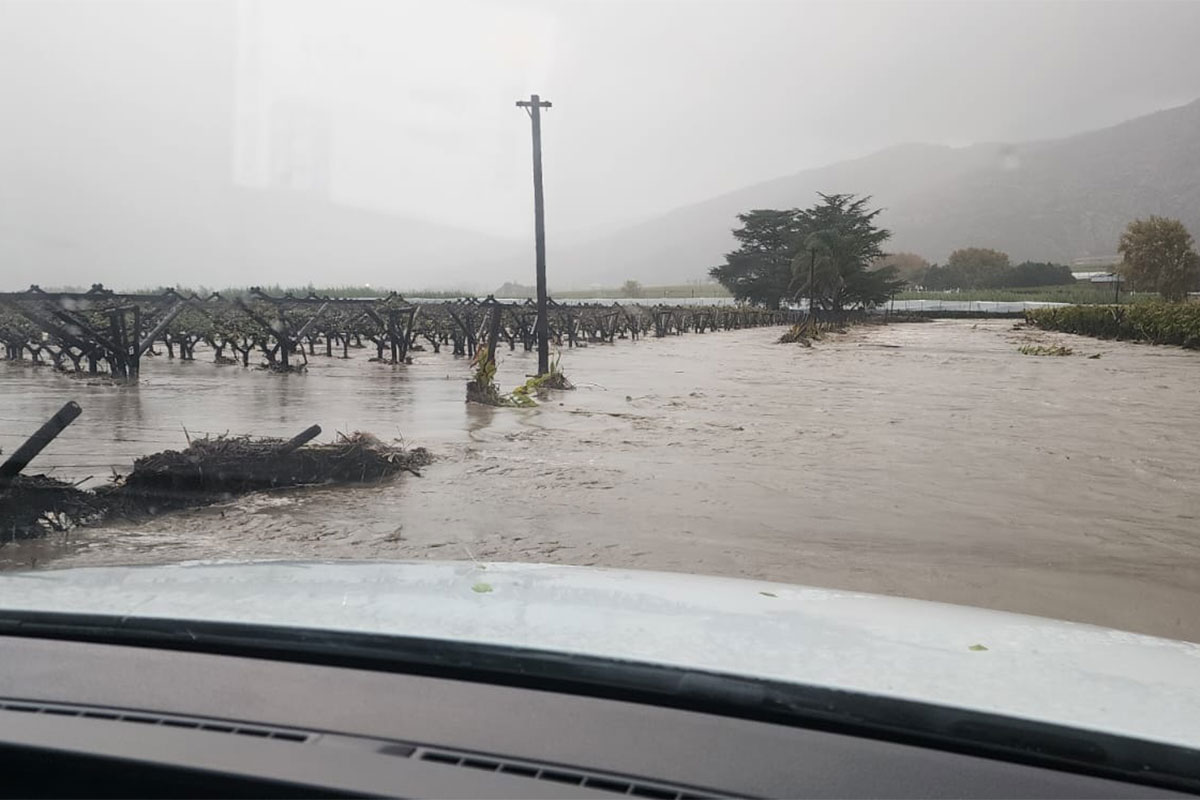
Between 9 and 12 May, several table grape and citrus farms outside Worcester and in the Hex River Valley were flooded, while bridges and roads were damaged by heavy rainfall.
Rojeanne de Wet, liaison officer at Agri Western Cape, told Farmer’s Weekly that at this stage, it is still too early to accurately determine the full extent of the impact that the recent severe weather has had on farming operations and agricultural yields.
“We are aware that there has already been damage to roads and infrastructure, and we also expect that orchards and other farming areas may have been affected. However, the rainfall is ongoing, which makes it difficult to properly assess conditions on farms or quantify losses at this point,” she said.
Anton Viljoen Jnr, a table grape farmer in the Hex River Valley, said farms lower down in the valley were flooded when the river burst its banks.
“It is chaos here. The vineyards are under water; the ground and roads have washed away. We can’t move around on the farm, and we can’t see anything. Farms next to the river have the most trouble. The farms higher up on the mountains are safer,” he explained.
Floodwaters disrupt apple harvest
Jacques du Preez, general manager of trade and markets at Hortgro, said the rain affected the last of the apple harvest in Grabouw.
“There was some impact on the last of the Pink Lady and Cripps Red apples. Fortunately, it is the last fruit of the season. There was also damage in Ceres, but we will know more after the damage assessment. Everyone is in disaster management mode now,” he said.
De Wet said the flooding cut some farmers off from communication, and the electricity supply was also affected.
“There are a lot of [power] problems; I am trying to find out which areas, but a lot of people are without power and signal. Farmers are doing what they can to limit further losses, but current efforts are largely centred on safety and risk management until weather conditions improve,” she added.
She said the primary focus is on ensuring the safety of farmers, farmworkers, and livestock during these dangerous weather conditions.
“We are continuously warning and encouraging our members to take all necessary precautions, avoid unnecessary travel, monitor infrastructure such as roads and bridges, and move animals to safer areas where possible.”
According to De Wet, the most important support needed is accurate information, effective coordination, and continued assistance from authorities during the damage assessment process.
“Farmers will need support in determining the extent of the damage once conditions stabilise, particularly regarding infrastructure repairs and potential agricultural losses. For now, the priority remains the safety and well-being of everyone on farms while the severe weather continues.”
Disaster response on call
The Office of the Premier of the Western Cape said in a media statement that the Provincial Disaster Management Centre and all Joint Operations Centres remain activated 24/7.
“Consecutive severe weather systems have lashed much of the Western Cape, causing widespread disruptions and damage. Fallen trees, electricity outages, and localised flooding have been reported in the Overberg, Cape Winelands, Garden Route, West Coast, and the City of Cape Town metropole,” it said.
“Several roads in affected areas remain closed until further notice, including the N1 at Worcester, along with various passes along the escarpment, severely impacting access to and from Cape Town.”
The Western Cape Cabinet welcomed the classification of the severe weather as a disaster, noting that three people have died in the province as a result of the latest stormy conditions.
“Emergency and disaster teams work as hard as possible to avoid loss of life. The fact that three residents died is deeply tragic and an indication of just how severe these weather systems have been. I implore all our residents to exercise extreme caution,” acting Premier Dr Ivan Meyer said in the statement.
De Wet said the Western Cape Department of Agriculture is currently conducting a formal damage assessment process, after which there will be a clearer indication of the financial impact and overall extent of the damage.