
Technology, skills, scale and professional management will increasingly determine which farming businesses remain competitive, according to economist Dawie Roodt of Efficient Group.
Speaking at the Sustainable Vegetable Production Seminar at Nampo Cape in Bredasdorp, Roodt painted a difficult picture of South Africa’s immediate economic prospects, while also pointing to opportunities for agriculture through technology, skills, scale and professionalisation.
He said the 1,6% economic growth forecast announced earlier in the year for the South African economy was unlikely to be achieved, and estimated growth could instead come in at around 0,7%.
He also warned of the possibility of another quarterly contraction, adding that weak economic growth meant South Africans were now poorer on a per capita basis than 15 years ago.
There could, however, be some relief for farmers if tensions in the Middle East eased.
Roodt expects oil prices to fall significantly once there is greater stability and oil flows through the Strait of Hormuz normalise. Under that scenario, he beliefs oil could eventually settle at around US$65 to US$70 per barrel.
Lower diesel prices would follow with a lag, while fertiliser prices could take longer to respond because natural gas was an important input in fertiliser manufacture, and gas infrastructure in the Middle East had suffered greater damage during the conflict than oil infrastructure, Roodt said.
A decline in oil prices would eventually feed through to lower inflation, he added. Combined with a strengthening rand, this could create room for further interest rate cuts. He beliefs cuts totalling between 50 and 100 basis points could be possible over the following year if this scenario plays out.
Technology will protect margins
But Roodt’s broader message was that farmers could not rely on economic cycles, input prices or commodity prices to secure the future of their businesses.
Agriculture itself was changing, he cautioned.
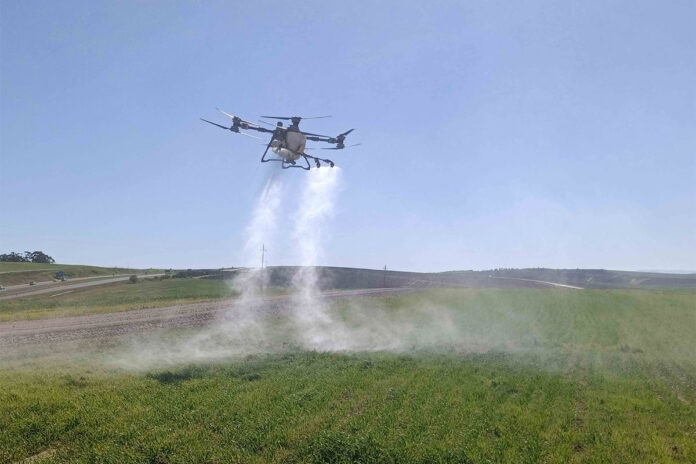
He recalled recently addressing a group of South African maize farmers and expecting presentations largely about planting, tractors and conventional production practices. Instead, discussions revolved around artificial intelligence, computer-controlled machinery, precision agriculture, drones, drone programming and genetic engineering.
“I was completely blown away,” he said, adding that what most people would traditionally regard as “farming” had become only a relatively small part of the discussion.
Roodt said he had seen the same trend among macadamia producers, where conversations increasingly centred on software, apps and artificial intelligence, and on extracting incremental improvements from each hectare.
This reflected a wider shift in advanced economies, where technology, skills and services were becoming increasingly important.
At the same time, he argued, the real prices of many physical products tended to decline over time, continually squeezing the margins of businesses producing them.
For farmers, this meant continually finding ways to become more efficient.
“If you don’t make use of the most recent technology [and] you don’t use the best skills available, you are going to close your business,” he warned.
Land alone will not create successful farmers
Roodt said the changing nature of agriculture had important implications for the debate around land and agricultural development.
During a cycling trip through Tanzania and Kenya, he had visited subsistence farmers who were producing maize on small pieces of land, often without fertiliser and with uncertainty over ownership. Yields were poor and some communities periodically depended on food assistance, he said.
Roodt contrasted this with highly mechanised South African commercial agriculture and argued that farmers operating in subsistence systems could not compete simply by having access to land.
Against this background, he criticised government’s emphasis on establishing more subsistence farmers.
In modern commercial agriculture, he argued, land itself represented only one component of a much bigger production system encompassing capital, skills, technology, management and access to services.
Later he summed up his argument more bluntly: “It’s not about the land. And it’s not even who owns the land. It’s what you do with the land in the end that really matters.”
Roodt also argued that South Africa could achieve much stronger economic growth if policies that discouraged investment were addressed.
He pointed to the lowering of the inflation target as an example of how a single policy change could have a significant impact on financial markets and, eventually, the broader economy. In his view, similar gains could be unlocked by addressing other constraints on growth.
Among these he singled out expropriation policy, the deterioration of local government, and the country’s high tax burden. If these and other policy obstacles were addressed, Roodt beliefs economic growth of 3% to 6% was achievable.
Farmers may have to share ownership
Roodt said farmers themselves would also have to rethink their attachment to traditional ownership structures.
Agriculture was increasingly becoming corporatised and professionalised, with a greater distinction between owning an agricultural business and managing it.
The best manager of a farm was not necessarily the owner’s son or daughter, he said. Modern agricultural businesses increasingly needed appropriately skilled managers, proper corporate structures and, in some cases, independent directors and chairpersons.
“You have to make a distinction between management and ownership,” he said.
“If you don’t run your farm and your agricultural business as a proper business, your chances of surviving are not very good.”
Roodt drew on his own experience at Efficient Group, where his percentage shareholding declined as the company grew.
While giving up some ownership had initially been difficult, he said owning a smaller percentage of a much larger and more valuable business had ultimately placed him in a better position.
Farmers similarly needed to be prepared to share ownership where this allowed businesses to grow and capture economies of scale, he said.
His advice was for producers to consider joining forces, growing their businesses and professionalising their management structures rather than becoming emotionally tied to retaining complete ownership of an individual piece of land.
Roodt expected this trend towards scale to accelerate.
He predicted that agriculture would increasingly consist of very large farming businesses, including co-operative-type structures, alongside much smaller, highly specialised operations serving particular niche markets. For mainstream commodity production, however, he beliefs that increasing scale was inevitable.
For farmers, his central message was that the capital required to produce food was no longer represented by land alone. Increasingly, it included technology, intellectual capital, skilled people, effective management and sufficient scale to remain productive and profitable in a rapidly changing economy.