ZAS, which is in its 116th year, was held from 24 to 29 August 2026 under the theme ‘Powering Growth: Where Agriculture, Technology, and Commerce Converge’.
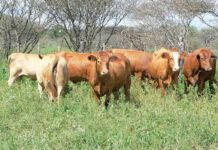
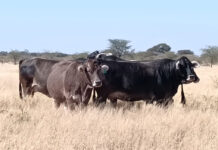
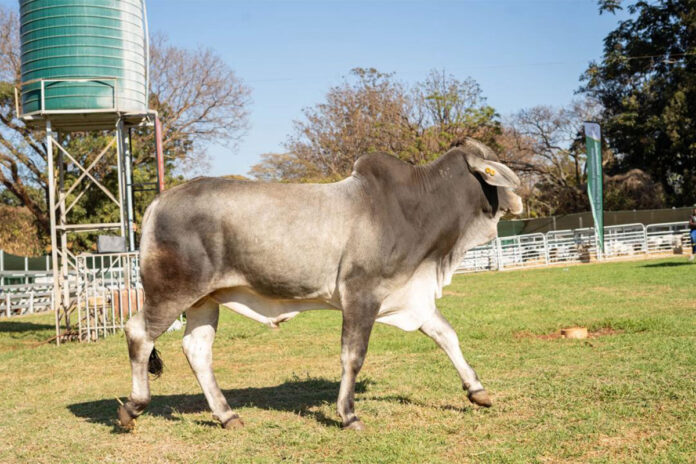
In total, ZAS recorded significant growth with 634 livestock entries in 2026 compared to 305 in 2025, representing a 108% increase, and the entries comprise beef cattle, dairy cattle, poultry, rabbits, sheep, goats, and pigs.
Givemore Chiambiro, a livestock specialist at ZAS, told Farmer’s Weekly that FMD is still a challenge affecting the beef industry, and most farmers were not willing to exhibit their dairy and beef cattle due to fears of the disease.
“Farmers were advised by ZAS to cooperate with the Directorate of Veterinary Services with movement permits and FMD screening. On arrival, staff were on standby to verify movement permits and FMD test results. Any cattle farmer with positive FMD results would not be permitted to exhibit,” he said.
“The Directorate of Veterinary Services has been very helpful, as we managed to have registered 97 cattle in 2026.”
From exhibits to deals
Chiambiro said increased livestock business-to-business deals are expected as more emerging commercial farmers engage breeders directly, indicating that the show is increasingly functioning as a business hub for the agriculture sector.
Edwin Tafadzwa Kudangah, the CEO of the Federation of Young Farmers Clubs Zimbabwe (FYFCZ), whose organisation won the best youth empowerment exhibition in agriculture and industry value chains award, told Farmer’s Weekly that when the organisation attended the show, it sought to shift the conversation from “How do we help young people get into farming?” to “How do we help young people build profitable agricultural businesses?”
He noted that they showcased FYFCZ as a youth agribusiness ecosystem that brings together production, value addition, markets, finance, technology, mechanisation, training, mentorship, and networking.
Kudangah said FYFCZ currently has over 10 000 farmers registered across 52 districts in Zimbabwe across horticulture, livestock and dairy, poultry, row crops and strategic grains, tobacco, mushrooms, agricultural technology, mechanisation, irrigation, value addition, and agro-processing, as well as emerging high-value and export-oriented commodities, with approximately half of the membership being young people under the age of 35.
Youth pivot to profit
According to Kudangah, the organisation is deliberately developing the concept of lead and anchor farmers; those who have demonstrated the ability to produce commercially become mentors for other farmers.
“We also promote contract farming, aggregation, joint ventures, mentorship, and structured production programmes. Our philosophy is that you shouldn’t simply give a farmer an input and walk away. The input needs to be connected to knowledge, finance, production support, and, ultimately, a market. We are therefore increasingly focused on building farmer-to-market and farmer-to-finance pipelines,” he said.
Asked to give two success stories in their organisation, the youthful CEO pointed at Tari Chidawanyika, who was exposed to farming at a very young age, joining his uncle’s farm at 18 years, where he received mentorship and practical exposure to commercial agriculture.
Instead of simply remaining an employee or treating the experience as a temporary opportunity, Chidawanyika is said to have used that environment to develop his own technical and entrepreneurial capacity.
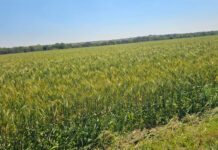
Kudangah said by the age of 20, Tari was already running his own farming operation, producing approximately 100ha of maize and another 100ha of wheat.
“That early progression is significant because it shows what can happen when a young person is given the opportunity to learn from an experienced farmer and then given the space to apply that knowledge independently,” Kudangah said.
“Today, Tari is targeting close to 500ha of rented land for his own agricultural production. His story is also important because it demonstrates that young farmers do not necessarily have to own large tracts of land before they can operate at scale.”
The youth farmers’ federation also told of the story of Tich Mapfoche, which shows that commercial success in farming doesn’t require big capital or land to start.
“Mapfoche began with just 0,5ha and even borrowed cattle to plough. Through determination, mentorship, and partnerships, he grew his own enterprise and then created a hub-and-spoke model that now supports more than 600 farmers. Instead of only expanding his own farm, he built a network where other farmers get support, knowledge, and market access,” Kudangah said.
He said last season, Mapfoche facilitated planting of approximately 17 000ha, and this season he’s targeting approximately 40 000ha of sorghum nationally through the network – a model focused on collective growth rather than individual production.
Officially opening the show, President Emmerson Mnangagwa indicated that the future of farming in the country is anchored on women and youth.
He said to that end, his administration is establishing youth agriculture entrepreneur hubs across provinces and also broadening the reach of the women in agriculture fund.

Processing zones and production gains
Mnangagwa said production is up, with wheat self-sufficiency having been achieved for three consecutive years, with a harvest of 375 000t in 2025.
He said maize output recovered to 2,3 million tons, helping restore the Strategic Grain Reserve, and the government now plans to expand mechanisation to village level, introduce index-based crop insurance, and invest in cold chains, and storage.
Mnangagwa said with youth and women targeted through new entrepreneur hubs and a broader agriculture fund, and with tobacco earning US$892 million (R14,74 billion) last season, the focus is shifting toward higher output, reduced risk, and value addition.
“To this end, the second republic has set out to establish special agro-processing zones in all our 10 provinces. We must move from raw soya beans to cooking oil and stock feeds; raw milk to cheese and yoghurt among other dairy products; fruits to juice and concentrates; tobacco leaf to cigarettes; cattle to leather and packaged meat. All agricultural produce must be processed locally,” Mnangagwa said.