


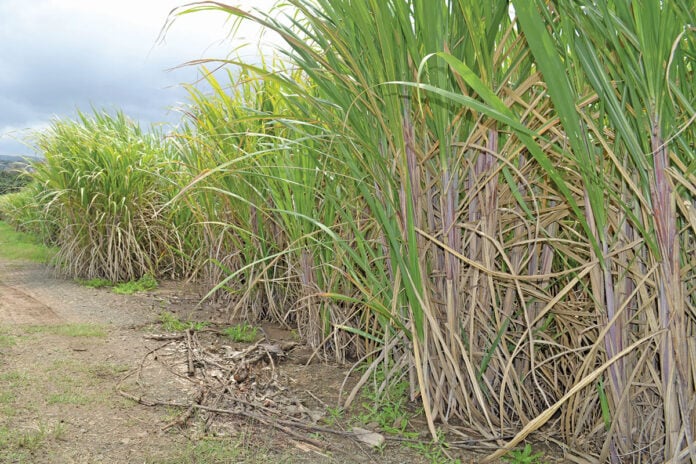
Under normal circumstances, THL’s cane harvesting season runs from April to December. However, the company’s joint business rescue practitioners (BRPs) confirmed in a statement on 25 November that a controlled winding down of affected mills had commenced amid uncertainty over the availability of R350 million in urgently required interim funding.
According to a statement from the South African Canegrowers Association (SA Canegrowers), the early closure of the mills threatens to leave growers with unharvested cane in their fields, while they are also owed payments for cane already delivered.
Small-scale sugar cane farmer Aniruth Anmol told Farmer’s Weekly that growers forced to carry cane over to the next season faced an extended period without income from that crop, potential pest and disease challenges, and disruptions to harvesting and planting schedules.
He added that cane already harvested deteriorated rapidly if not processed in time.
“The financial implications are particularly concerning for small-scale growers like us, who depend heavily on regular cane payments to cover wages, transport, production inputs, and debt repayments.”
Anmol said the early closure would put many, if not all, growers out of pocket.
“At a time like this when input and fuel costs are skyrocketing, and with the festive season basically here, the few weeks lost means big losses to people on the ground. We cannot keep workers on if we aren’t paid. It’s a major knock-on effect,” he said.
Funding impasse
In a letter to growers on 20 November, THL indicated that approximately R500 million would be paid on the usual November payment date, followed by further payments in December.
However, in a subsequent letter dated 24 November, company CEO Gavin Dalgleish said this commitment was based on anticipated Industrial Development Corporation (IDC) funding and forecast cash receipts, and could no longer be confirmed.
He explained that although the IDC board had approved an additional R350 million in post-commencement finance, the funds had not been made available because of difficulties surrounding repayment arrangements.
He added that the approval was conditional on, among other things, arrangements for repaying the IDC bridging facility through funding from Standard Bank to Vision Consortium, the approved buyer of THL’s South African sugar operations.
“Standard Bank has advised that, under the current terms of its funding arrangements with Vision, it is not presently able to provide the confirmation required by the IDC for repayment of the R350 million bridge facility,” Dalgleish said.
An alternative mechanism had been proposed whereby the IDC facility could be drawn and subsequently repaid through Vision’s acquisition of sugar stocks following implementation of the transaction. The proposed arrangement remains subject to agreement between the relevant parties.
The BRPs said available cash resources and receipts would be directed towards grower payments as funds became available, subject to the company’s financial requirements to protect and preserve its assets and operations.
“THL is not presently in a position to confirm revised payment dates or amounts,” they said.
Deliveries halted
In the second letter, growers were instructed to cease all further cane deliveries from 25 November unless expressly advised otherwise by THL.
Those with cane already in transit or requiring assistance with implementing the termination of deliveries were advised to contact their usual THL operational representatives before proceeding.
The BRPs said priority would be given to safely processing and managing cane already committed or in the system, where applicable; safeguarding employees, growers, contractors, and surrounding communities; securing mills, equipment, and sugar stocks; and complying with legal, environmental, and contractual obligations.
They added that a detailed operational plan would be communicated directly to affected stakeholders.
“In the absence of certainty regarding this funding, THL cannot responsibly continue normal operations and incur additional obligations without reasonable certainty that those obligations can be met,” the BRPs said.
Meanwhile, Dalgleish said progress had been made towards implementing the Vision transaction, with the subscription and shareholders agreements signed.
He added that the outstanding South African Sugar Association settlement agreement and clause 203 certificate were being progressed.
Once these had been finalised and accepted by Vision, approval under the Public Finance Management Act (No. 1 of 1999) would remain the principal outstanding transaction approval.
Dalgleish said the IDC was trying to expedite the application. However, until the transaction had been implemented, it could not address THL’s immediate liquidity requirements.
“The orderly wind-down does not mean that efforts to secure the IDC funding or implement the Vision transaction have ceased,” he added.
Growers cannot take on further uncertainty
Following THL’s announcement, SA Canegrowers Chairperson Higgins Mdluli called for urgent intervention to prevent a “deepening economic and humanitarian crisis in rural KZN”.
In a statement, Mdluli said the association was engaging with THL management, the BRPs, the IDC, and the Department of Trade, Industry and Competition, although he could not disclose the details of those discussions.
“However, we urge all parties to urgently meet to agree on the final funding mechanism and conclude the business rescue transaction.
“Around 18 000 of South Africa’s 28 000 sugar cane growers supply cane to Tongaat Hulett’s mills, and the vast majority of them are small-scale growers. There are no alternative sugar mills they can deliver to,” he said.
Mdluli added that growers had continued delivering cane to THL in good faith throughout the business rescue process, carrying much of the financial burden of keeping the mills operational.
“They, their farmworkers, and the rural communities of KwaZulu-Natal that depend on them cannot absorb further uncertainty. Should payment be delayed or not made in full, the burden falls to rural KZN,” he said.
Theorising the worst-case scenario, Mdluli said, “Should Tongaat Hulett enter liquidation, tens of thousands of direct jobs and far more indirect jobs in KZN will be destroyed instantly.”
SA Canegrowers warned that the consequences of a permanent closure would extend well beyond the agriculture sector.
The association also warned that the closure of THL’s mills would force major food and beverage manufacturers to rely largely on imported white sugar, increasing South Africa’s exposure to volatile international sugar prices and further threatening the viability of the domestic industry.