


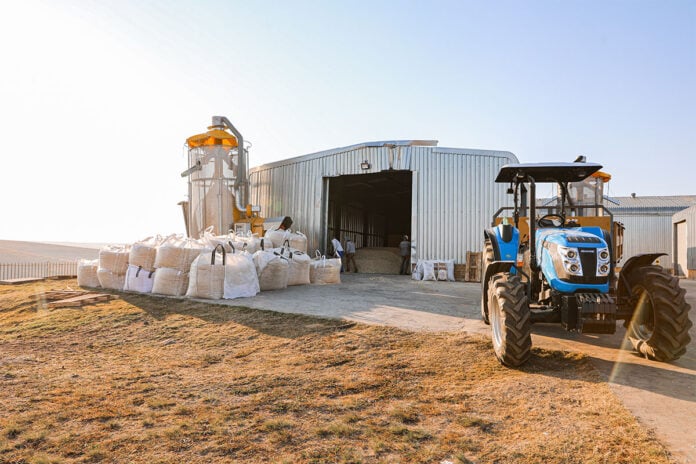
The hub, which is situated in the town of Mbizana, aims to source approximately 5 000t of its maize requirement from local farmers, with plans to expand processing and bring more emerging producers into its supply chain.
The 150t of maize was purchased from Jay Jay Farming, an emerging farming business supported by the Eastern Cape Rural Development Agency (ECRDA).
Nkosiphendule Quvile, executive of integrated programmes management at the ECRDA, told Farmer’s Weekly that the hub was established to give farmers access to markets closer to home while retaining more value from maize milling and packaging within Mbizana.
“Emerging farmers often face challenges in securing reliable buyers, meeting commercial supply volumes, and complying with quality requirements,” he said.
The hub operates under the ECRDA’s Rural Enterprise Development (RED) Hub programme and is run through a partnership with Sila Milling South Africa, Sivuka Sonke Secondary Co-operative, and the ECRDA.
Sila Milling was appointed as the private operating partner and is responsible for the facility’s commercial milling operations. Sivuka Sonke facilitates engagement with affiliated farmer co-operatives and communities, and the ECRDA provides institutional support and oversees the partnership agreement.
RED Hubs bring together agricultural services such as produce collection, storage, processing, and distribution to help farmers access commercial markets. At Mbizana, maize delivered to the hub can be stored and processed into products such as maize meal and samp.
White maize requirements
Xolani Ndzaba, CEO of Sila Milling, said the maize was sourced from Jay Jay Farming because the producer could meet the mill’s immediate quality and quantity requirements.
He added that other farmers in the surrounding areas had predominantly planted yellow maize, while the facility requires WM1, the highest-quality white maize under South African grading regulations, for processing.
The mill has a storage capacity of 2 000t and can process 3,2t of maize an hour. Its first-year processing target is 24 000t, of which approximately 5 000t, or 21%, are expected to come from local farmers.
Sila Milling offers market-related prices guided by prevailing SAFEX prices. Minimum delivery volumes per farmer have yet to be confirmed.
Ndzaba said the company was working with Sivuka Sonke, traditional leaders, the ECRDA, the Winnie Madikizela-Mandela Local Municipality, and the Eastern Cape Department of Agriculture (ECDOA) to encourage more farmers to plant white maize.
He added that offtake agreements, production finance, mechanisation, and technical support would be needed to help emerging farmers meet the mill’s commercial requirements.
More than 100 farmers represented
Lindinkosi Faku, chairperson of Sivuka Sonke, said the organisation represents just over 100 individual farmers through its 12 affiliated primary co-ops, seven of which are currently active.
However, its members are not yet supplying the hub. Preparations are under way to bring them into the supply chain during the next production season.
“Our members have access to more than 895ha of land, presenting significant potential to expand maize production,” Faku said.
The ECDOA has also earmarked 70ha for white maize production linked to the hub through its mechanisation support programme.
Faku said the co-op was working with its partners to strengthen production capacity, improve grain quality, and prepare members to meet the mill’s requirements.
Monitoring farmer participation
The ECRDA will monitor the hub’s performance through farmer participation, maize volumes delivered, and the proportion of grain sourced locally.
Quvile said seasonal assessments would also track production volumes, yields, and consistency of supply. Where information is available, the ECRDA will assess farmers’ earnings, production costs, and payment timelines to determine the economic benefits of participating in the hub.
Historical figures provide context for the latest procurement. The ECRDA’s 2015/16 Annual Report shows that the Mbizana hub received 316,7t of white maize from the 2014/15 crop, of which 226,5t were sold to the Mqanduli RED Hub for milling.
The recent purchase is equivalent to approximately 66% of that historical sales volume. However, a comparison with other mills across the Eastern Cape would require consolidated provincial intake records, Quvile said.