

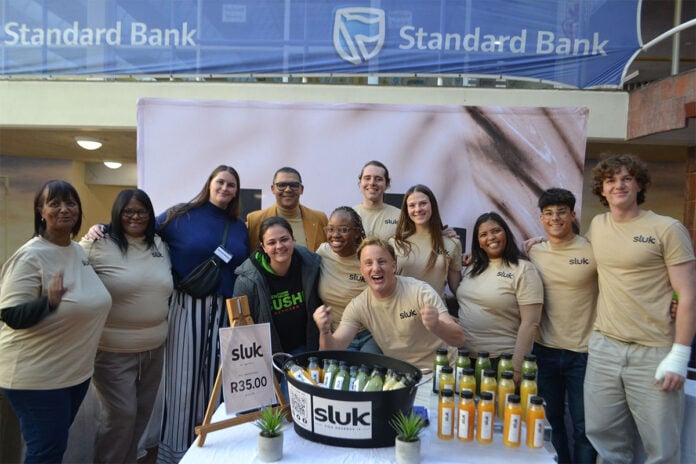
Sluk, founded by six UCT students, tackles the challenges of food waste, food insecurity, and unemployment by transforming fruit rejected by retailers into nutritious smoothies, while creating employment for women at early childhood development (ECD) centres.
The business was developed through the UCT Genesis Project, the action-learning programme for the university’s Postgraduate Diploma in Management in Entrepreneurship. Over the course of an academic year, students establish and run their own businesses. This involves everything from raising start-up capital and developing products and brands to reporting to a board of directors.
“The Genesis Award is the summation of the UCT Genesis Project,” Stuart Hendry, convenor of the Genesis Project, told Farmer’s Weekly.
“Sluk won over the judges with the problems they are solving. Tons of so-called ‘ugly fruit is being thrown away because it’s deemed unfit for human consumption, while across the road, children and teenagers are stunted from malnutrition.
“This drove Sluk to use ugly fruit to make beautiful, nutritious smoothies, and to employ women in the process,” he said.
Sluk CEO Erin Harding said they wanted to change the way South Africa views food waste.
“South Africa throws away about 10 million tons of food a year. Around 70% of that is fruit and vegetables, while roughly 20% of the population is food insecure,” she said.
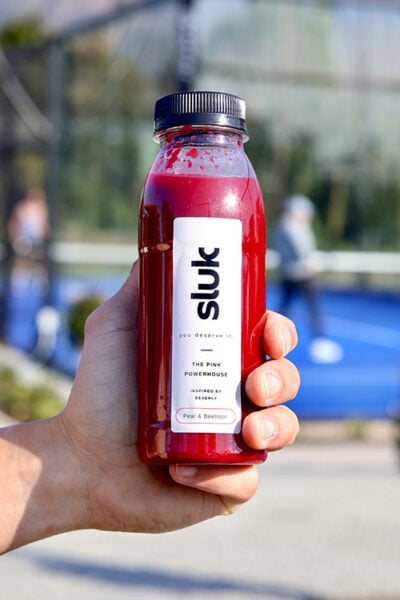
Sluk sources most of its fruit from merchants at Epping Paradise Hawkers Market in Cape Town, who sell surplus stock rejected on the grounds of size or appearance at discounted prices.
“We’ve built close relationships with [the merchants], which means we source locally from people we know instead of from large food chains,” Harding said.
Suppliers now have a regular buyer for stock they would otherwise write off, and Sluk is working towards formalising deliveries directly from the market to its production kitchens.
The smoothies are produced in the kitchens of two ECD centres, one in Kuils River and the other in Blue Downs, with six women employed to make them. Additional workers are brought in when production requires it.
This arrangement provides additional income for the women and their centres, where financial pressures can make it difficult for families to afford ECD fees.
“These jobs are at the centre of what we do, as every smoothie we sell puts money into the hands of women who care for the next generation,” Harding said.
Keeping overheads low
Sluk has sold more than 1 730 smoothies since 23 May, paying more than R10 000 into its partner ECD centres. Each weekly production run yields between 100 and 200 smoothies, with flavours changing according to seasonal availability.
The range includes mango and ginger, the top-selling flavour, as well as guava and plum, plum and banana, citrus and apple, and spinach and apple. Recipes are developed and tested by the team before being documented on recipe cards to maintain consistency across batches.
The business was designed to keep overheads low and make expansion relatively straightforward. Setting up a production kitchen costs approximately R10 000, including equipment, hygiene requirements, and training.
The founders estimate that a kitchen producing 100 to 200 smoothies per week can recover its set-up costs within a month.
“Each bottle earns a strong gross margin, so our social impact is funded by our sales and doesn’t rely on donations. We believe the model will only last if it stays commercially viable,” Harding said.
Sluk currently distributes smoothies through UCT campus activations, markets, and sports clubs. Sandra Lucas, who is employed at one of the ECD centres, also sells the smoothies in her community on a commission basis.
Discussions are under way to distribute the smoothies at hotels, schools, and coffee shops, with plans to establish additional production kitchens through partnerships with other ECD centres.