
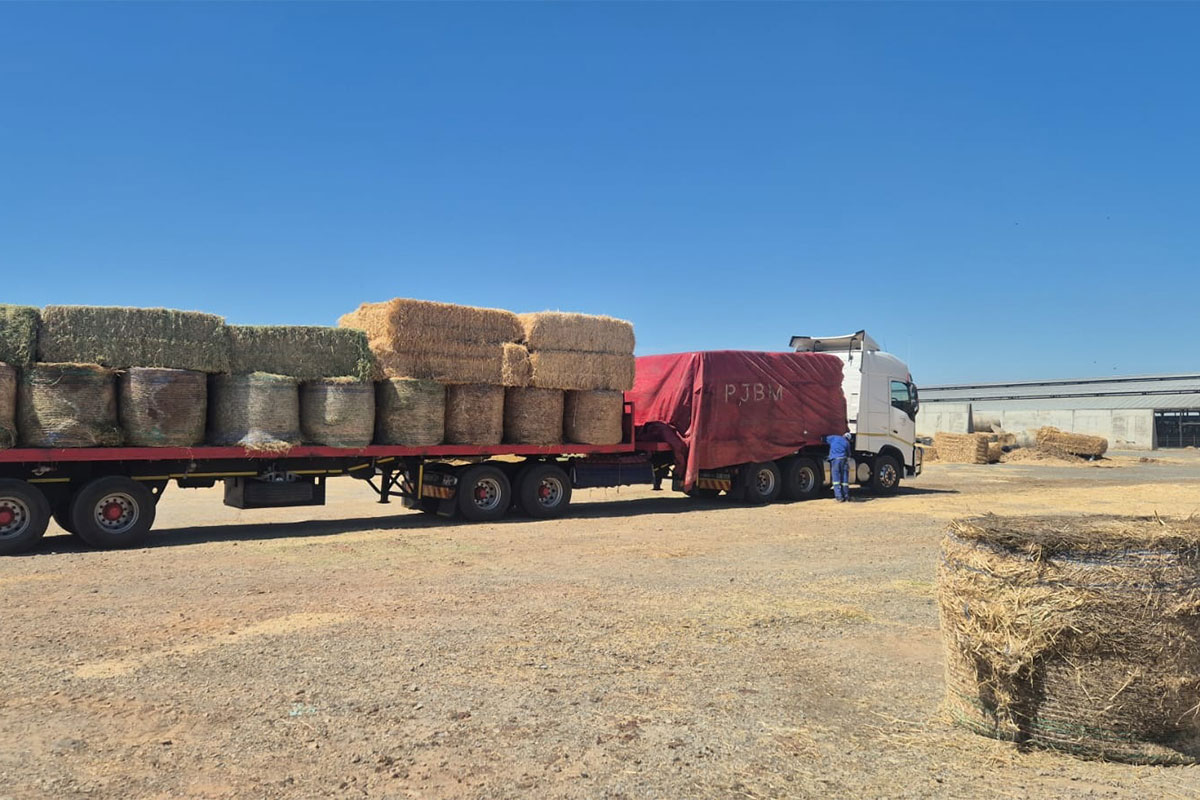
Announced on 8 April in a Western Cape Department of Agriculture (WCDoA) press release, the support comes after extended periods of limited rainfall that have placed significant pressure on grazing veld across several regions of the province, affecting livestock conditions and threatening farm sustainability.
“Our livestock farmers are under real pressure because of prolonged dry conditions. This intervention is about acting early to protect herds, livelihoods, and grazing resources. We cannot allow short-term climate shocks to undermine the long-term sustainability of agriculture in the Western Cape,” provincial Minister of Agriculture, Economic Development and Tourism, Dr Ivan Meyer said in the statement.
He added that the WCDoA is implementing the intervention to reduce immediate pressure on natural grazing resources and stabilise production systems as winter approaches.
In reply to follow-up questions from Farmer’s Weekly, Daniel Johnson, spokesperson for Meyer, said the affected grazing areas are the Central Karoo (entire district), Garden Route (entire district), Cape Winelands (Tankwa region) and Overberg (Barrydale).
He noted that the WCDoA is still uncertain about the exact number of farmers who will be supported and the scale of livestock affected. The final figure will depend on the number of applications received. Johnson said previous fodder support provided in 2022 may indicate likely uptake.
“The most recent indication came from West Coast farmers who also indicated that they require support. Based on the uptake during the previous drought relief intervention in 2022 within the identified areas, it is anticipated that approximately 1 100 applications may be submitted,” he added.
Agri western cape welcomes intervention
Speaking to Farmer’s Weekly, Jannie Strydom, CEO of Agri Western Cape, said the organisation welcomes the support from the WCDoA. The two bodies will work in close coordination to ensure no farmer is inadvertently left out.
“We are grateful for the timely response from the Western Cape government, and we acknowledge that this form of risk-reduction relief is both necessary and appreciated under the current conditions,” he said.
“While the exact number of affected farmers is still being quantified, it is clear from our structures that a significant number of livestock producers across key regions are experiencing sustained pressure due to prolonged dry grazing conditions.
“These areas have seen below-average rainfall over extended periods, placing strain on natural veld and available feed resources.”
This latest intervention follows support that Agri Western Cape and its members have already provided to farmers earlier this year.
“Agri Western Cape, in collaboration with its commodity organisations and regional structures, continues to support farmers through ongoing communication and advocacy for additional relief measures,” Strydom said.
“In February, we also provided drought assistance to producers in the Garden Route, Klein Karoo, and Central Karoo, demonstrating our ongoing commitment to supporting farmers through difficult conditions.”
Meyer said: “Climate variability is no longer a future threat; it is already shaping farming conditions across our province. Government must respond decisively, but we must also work in partnership with farmers to build resilience into our production systems.”
Livestock farmers are encouraged to apply for the available relief and continue implementing sustainable grazing and veld management practices as part of long-term climate resilience planning.
Meyer and Strydom both emphasised that the fodder support forms part of a broader risk-reduction strategy.
“By easing pressure on natural grazing now, we help farmers bridge difficult conditions while safeguarding the veld so that it can recover when rains return,” Meyer said.
Johnson said the application deadline has been extended to 30 April 2026 to ensure funding reaches qualifying producers as quickly as possible. He added that a request has also been made to the national Department of Agriculture for additional financial support.
“Subject to all other conditions being met, farmers are expected to access the support towards the end of May 2026,” he noted.
For more information, farmers may phone Leslie Marthinussen on 021 808 5360, or email [email protected]. They can also apply for fodder support online at elsenburg.com/programmes/disaster-risk-reduction/drought-disaster-survey-forms/.