
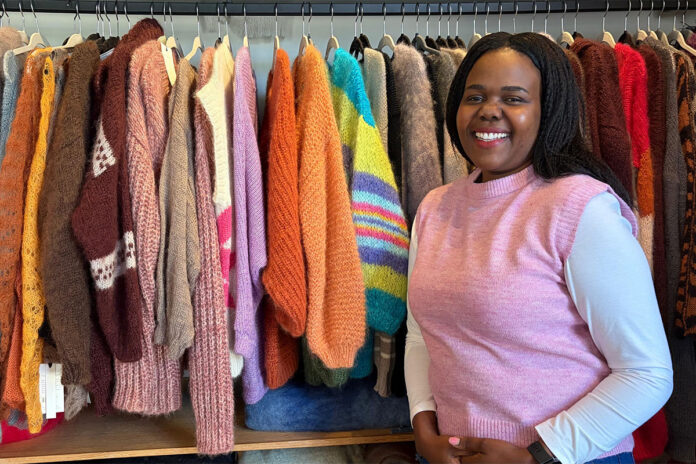
There is something about Mohair Empowerment Trust manager Beauty Mokgwamme that stands out. It is not simply her knowledge of the mohair industry or her ability to speak confidently about production systems and farmer development – it is the way she speaks to people.
Whether she is visiting a first-generation Angora goat farmer in the Eastern Cape, mentoring a young graduate or discussing the future of South Africa’s mohair industry, her passion remains unmistakable. Every conversation comes back to one thing: creating opportunities for others.
As Women’s Month celebrates women who are shaping industries and transforming communities, Mokgwamme’s story is one of quiet determination. It is not defined by titles or accolades, but by decades of choosing purpose over comfort, service over recognition, and people over personal ambition.
Her journey has taken her from a small village in North West to becoming one of the country’s most respected agricultural development leaders. Along the way she has faced loss, navigated unfamiliar environments, broken barriers in traditionally male spaces, and helped build one of South Africa’s most successful agricultural empowerment programmes.
Looking back, it becomes clear that every chapter of her life prepared her for the next.
Humble beginnings
Although Mokgwamme was born in Johannesburg, her childhood was spent in Taung in North West, where she was raised by her mother after returning to the rural village.
Life was modest. Her father worked on the mines while her mother earned a living as a domestic worker. Like many South African parents, they worked tirelessly to create opportunities for their children.
Mokgwamme was the only daughter among three siblings, and from an early age she learnt that hard work was simply part of everyday life. Agriculture was woven into that upbringing.
School gardening formed part of the curriculum, introducing learners to growing vegetables and flowers while teaching responsibility and patience. At home, livestock were part of daily life, and she eagerly helped wherever she could.
“I’ve been involved with agriculture from a very young age. I loved planting, seeing things grow and working with animals. That’s where my passion started,” she says.
Leadership also came naturally. She captained the school netball team, sang in the choir and was often entrusted with responsibilities by teachers. Long before she understood what leadership meant, she had already begun serving others.
But life also teaches resilience. Her father passed away while she was still young. Years later, both of her brothers died at the age of 25. At just 24 years old, shortly before becoming a mother herself, she also lost her own mother.
Those losses changed her forever. Yet rather than allowing hardship to define her, Mokgwamme carried forward the lessons her mother had instilled in her: respect every person, work hard and never stop believing that education can change lives.
“Those values remain the foundation of my leadership today,” she says.
Choosing a different future
After completing matric in 2000, Mokgwamme believed her future had already been decided. With her father gone and her mother carrying the family’s financial burden, university seemed out of reach.
During school holidays she would travel to Johannesburg, where her mother was employed as a domestic worker in the house of an Indian family. Watching her mother clean, cook and care for another family left a lasting impression.
“I thought I was going to become a domestic worker because that’s what I knew,” she says.
It was not a lack of ambition that shaped that belief. It was circumstance.
“Everything changed when family members recognised my academic potential and encouraged me to apply at agriculture colleges. My former agriculture teacher, who had always believed I possessed a special talent for agriculture, encouraged me to pursue the field professionally,” she says.
Applications were submitted across South Africa. When the Grootfontein College of Agriculture in Middelburg, Eastern Cape, offered her a place, she knew her life was about to change. Looking through the college prospectus, she realised she would be entering an environment completely different from the one she had always known.
“The photographs showed predominantly Afrikaans-speaking students and a world that felt intimidating. Despite my fears, I accepted the opportunity. It was the first of many decisions that required courage over comfort,” she says.
Building a foundation
Arriving at Grootfontein in 2003 challenged Mokgwamme in ways she had never imagined. Most lectures were presented in Afrikaans, making technical agricultural terminology particularly difficult to understand.
“For many students, language came naturally. For myself, every lesson required additional effort,” she says.
Instead of allowing the language barrier to discourage her, she developed a habit that would shape her entire career. After lectures she visited lecturers’ offices, asking them to explain concepts again until she fully understood.
“I never wanted to use the language barrier as an excuse,” she says.
Her determination quickly earned the respect of lecturers and fellow students alike. Outside the classroom she embraced every opportunity available. She captained the college’s netball team, served in student leadership and immersed herself in practical livestock production. More importantly, she built lasting relationships with commercial farmers and lecturers who would later become mentors throughout her career.
When she graduated, the college recognised not only her academic achievements but also her leadership potential.
“I returned to the institution as part of its Young Professionals Programme before being appointed as a production technician specialising in sheep, goats, wool and mohair,” she says.
It proved to be the ideal training ground. Working alongside experienced lecturers and industry experts, she refined both her technical knowledge and her ability to teach others.
“Looking back, I believe Grootfontein gave me far more than a qualification. It gave me confidence, taught me discipline and most importantly, prepared me to lead.”
Motherhood changed everything
Professionally, Mokgwamme was thriving. Personally, however, life was changing. She had married a fellow Grootfontein graduate and the couple were raising two young children. Today, she has three children, with her youngest son being five years old.
When health complications arose with her second child, remaining in Middelburg was no longer practical. Access to specialised healthcare became a priority.
“It wasn’t an easy decision because I loved Grootfontein, but as a mother, my children had to come first,” she says.
Leaving the institution she loved was one of the most difficult decisions of her career. She was not seeking promotion, but what was best for her family. That decision would unexpectedly lead her to the opportunity that would define the rest of her professional life.
Finding her purpose
During her years at Grootfontein, Mokgwamme had worked closely with the wool and mohair industries, coordinating student placements and building relationships with commercial producers and industry leaders.
One of those relationships would prove life-changing. When a vacancy became available at the Mohair Empowerment Trust, former Mohair South Africa CEO Deon Saayman encouraged her to apply. There was one concern: the position had traditionally been viewed as a man’s job.
Mokgwamme never saw it that way.
“I simply told him I could do it. I accepted the position and relocated to Gqeberha. Without fully realising it at the time, every experience throughout my career had prepared me for this role,” she says.
Her practical livestock knowledge, teaching experience, leadership skills and understanding of emerging farmers all came together.
“I felt like everything I had learnt finally had a place where it could make a real difference,” she says.
Building more than farmers
When Mokgwamme joined the Mohair Empowerment Trust, the organisation was already committed to developing emerging Angora goat farmers. Her task was to strengthen that vision. For six years, she managed much of the programme almost single-handedly.
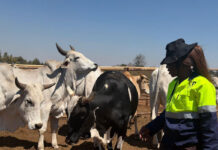
She travelled across South Africa assessing grazing capacity, evaluating infrastructure, preparing board reports, coordinating livestock purchases, facilitating accredited training and supporting farmers through every stage of their development. The workload was enormous. Yet she never viewed it simply as employment. “It became a calling,” she says.
The work took her into some of South Africa’s most remote farming communities. Every project began long before goats arrived on a farm.
“I spent time understanding each farmer’s commitment, their willingness to learn and their long-term vision. We don’t just invest in goats; we invest in people,” she says.
That philosophy has become central to the success of the Mohair Empowerment Trust. Farmers receive interest-free loans in the form of quality Angora goats, but livestock is only one part of the programme. Continuous mentorship, technical support, accredited training and relationships with commercial producers ensure farmers develop sustainable commercial businesses.
For Mokgwamme, success is never measured by the number of goats distributed, but by the farmers who become commercially viable.
“We want farmers to become accountable, bankable and able to stand on their own.”
Knowledge, she believes, is the greatest investment any organisation can make.
“Goats alone don’t build commercial farmers; knowledge does,” she says.
Leading an organisation with heart
As the programme expanded nationally, so did its responsibilities. Commercial producers, brokers, veterinarians, universities and funding partners increasingly recognised the impact the trust was making. Eventually, managing everything alone became impossible.
When FirstRand asked how it could support the organisation, Mokgwamme’s answer was immediate.
“I told them I needed another Beauty,” she laughs.
That support enabled Mohair Empowerment Trust to appoint staff member Sandile Ngwane, allowing the organisation to expand its reach while continuing to provide close support to farmers.
Today, the trust’s work extends well beyond livestock financing. It supports bursary students, internship programmes and young professionals entering agriculture. It has also invested in fashion design students who will help promote South African mohair internationally.
For Mokgwamme, transformation cannot stop at the farm gate.
“It must include every part of the value chain. I have become a respected voice in agricultural development, regularly engaging with industry leaders, commercial farmers, government and international stakeholders about sustainable farmer development,” she says.
Despite those achievements, she remains remarkably humble. When asked about success, she quickly redirects the conversation towards farmers, trustees, funders, mentors and colleagues.
“Leadership, I believe, has never been about standing in front. It is about helping others stand beside you,” she says.
A legacy of service
Mokgwamme never set out to become a leader. She simply committed herself to serving others, one opportunity at a time.
“My mother taught me to respect people, no matter who they are. Whether I work with farmworkers, commercial farmers or business leaders, everyone deserves the same respect,” she says.
As Women’s Month shines a spotlight on women making meaningful contributions in South Africa, Mokgwamme hopes more young women will see agriculture as a place where they belong – not only as farmers, but as scientists, veterinarians, researchers, entrepreneurs, extension officers and industry leaders.
Her advice is simple: “Believe in yourself. Stay disciplined. Never stop learning. Agriculture needs people who are willing to work hard and serve others.”
As Mokgwamme and I concluded our conversation, I thought back to our first meeting two years ago. At the time, I recognised her passion.
Today, I understand where it comes from. It was planted in the school gardens of Taung. Strengthened through personal loss. Refined in lecture halls where she refused to let language become a barrier. Tested through years of travelling South Africa’s rural roads to support farmers, and ultimately transformed into a career dedicated to creating opportunities for others.
Mokgwamme’s greatest achievement is not simply the organisation she leads or the farmers she has helped commercialise. It is the lasting belief she instils in people who once doubted that they belonged in agriculture.