

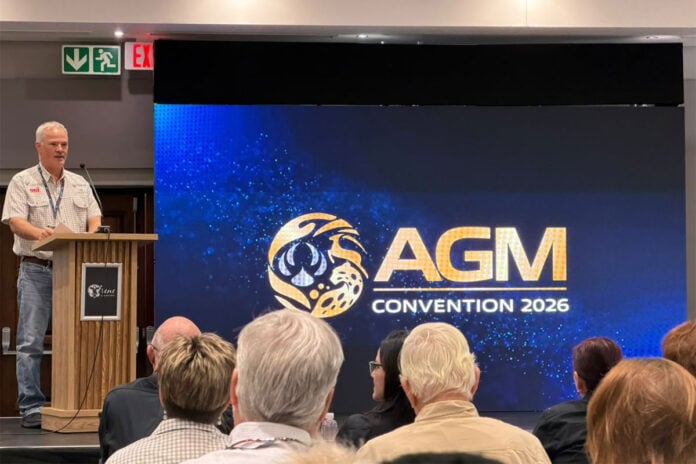
South Africa’s wildlife industry faces increasing pressure from international regulations, rising game prices, and changing public perceptions of hunting. These challenges, alongside the economic importance of wildlife conservation, were central to discussions at the convention, held at Irene Country Hotel in Centurion on 13 November.
The convention brought together professional hunters, game industry representatives, conservation organisations, and international partners to examine developments affecting the industry.
Opening proceedings, PHASA President Eardley Rudman emphasised the association’s responsibility towards wildlife, natural resources, and the rural communities whose livelihoods depend on sustainable utilisation.
Throughout the day, speakers repeatedly returned to the subject of the commercial viability of wildlife enterprises and their contribution to conservation.
International market access under pressure
Safari Club International (SCI) representative Laird Hamberlin raised concerns about the difficulties experienced by hunting outfitters from Zimbabwe, Zambia, and Tanzania in obtaining visas to attend international hunting exhibitions in the US.
According to him, outfitters have encountered visa refusals when attempting to participate in major industry events, including exhibitions associated with SCI, Dallas Safari Club (DSC), and the Texas Trophy Hunters Association.
Hamberlin said SCI was engaging with US authorities to address the situation.
For African hunting businesses, international conventions provide opportunities to secure clients, establish relationships, and market hunting destinations. Restrictions affecting participation could therefore have commercial consequences for operators dependent on foreign visitors.
A DSC representative raised similar concerns about international regulatory developments, particularly proposed hunting trophy import restrictions in France.
DSC indicated that it was seeking diplomatic engagement over the French proposals while working with policymakers to oppose similar restrictions in the US.
It argued that international hunting regulations could affect conservation funding, wildlife management, and rural communities that benefit economically from hunting.
Both SCI and DSC emphasised the importance of international cooperation in responding to regulatory challenges.
Game prices raise competitiveness concerns
Closer to home, JP Smith, chief operating officer at auction house Wildswinkel, presented figures highlighting the changing conditions in the local wildlife industry.
According to the data, average prices for male trophy animals across the species analysed increased by 14% between 2025 and 2026.
However, price movements varied considerably between species and trophy categories. Average prices for sable measuring 50 to 51⅞ inches increased by 21,6%, while kudu in the 60- to 61⅞-inch category recorded an increase of 36,4%.
Not all categories experienced growth. Prices for buffalo measuring 50 to 50⅞ inches declined by 8,8%, demonstrating the differences in demand and pricing across the market.
Smith warned that rising animal prices, combined with transport costs and other operating expenses, could place pressure on the competitiveness of South African hunting packages. While higher prices can benefit game breeders, hunting operators must ultimately recover these costs from their clients.
He encouraged operators to manage purchases carefully, plan ahead, and consider the broader value of their offerings.
Instead of depending entirely on higher trophy prices, Smith suggested that businesses place greater emphasis on the complete hunting experience, including accommodation, service, and the diversity of hunting opportunities available in South Africa.
The discussion also highlighted the importance of maintaining affordable entry-level hunting options to attract new international clients.
Economic incentives influence conservation
Wildlife trade economist Michael ‘t Sas-Rolfes challenged the assumption that restrictions on wildlife trade necessarily lead to improved conservation outcomes.
Drawing on his research into rhino conservation and wildlife markets, which examined the relationship between regulated rhino hunting and population trends, he explained how private ownership and the commercial value of wildlife have historically encouraged landowners to invest in breeding, habitat protection, and antipoaching activities.
‘t Sas-Rolfes argued that carefully managed hunting could generate revenue for conservation and, under certain circumstances, the selective removal of specific bulls could contribute to improved breeding performance.
However, he cautioned that commercial wildlife utilisation must operate within appropriate management systems to avoid compromising the ecological characteristics of wild populations.
His broader argument was that conservation outcomes depend heavily on property rights, institutional arrangements, and the economic incentives influencing human behaviour.
Therefore, ‘t Sas-Rolfes suggested that trade restrictions be assessed against their actual conservation outcomes rather than assumed to be effective.
Industry challenged to demonstrate its value
Robbie Kröger, founder of Blood Origins, challenged professional hunters to reconsider how they communicate their contribution to conservation. He argued that trophy photographs shared among hunters were frequently interpreted differently by audiences unfamiliar with the industry’s activities. Using a comparison of two Tanzanian hunting concessions, Kröger presented figures suggesting substantially greater habitat change in an area where hunting had ceased than in a neighbouring concession where hunting continued.
Although the comparison requires further examination to establish the factors responsible for these differences, it highlights the potential relationship between wildlife-based revenue and habitat protection.
Kröger encouraged operators to document measurable conservation achievements, employment opportunities, and community development initiatives. His message was that the hunting industry should communicate the outcomes of its activities rather than expect the public to understand their conservation value.