
The theme of this year’s World Milk Day is ‘Celebrating Women Farmers’, recognising the often unseen contributions of women dairy producers while also drawing attention to the wider role women play across the value chain in bringing dairy products to consumers.
At the commercial level, Helen McDougall, CEO of Woodlands Dairy in Humansdorp, Eastern Cape, described the dairy industry as one that operates across multiple, interconnected systems.
“Agriculture and food manufacturing are evolving industries that need diverse thinking and strong, accountable leadership. This is why women are playing critical roles across dairy farming, science, leadership, and operations,” she told Farmer’s Weekly.
McDougall noted that the dairy industry has moved beyond bulk production towards more specialised products, largely driven by shifting consumer demands.
“We’ve seen a significant shift from commodity-based thinking to value-led innovation. This has driven growth in areas like high-protein products, lactose-free options, and more environmentally responsible packaging.”
Dairy farm profitability under strain
Tanya Chicken, who manages Robhoek Farm in the Tsitsikamma area, said profitability is increasingly constrained by climate variability, rising input costs, and operational disruptions.
“Profitability is increasingly affected by factors outside a farmer’s control. Severe storms, for example, can affect the cows and result in a noticeable drop in milk production, even with good management in place,” she explained.
These weather events can quickly translate into financial pressure.
“Power disruptions during these periods also mean relying heavily on diesel generators, and at current fuel prices, that places real pressure on cash flow,” Chicken added.
She said feed costs remain another major constraint, forcing farmers to reduce their reliance on buying inputs.
“That is why we focus strongly on producing as much high-quality fodder as possible on the farm itself.”
Despite these pressures, Chicken said technology is increasingly central to farm management.
“Technology has become a very valuable management tool, because it allows us to identify problems earlier and make more informed decisions.”
However, she stressed that technology does not replace experience but rather complements it.
“[Technology] does not replace good stockmanship. The biggest value comes from combining practical farming experience with accurate data,” she said.
Value-added production faces market access barriers
Smaller producers face additional constraints, particularly access to formal markets.
Bianca Fraser-Jones, co-owner of Stonehouse Cheese Estate in Stanford, Western Cape, said retail access remains a major hurdle for artisanal producers.
“It remains challenging for smaller producers to access large retail markets in South Africa. Many retailers require high volumes, strict compliance standards, and extended payment terms,” she explained.
These requirements can place strain on small businesses, limiting their ability to scale, and alternative sales channels have therefore become crucial.
“For artisanal producers, direct sales channels such as farm shops, local markets, and independent retailers often become essential for survival and growth,” Fraser-Jones said.
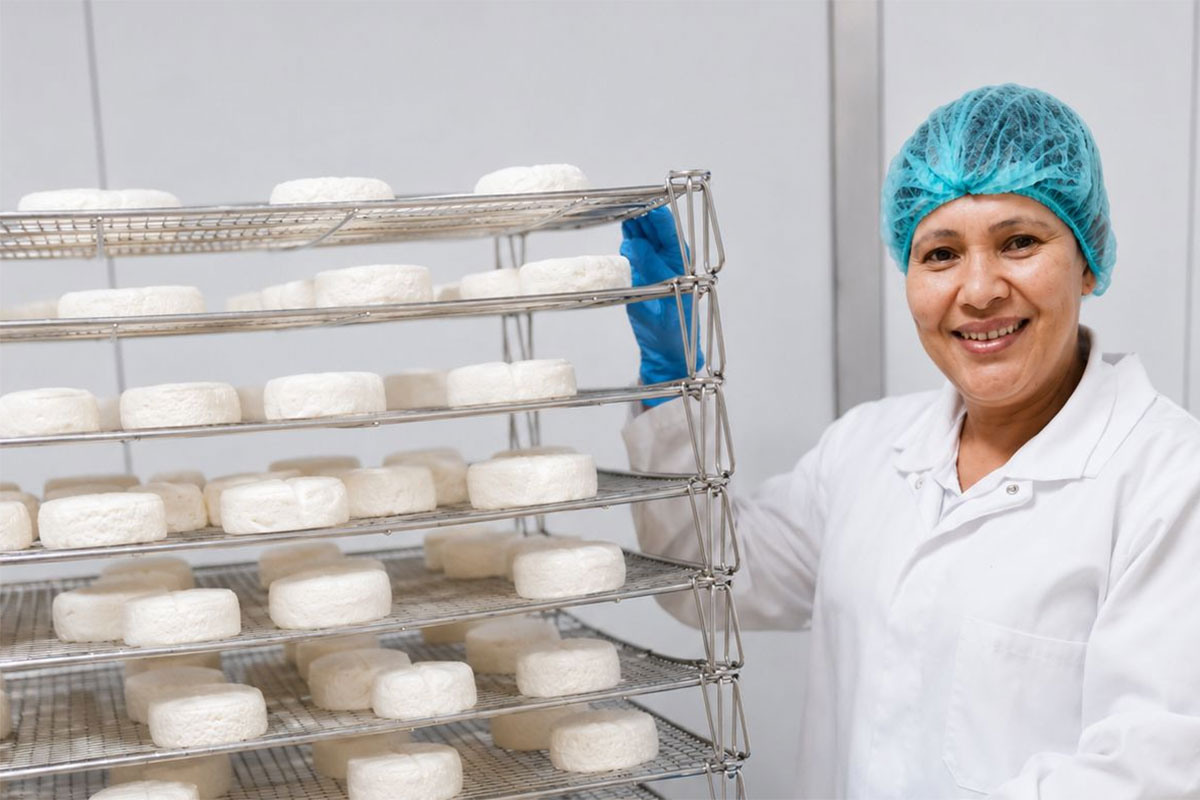
At production level, Kay-Marie Swart, a cheesemaker at Stonehouse Cheese Estate, illustrates the growing role of women in value-added dairy production. Her career began with on-farm work, and she now leads the farm-to-cheese operation, overseeing everything from milk production to maturation.
Her work highlights the link between farming practices and final product quality, with cheesemaking requiring both technical precision and experience.
“The science is what keeps you from messing up, and the art is what makes the cheese good,” Swart added.
Gaps in support remain for women in dairy
Swart noted that women are becoming increasingly active in artisanal dairy production, particularly in specialised areas such as microbiology and product development.
“There has been a real shift over the last 10 to 15 years,” she said, adding that more women are entering and leading the industry.
Across the dairy value chain, commercial and small-scale producers point to the need for stronger support structures to enable women to grow and scale dairy businesses.
Fraser-Jones said access to resources remains a key limitation.
“More accessible support structures for women in agriculture and dairy are essential, particularly in mentorship, funding, training, and market access.”
She added that many women in the industry are balancing multiple roles at once.
“Many women are managing everything from production and operations to business management and family responsibilities,” she noted.
McDougall confirmed that at farm level, women are often deeply involved in the day-to-day running of operations, from livestock care to administration and workforce management, adding, however, that “they are not always equally represented in ownership structures or strategic decision-making roles”.
She pointed out that over the next five years, the South African dairy industry, together with government and other role players, needs to focus on creating clearer development pathways for women in dairy.
“There is still work to be done to ensure women have greater access to opportunities that allow them to grow from operational roles into leadership and ownership positions,” McDougall advised.