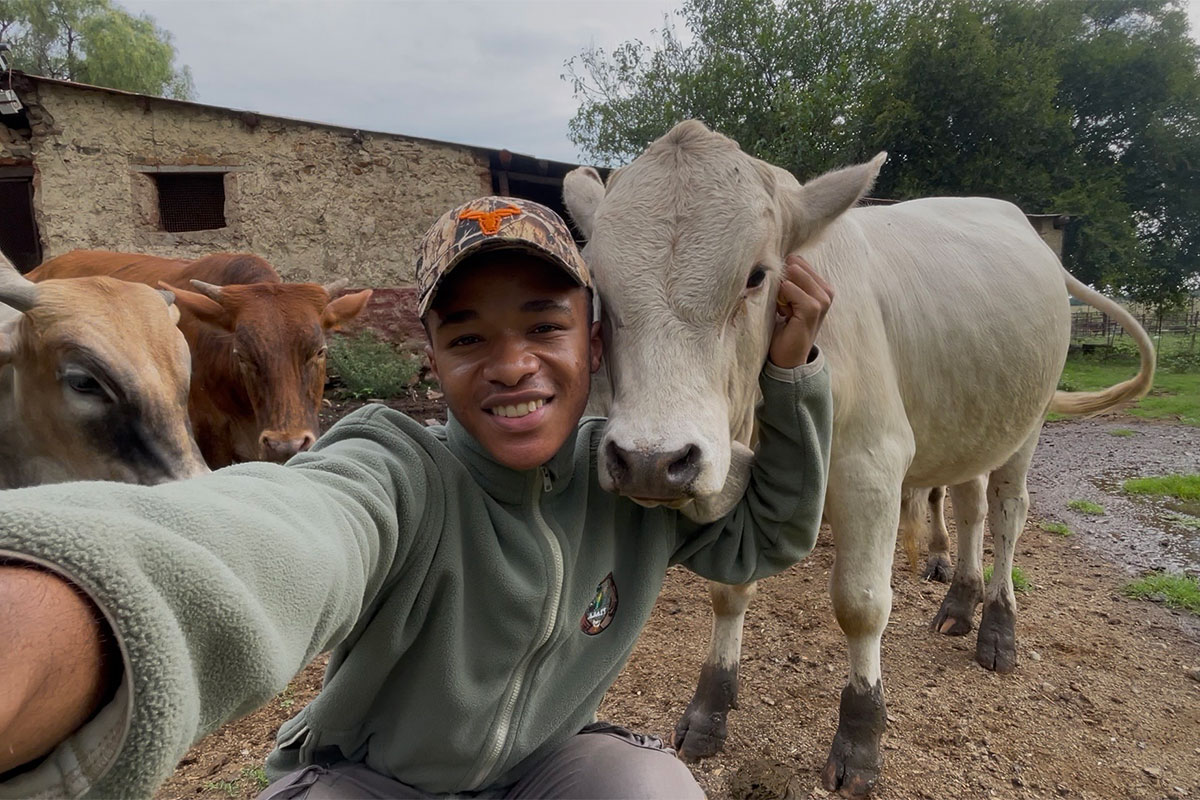
A graduate of the Elsenburg Agricultural Training Institute in the Western Cape, Tsotetsi represents a new generation of agricultural professionals who are as comfortable in the cattle kraal as they are in the world of branding and digital storytelling.
His journey into agriculture began not in a lecture hall, but in the fields of Sasolburg, Free State.
“My journey into agriculture began in Grade 11 when my Life Sciences teacher encouraged me to consider it as a career path. At the time, I was uncertain about what I wanted to pursue, but the suggestion made sense because of my background.
“In 2010, my father bought a farm in the Free State, and although it was not a commercial operation, it became a place where I spent a lot of time, especially on weekends. I was drawn to the calmness of the environment, but also to the curiosity it sparked in me,” he tells Farmer’s Weekly.
“I enjoyed observing different cattle breeds, comparing bulls, and trying to understand the differences in structure and performance. I was also interested in the science behind soil types and livestock systems. Over time, that curiosity turned into a clear passion for livestock farming, and I knew I wanted to build a career and a name for myself in agriculture.”
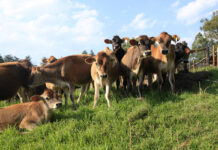
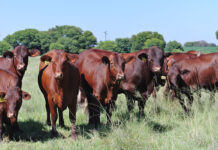
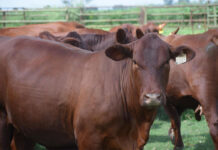
Boran cattle
Tsotetsi’s early curiosity would later sharpen into a specific passion for cattle genetics and, more recently, Boran cattle.
“My interest in cattle genetics, particularly Boran cattle, started in 2022 when my father bought a purebred Boran bull while I was in matric. The bull stood out because of its calm temperament, strong structure, and overall balance. It made handling easier and strengthened my connection with the animal, which made me realise the importance of temperament alongside physical traits.”
He says that moment sparked a deeper interest in what defines a superior animal.
“I became interested in breeding a well balanced bull that combines fertility, masculinity, capacity, adaptability, a strong topline, and a calm temperament. This curiosity led me into cattle genetics.
“My interest was further strengthened at Elsenburg, where I completed both theoretical and practical training in artificial insemination and became a certified cattle artificial inseminator, gaining a deeper understanding of how genetics can be applied to improve herd quality,” he says.
A turning point
For Tsotetsi, the Elsenburg Agricultural Training Institute was not just an academic institution, but a turning point in how he views farming.
“My experience at Elsenburg played a significant role in shaping my approach to farming. It shifted my mindset from simply being interested
in farming to understanding agriculture as a structured and professional agribusiness. I gained strong technical knowledge in livestock production, dairy systems, and a discipline, accountability, and the importance of data driven decision making.”
He says Elsenburg also pushed him out of his comfort zone and taught him a mindset that he still carries today, that closed mouths don’t get fed.
“I realised that no one is going to create opportunities for you, and that you need to actively put yourself out there, build networks, and seek exposure.”
While his formal training laid the foundation, Tsotetsi’s real-world grounding came from the family farm in the Free State.
“My family farm has been a foundational part of my development. It served as my first practical learning environment and gave me exposure to agriculture before any formal training. Because it was not a large commercial operation, it allowed me the freedom to learn through trial and error. It is where I developed practical skills such as driving a tractor, basic welding, and milking. It also gave me the opportunity to observe livestock closely and understand their behaviour and differences. That environment built my confidence and shaped me into a hands-on learner,” he says.
That hands-on approach was further tested when, still as a second-year student, he made a bold personal investment.
“While working as a social media manager in my second year of college, I made the decision to buy my own sheep. The motivation behind this was to create something tangible from the money I was earning and to take ownership of my journey. As a student, it is easy to spend money without direction, but I wanted to invest in something that could grow and represent the beginning of my farming journey.
“That experience taught me financial discipline, patience, and responsibility. I learned how quickly money can be spent if it is not managed properly and how important it is to reinvest in your vision. It also showed me that starting small is not a limitation, but a necessary step in building something meaningful,” says Tsotetsi.
Beyond livestock production, Tsotetsi is also positioning himself at the intersection of agriculture, media and branding.
“My background in media and marketing has influenced my approach by helping me see agriculture beyond production. It has given me an understanding of branding, storytelling, and positioning. I approach farming with an awareness of how products, livestock, and even a farm itself can be presented and marketed. It also helps me understand the importance of visibility and networking, as opportunities often come from how you position yourself and engage with others,” he explains.
Building a brand
This, he says, led to the development of Kin and Kraal, an agricultural lifestyle brand that reflects both his identity and aspiration.
“Kin and Kraal is an agricultural lifestyle brand that I am currently developing, starting with clothing that combines durability and functionality with a clean, modern style. It
is designed for farmers, agricultural students, and individuals connected to the land, while still being wearable in everyday environments. The name represents both community and farming heritage, which are central to the identity of the brand.”
He says his long-term vision is to expand Kin and Kraal beyond clothing into a broader agricultural brand that includes products and services such as consulting and extension support.
“I previously served in structures such as the Association of Students of Agricultural Training Institutes, where I was the public relations officer for the Student Representative Council, which strengthened my interest in youth development and leadership. This ties into my vision of establishing the Kin and Kraal Foundation, which will focus on supporting young agricultural graduates who struggle to find employment by helping them gain direction and opportunities. The broader goal is to make agriculture more modern, relatable, and aspirational for young people,” he says.
Learning from challenges
However, Tsotetsi is not unfamiliar with the challenges facing young people into agriculture.
“One of the main challenges I have faced as a young person in agriculture is gaining access to opportunities and building credibility in an industry that values experience. It can be difficult to be taken seriously when you are still early in your career.
“There is also the challenge of navigating an industry that is highly network driven. I have navigated these challenges by focusing on continuous learning, gaining practical experience, and actively putting myself in spaces where I can grow. I have learned the importance of building relationships and positioning myself, because many opportunities come through networks,” he says.
Long-term goals
Looking to the future, his goal is both production-driven and people-focused.
“My long-term vision is to build a strong livestock farming operation with a focus on cattle genetics and breeding. I aim to produce high quality animals and eventually expand into larger scale systems such as feedlots.”
Tsotetsi says alongside production, he wants to grow Kin and Kraal into a recognised agricultural brand that represents identity, pride, and opportunity.
“I also plan to expand into consulting and extension services and contribute to the development of other farmers. A key part of my vision is to create opportunities for young people in agriculture through mentorship, support, and access to resources,” says Tsotetsi.
For him, the future of agriculture depends on how well the sector attracts the youth. “I believe young people can be better attracted to agriculture by making the industry more visible, relatable, and aspirational.
“Agriculture needs to be presented as a space where young people can build careers, businesses, and identities. Practical exposure is important because it builds confidence and interest. Retention comes from creating clear pathways for growth, from learning to ownership, and from providing support systems such as mentorship, training, and access to opportunities.
“When young people can see a future for themselves in agriculture and feel a sense of pride in it, they are more likely to stay and contribute,” he says.
This is part of our 30 Under 30 segment.