Speaking to Farmer’s Weekly at Nampo Harvest Day 2026, Van der Westhuizen said many producers are facing difficult decisions after a challenging production season, but he warned that postponing investment in technology for too long could hurt margins even further.
“Modern precision technology has become essential for improving operational efficiency and controlling costs in a low-margin environment. Machine data allow farmers to monitor fuel consumption, operator performance, machine stress levels, and spraying accuracy, while also identifying maintenance issues before costly breakdowns occur,” he explained.
“Within the low-margin environment, and with all the uncertainty regarding input prices, the more information farmers have, the better the decisions they can make.”
Van der Westhuizen added that technology is increasingly helping farmers improve input efficiencies by reducing spray overlaps and providing more accurate application data for planning and budgeting.
At the same time, he cautioned farmers against overcapitalising by buying machinery that exceeds the actual requirements of their farming operations. He explained that producers often make purchasing decisions based on what neighbouring farmers are using rather than analysing their own utilisation needs.
Oversized machinery often results in poor utilisation rates, unnecessary fuel consumption, and higher operating costs, all of which place additional pressure on already constrained cash flow.
Van der Westhuizen encouraged farmers to work closely with dealers and technology specialists when making mechanisation decisions. By analysing historical machine data and operational requirements, farmers can determine whether equipment is being fully utilised and what specifications are best suited to their businesses.
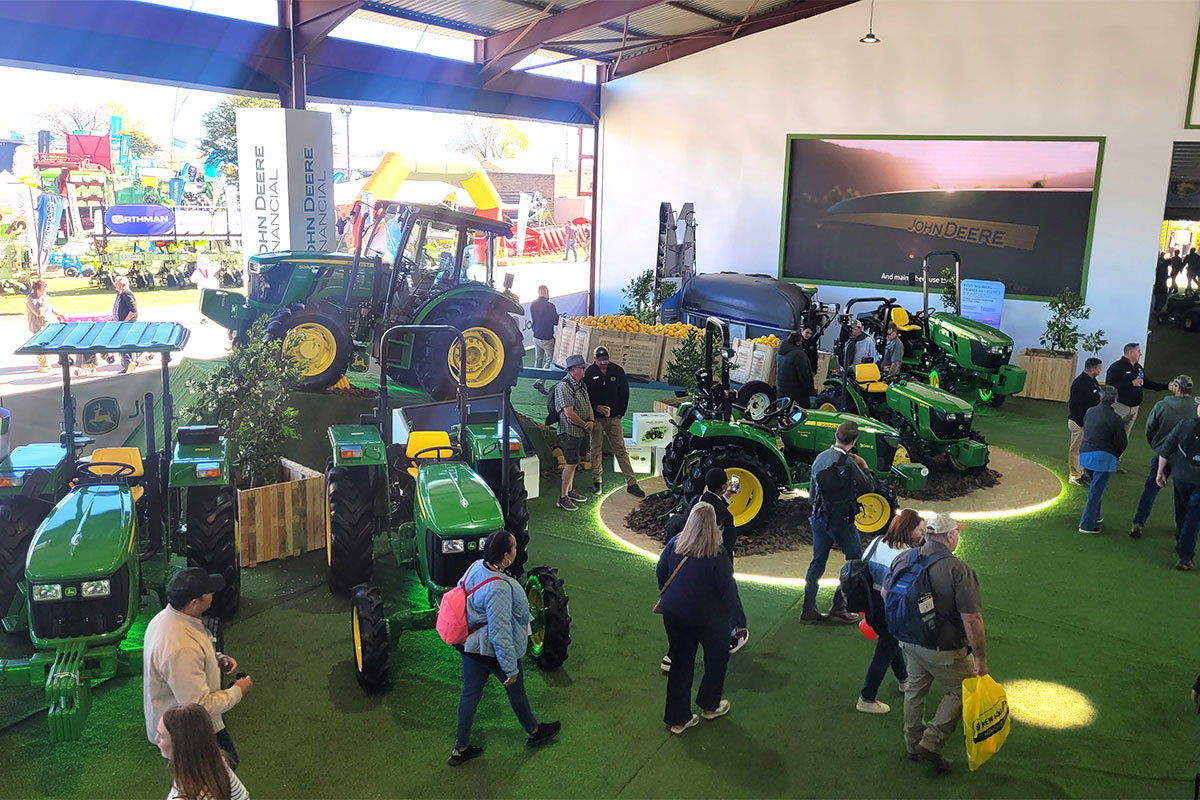
He added that financing models also need to be adapted to the realities farmers are facing. He said John Deere Financial offers more flexible repayment structures aimed at easing short-term cash flow pressure. These include options that allow farmers to purchase equipment now and only begin repayments in 2028, as well as five-year repayment plans that only require four instalments, giving farmers flexibility during difficult seasons.