
Aquagel made history when it became the first and only company to present a combination of biochar and micronised volcanic rock as a solution to climate change at a carbon sequestration conference held at Oxford University in 2024.
Clayton Postma, managing director of Aquagel, recalls that there were hundreds of solutions focusing on either biochar or volcanic rock to capture carbon, but only Aquagel and one PhD holder were exploring the combination of the two.
Compared to the student, Aquagel was at least six months ahead in terms of results, product development, and a market-ready patented product.
“By combining the two, Aquagel aimed to extend carbon storage in soils. Biochar can lock away carbon for more than a century, while volcanic rock weathering has the potential to store it for millennia. We also sought to amplify the individual agronomic benefits associated with each of these,” says Postma.
He adds that what makes the solution “really special” is that it was conceived and developed right here in South Africa.
Individual benefits
To understand how the combination may work in practice, it is useful to consider the individual characteristics of its components.
Biochar has long been recognised for its ability to improve soil structure and water retention, particularly in sandy soils.
While it contains no nutrients itself, its high surface area improves cation exchange capacity and enables it to hold onto essential nutrients such as nitrogen, phosphorus, and potassium, reducing leaching and improving fertiliser use efficiency.
Biochar also provides a protected habitat for beneficial soil organisms, enhancing biodiversity and accelerating the breakdown of organic matter.
Micronised volcanic rock, meanwhile, is rich in minerals such as silica, calcium, magnesium, iron, and potassium, which are slowly released into the soil as the particles weather. This gradual nutrient supply can support sturdier plant growth, higher yields, and potentially more nutritious crops.
Silica in particular has also been associated with improved tolerance to pests, disease, frost, and drought.
In addition, volcanic rock may help buffer soil pH and support soil organisms such as earthworms, which play an important role in aeration and nutrient cycling.
The combination
Since relatively little research has been conducted on the combined use of biochar and micronised volcanic rock, experiences to date have largely been observational rather than supported by extensive peer-reviewed scientific studies.
In this respect, the approach shares similarities with regenerative and biodynamic farming systems, where practical field observations and soil health principles often precede formal scientific validation.
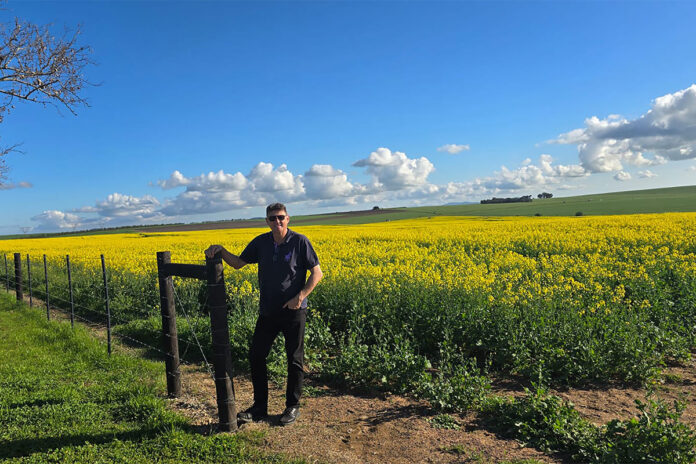
Postma confirms that the field trials at Tygerhoek Research Farm near Riviersonderend, on which Farmer’s Weekly reported in 2024, have continued to show promising results.
Treatments in which 20% and 30% of fertiliser (a mixture of 10kg nitrogen, 12kg phosphate, 6kg potassium, and 6kg sulphur) was replaced with RegenR8, achieved higher yields and better quality than the control for three consecutive years.
In one treatment, no RegenR8 was applied in the third year, yet the plot continued to outperform the control, suggesting a possible (long-term) residual effect. The trial has been small so far, but it will be expanded in the coming season.
Postma adds that a Stellenbosch University student will be conducting a postdoctoral study in 2026/27 on the impact of RegenR8-treated grain on sheep production, although the research still requires approval.

“She wants to look at how the use of RegenR8-treated land could influence feed conversion and livestock growth, and possibly even meat quality, although that could become a separate study,” he says.
Postma notes that several farmers around the Swartland and Southern Cape have also reported positive results, particularly those that felt they had reached a production plateau despite increasing fertiliser use.
“Nine out of the 13 producers who have trialled the product so far have reported positive results.”
He adds that one farmer in the Swartland reportedly made an additional profit of roughly R950/ha more on lands where she used RegenR8 compared with those where she did not.
“I know these are not controlled conditions and there are many variables that could have influenced the outcome, but an additional
R950/ha can make a substantial difference to the financial viability of wheat farming, which is currently under immense pressure,” says Postma.
He adds that the current geopolitical tensions involving Israel and the broader Middle East region are expected to place additional pressure on global fertiliser supply chains, which in turn will contribute to increase fertiliser prices and could also result in potential shortages in international markets.
“Solutions like ours that enhance soil biological activity, improve nutrient availability, and increase nutrient uptake efficiency in plants, will allow farmers to reduce overall fertiliser application rates without sacrificing yields,” he says.
Postma would like to see more farmers who use precision farming techniques put the product on trial and share their production data to get a better picture of how RegenR8 impacts production at farm level.
“There are still many questions that need answering. We know the product works in the field, but we still need to understand exactly how it works, as well as the optimal multi-year dosages and application methods.”
The patented product has been pelletised to make it easier for farmers to apply using familiar equipment. It can either be broadcast on its own, or blended with fertiliser before application.
Experimental science
Aquagel is also exploring more speculative explanations for the product’s performance. Postma believes the paramagnetic properties of the volcanic rock component, together with the microbial effects of the biochar, could influence nutrient dynamics in the soil.
“We are seeing a 34% increase in the uptake of macroelements, such as nitrogen, phosphorus, and potassium, and microelements when adding only 22,5kg of RegenR8/ha.
“This translates into better plant growth, with the plants also being more disease-, drought-, heat- and cold-tolerant,” he says.
In terms of paramagnetism, he explains that RegenR8 contains minerals with unpaired electrons, a property that gives certain volcanic materials weak paramagnetic characteristics.
“Our hypothesis is that these minerals may influence soil processes in subtle ways,” he says. “Some researchers have proposed that paramagnetic materials could interact with natural electromagnetic fields, such as the Schumann resonance, and potentially affect the movement of water and nutrients in soil, although this remains an area of ongoing investigation.”
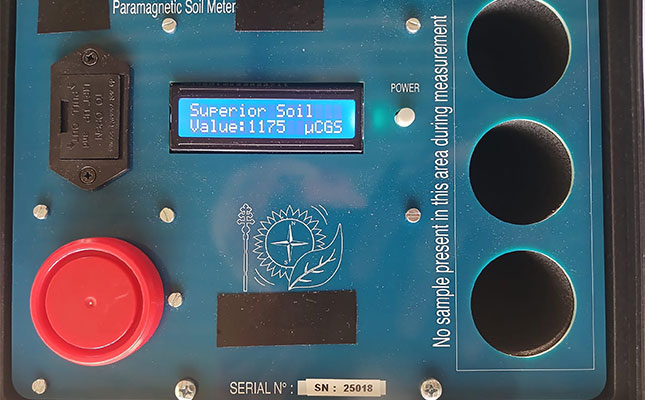
Postma stresses that this remains a working theory: “We have imported specialised equipment from France to measure the paramagnetic characteristics of different soils. In our assessments so far, soils with lower measured paramagnetic readings have tended to show lower biological activity and crop performance than soils with higher readings.”
The science behind paramagnetism and Schumann resonance, however, remains exploratory, and most concrete evidence of RegenR8’s impact comes from field trials and farmer observations.
International recognition
Despite the uncertainty and the questions that remain around the product’s mechanisms, in December 2025 Aquagel secured foreign investment from Germany amounting to several million euros.
“We have used the funding to scale production at our factory in Brakpan, Gauteng, which is strategically close to our raw material sources and end-user markets,” says Postma.
“We now operate a three-storey-high biochar plant that produces 60t/month to 100t/month of activated carbon with zero waste.
“We also filed patents in 19 countries and have access to funding structures and willing partners that could support the duplication of the project in other countries where suitable biomass and rock resources are available.”
Currently, pine wood waste from certified forestry operations is used as feedstock for the biochar.
Postma says the company is also evaluating invasive alien species, such as Prosopis and Port Jackson, as alternative sources.
“I know people say you can make biochar from anything, but we already know that the quality will differ depending on the feedstock used.
“The production process is just as important. If it isn’t properly controlled, you may end up with a material that behaves more like raw charcoal, which can temporarily immobilise nutrients in the soil.”
Agronomic-grade biochar is typically produced at high temperature under carefully controlled, oxygen-limited conditions.
This ensures high carbon stability and low volatile compounds, which significantly reduces the risk of short-term nutrient immobilisation in soils.
The Future
Carbon credits form a central part of the business model.
“We are currently earning about 2,2 carbon credits for every ton of biochar we produce,” he says, adding that these credits are sold to international companies, including the likes of Microsoft and Lufthansa.
“In theory, enhanced weathering from the volcanic rock component should generate significantly more credits, potentially up to 10 times as much, but this is far more complex to measure and verify.”
Postma has also registered a non-profit organisation (NPO), Bread from Stone, through which he hopes to make some of their product available to smallholder and emerging producers.
“We want to use corporate social investment funding in the NPO to supply struggling producers with essential fertiliser. Our product, however, can make a huge difference by unlocking soil nutrients, improving the resilience and nutritional value of crops, and ultimately helping put more bread on the table,” says Postma.
For more information, email Clayton Postma at [email protected].