
Following the gazetting of industrial hemp regulations in 2020, which legalised the controlled production of the crop in Zimbabwe, the Agricultural Marketing Authority (AMA) is shifting the industry focus from potential to measurable, scaled production.
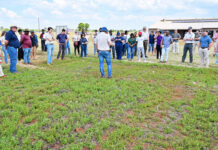
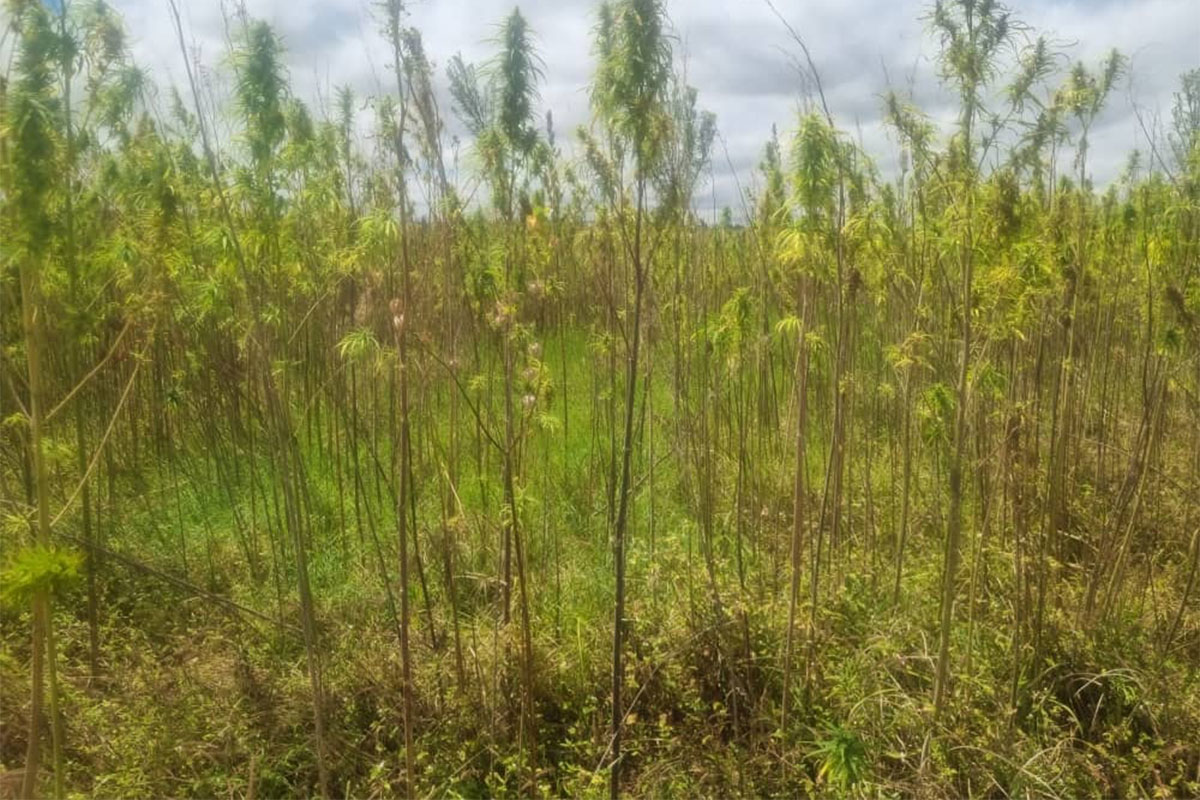
In her speech at an Industrial Hemp Field Day recently hosted by the Zimbabwe Industrial Hemp Trust (ZIHT) at Disi Farm in Mvurwi, AMA CEO Alice Mapfiza said the authority is moving beyond regulation to building markets. The event also showcased a 10ha trial of the Yuma hemp variety grown by the ZIHT.
“We must move from describing industrial hemp as a promising industry to confidently positioning it as a successful one; a benchmark for other agricultural value chains on how coordination, strategic partnerships, and teamwork can drive growth and transformation,” she said.
“[This field day] is not just about showcasing a crop. It is about showcasing a future industry. Hemp is not just a crop; it is an ecosystem of opportunities. From fibre and CBD [cannabidiol] to construction materials, textiles, food products, and carbon markets, hemp offers Zimbabwe a pathway to diversify agriculture, industrialise production, and unlock new value chains.”
Adding value to a bankable crop
Mapfiza said the global industrial hemp industry is on a strong growth trajectory, with the market projected to expand from approximately US$6,2 billion (around R103 billion) to more than US$20 billion (R330 billion) by 2033.
This presents a clear opportunity for Zimbabwe to position itself as a competitive player in the evolving global value chain.
She added that the AMA’s key focus is ensuring the hemp industry develops into a structured market where farmers, processors, and buyers are efficiently connected.
“The greatest opportunity in hemp lies not in exporting raw materials but in value addition. True value will be realised when Zimbabwe processes hemp locally into finished or semi-finished products such as textiles, oils, construction materials, and industrial inputs.”
The AMA is encouraging investment not just in production but also in processing, logistics, and market development.
Mapfiza said the government is committed to growing the industry, but financing remains a major challenge. As a result, the AMA is engaging financial institutions to support the expansion of the hemp value chain.
“We are promoting structured financing mechanisms, including agro-bills, which are based on projected receipts from the industry. These instruments enable farmers to access inputs and working capital while linking production to reliable markets.
“Through continuous engagement with financiers, we are working to ensure that hemp becomes a bankable crop.”
She noted that coordinated models such as contract farming and co-operative systems can make hemp a powerful driver of rural development and employment, provided smallholder farmers, youth, and rural communities are integrated into the hemp value chain.
Mapfiza said the foundation for growing Zimbabwe’s industrial hemp industry has already been laid: “The policy framework is in place, the regulatory system is operational, and the private sector is showing growing interest. The next phase is scaling, coordination, and commercialisation.”
Rethinking hemp
Kumbirai Mateva, head of the Sustainable Agricultural Practices division at Kutsaga Research, told attendees that Zimbabwe is experiencing a shift in mindset when it comes to hemp. It is increasingly seen not as a controversial crop but rather as a strategic one that can support industries beyond the farm, producing fibre, oil, and medicinal compounds, while also fitting into climate-smart agriculture.
He said varieties collected from around the world and tested at Kutsaga underperform in Zimbabwe because they aren’t suited to local climatic conditions.
“We are not operating in the theoretical realm; we are now in a phase where science, policy, and the industry are beginning to align, so we have learnt very quickly that we cannot rely on imported genetics,” he explained.
Mateva said the country is now collecting local landraces to establish its own seed systems, and the programme is at the testing phase.
Speaking to Farmer’s Weekly, Leslie Ngoshi, head of Agronomy & Extension Services at the ZIHT, said farmers countrywide have collectively grown 40ha of the crop, which is expected to reach 100ha by August.
Finding the right hemp for Zimbabwe
At the field day, agronomist Brian Neurashe, head of the Department of Research and Specialist Services in the Ministry of Agriculture, Mechanisation and Water Resources Development, said he helped pioneer industrial hemp cultivation in Zimbabwe.
According to him, he was instrumental in bringing numerous germplasm varieties into the country, more than 20 of which have since undergone trials in collaboration with Kutsaga.
“We have identified only three or four [germplasms] that do well, including Yuma, which is from China. We have been looking at various agronomy parameters, including planting dates, and have concluded that the most ideal planting date for the crop is October to November,” Neurashe said.
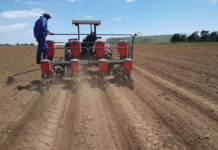
“We have also been looking at seeding rates. We have not done exhaustive research on it, but we are using a rate of 80 seeds per square metre.”
He added that, given the efforts under way, failure is not an option.