

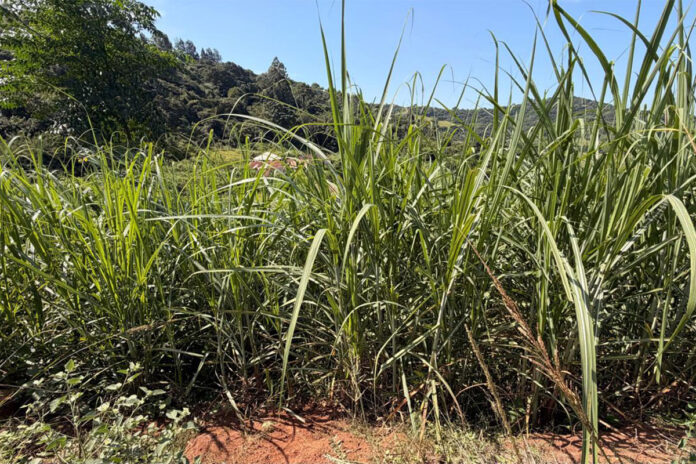
In South Africa’s complex food system, sugar is often discussed in narrow nutritional terms. Yet behind every teaspoon lies a deeply agricultural story, one shaped by cane fields, mill infrastructure, rural livelihoods, and the long-standing tension between public health policy and agricultural sustainability.
Priya Seetal, sugar and health policy manager at the SASA, believes that sugar cannot be separated from the system that produces it.
“I see the plight of our farmers and our millers, and I want to be part of the solution in helping them sustain themselves,” she says.
She adds that South Africa’s sugar industry is one of the country’s most labour-intensive agricultural sectors, with a value chain that stretches from small-scale cane growers to large milling operations. It is also one of the most policy-sensitive, particularly following the introduction of the Health Promotion Levy, commonly referred to as the sugar tax.
From a public health perspective, Seetal acknowledges the legitimacy of concerns around non-communicable diseases.
“Obesity is a major problem in South Africa because it is a risk factor for diseases like heart disease, diabetes, and cancer. It also leads to a great cost to government and affects quality of life,” she says.
However, she argues that the policy response has placed disproportionate pressure on a single commodity within a much broader dietary and socio-economic system and, by extension, on agricultural producers.
“The sugar tax is a blunt instrument. It hasn’t been shown to work anywhere else in the world, and it was a knee-jerk reaction to what was happening in South Africa,” she says.
Within the agricultural economy, the impact has been immediate and structural. The beverages sector reformulated away from sugar to avoid the devastating tax, thus leading to a multi-billion-rand revenue loss for the industry since the introduction of the Health Promotion Levy in April 2018. Furthermore, the sugar tax ramifications include substantial job losses and the permanent closure of two sugar mills in KwaZulu-Natal.
While Seetal avoids reducing the debate to a binary of health versus industry, she is clear that the ripple effects extend far beyond nutrition labels.
“Immediately following implementation, the impact on the sugar industry has been significant,” she says.
Beyond a single crop
Seetal says that sugar cannot be isolated from the broader agricultural and food system in which it operates.
In nutrition discourse, sugar is often treated as a leading risk factor. But in agricultural terms, it is also a functional crop input and processing ingredient with multiple roles across food manufacturing.
“Sugar is often cited as a scapegoat. If someone has high blood sugar, the first question is often, ‘How much sugar did you eat?’ But health outcomes cannot be reduced to a single ingredient,” she says.
From a food science perspective, Seetal says sugar’s functional roles go beyond sweetness, including fermentation support in baking, where it activates yeast, and preservation in products such as jams and marmalades, where it reduces water activity and extends shelf life.
These functions matter in a country where food security, affordability, and waste reduction remain critical policy priorities. In agricultural terms, they also influence product formulation decisions made by processors, which in turn affect demand for raw agricultural inputs like sugar cane.
The agricultural reality behind nutrition policy
The tension between agricultural production and nutritional policy is not unique to South Africa, but it is particularly pronounced in a country where sugar cane remains a major commercial crop supporting thousands of jobs.
Seetal says that dietary debates often overlook this production layer.
“Sugar should not be seen in isolation. It should be considered as part of a balanced diet and within the broader food system,” she says.
That system includes farmers managing climate variability, mills navigating input costs and logistics, and rural communities dependent on agricultural value chains for economic stability. For Seetal, the challenge is not to dismiss public health concerns but to ensure that policy instruments account for agricultural complexity.
Affordability over nutrition in low-income food systems
When asked whether the sugar tax has influenced consumer behaviour, particularly in lower- income households, Seetal points first to the dominant force shaping food decisions in South Africa: price.
“Affordability is a major issue in South Africa. People are now looking at prices more than the nutritional value of foods when they are picking foods off the shelf,” she says.
In practice, she explains, purchasing decisions are driven by immediate energy needs rather than dietary optimisation.
“People are looking for something that’s going to fill them up quickly and take them out of the hunger that they are feeling. Affordability is probably about 99% of the reason why people are buying the foods that they are buying,” she says.
Has the sugar tax changed consumption?
While Seetal acknowledges that sugar consumption figures have declined since the introduction of the Health Promotion Levy, she argues that the reduction is largely structural rather than behavioural.
“There is research to show that there has been a drop in sugar consumption, but the main reason is that beverage companies reduced the amount of sugar in their products and replaced it with artificial sweeteners,” she says.
In other words, the reduction reflects reformulation within the agro-processing sector rather than a fundamental shift in consumer behaviour, a distinction that is critical in agricultural economics, where demand signals directly influence upstream production.

From a food system perspective, this means sugar input reduction is occurring at the manufacturing level, not necessarily at the household consumption level.
“The sugar is taken out, but the taste is maintained, so sugar consumption has dropped because there is less sugar in beverages,” she says.
However, she adds that the broader public health outcomes that informed the policy remain unresolved. “In many places where similar taxes have been implemented, there has been no impact on diabetes and obesity rates,” says Seetal.
The agricultural value chain impact
South Africa’s sugar industry contributes an estimated 6% of national agricultural output, positioning it as a significant component of the country’s rural economy. But Seetal highlights that the effects of the sugar tax extend well beyond beverage manufacturing.
Since the levy’s introduction in 2018, she says the industry has experienced a substantial contraction in demand.
“We saw a drop in demand for sugar of about 250 000t, which equates to about R1,2 billion in lost revenue for the sugar industry,” she says.
That decline has had cascading effects across the value chain, from cane growers to milling operations, transport logistics, and rural employment networks.
A socio-economic impact assessment conducted through the National Economic Development and Labour Council, South Africa’s statutory apex body for social dialogue established in 1994 to bring together government, labour, business, and community organisations, estimated in 2021 that approximately 10 000 jobs were lost due to the sector’s contraction alongside the closure of two sugar mills.
From an agricultural geography perspective, mill closures are particularly significant because sugar mills function as economic anchor institutions in rural cane-growing regions. Their removal disrupts not only employment but also service delivery ecosystems, local procurement networks, and municipal revenue bases.
“In some cases, these towns have become ghost towns. You start seeing breakdowns in electricity, water, and basic services,” she says.
Rural economies and the cost of policy design
For Seetal, the sugar tax debate highlights a recurring tension in agricultural policy design: the gap between public health objectives and rural economic realities.
“When you introduce a blunt instrument like this, the ramifications in rural communities are severe,” she says.
The closure of processing infrastructure, she argues, illustrates how fiscal measures aimed at consumer behaviour can transmit shockwaves backwards through agricultural production systems.
In sugar cane-dependent regions, where agriculture is often the primary employer, reduced milling demand translates directly into reduced sugar cane uptake, lower farm gate prices, and constrained reinvestment in production systems.
The result is a tightening of rural economic activity at precisely the point where agricultural development is most needed.
Sweeteners and the shifting food chemistry of agriculture
As sugar demand patterns change, the food industry has increasingly turned to non-nutritive sweeteners, a shift that also carries agricultural implications, particularly in processed food manufacturing.
Seetal cautions against viewing these alternatives as inherently problematic or beneficial. “They shouldn’t be demonised, but they also shouldn’t be consumed in excess,” she says.
She says that while global scientific consensus generally considers approved non-nutritive sweeteners safe, emerging research, including recent reviews by the World Health Organisation, has questioned their long-term effectiveness in weight management and potential risks associated with high consumption, particularly in vulnerable groups.
Misconceptions in the sugar debate
Much of the public discourse around sugar, Seetal says, is shaped by a fundamental misconception: that sugar directly causes diabetes.
“That is the biggest misconception; there is no scientific evidence that sugar eating causes diabetes,” she says.
Instead, she points to a combination of genetic, physiological, and lifestyle factors, including abdominal obesity, physical inactivity, and family history, as primary risk drivers for type 2 diabetes.
She adds that even individuals with low sugar intake can develop the condition under the right risk profile.
In her own case, she says, diagnosis came after weight gain rather than dietary sugar intake.
“I’ve never had a sweet tooth, but I developed diabetes after gaining weight,” she says.
Another common misconception, she adds, is that individuals with diabetes must eliminate sugar entirely.
“That is not true; sugar can be consumed in moderation. The issue is excess and overall dietary balance,” she says.