
The GS Challenge was once the ultimate adventure motorcycling event, separating those who could from those who merely aspired to be dirt-road warriors, but unfortunately, over the years it suffered a slow decline.
Farmer’s Weekly spoke to two stalwarts of the adventure-riding fraternity, Jan du Toit and Stefan Boshoff, who are reviving this iconic event in 2026.
“We want the GS Challenge to recapture the spirit that originally defined the event. We want it to be an occasion for people who love riding their motorcycles, making like-minded friends and embracing the adventure,” says Du Toit.
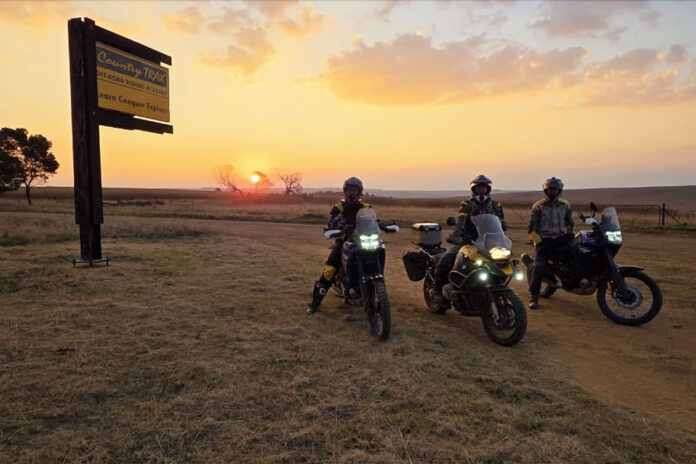
The event will take place at the Country Trax off-road training facility near Amersfoort in Mpumalanga from 24 to 27 September 2026.
Participants will be able to choose between two routes on the first day. The more demanding option will cover 320km, while the less challenging route will span 240km. On the second day, riders will complete a route of 180km.
The shorter route on day one will allow riders sufficient time to stop in the village of Lothair, home to Randell’s Ranch Museum, which houses one of the country’s largest collections of vintage tractors.
The route has been designed to provide ample opportunity for participants to explore the museum.
Grades of difficulty
The longer route will take riders through the Chrissiesmeer region, an area steeped in history and renowned for its ancient San rock art, Anglo-Boer War sites and well-preserved 19th-century sandstone buildings.
Route difficulty was previously indicated by colour-coded categories, but this eventually became confusing for riders.
“We therefore decided to simplify matters and offer only two options,” says Du Toit.
Aware that some riders may be concerned about route difficulty, Du Toit explains his unique classification system for the two options, emphasising that the Challenge is not reserved solely for highly skilled riders.
“There are two classifications that explain the route difficulty – the 70/55 route and the 28/36 route.
“On the 70/55 route, a 70-year-old man and a 55-year-old woman, who had only started riding three years earlier, were both comfortable. And I must add that she is not particularly tall, in fact, she is rather short,” he explains.
The 28/36 route, meanwhile, satisfied the appetite for adventure of two very fit nephews, aged 28 and 36 respectively, who tackled the route with plenty of enthusiasm on their adventure motorcycles.

History of the GS Challenge
We asked co-organiser Boshoff to provide some insight into the history of the GS Challenge.
“Back in the late 1980s and early 1990s, BMW had very little presence in the local motorcycling scene. Adventure riding was dominated by XT- and XR-type motorcycles, while rallies were reserved for the fast and fearless,” he says.
XT- and XR-type motorcycles refer to two legendary families of single-cylinder dual-sport and trail bikes manufactured by Yamaha (XT) and Honda (XR).
Historically, both played a significant role in defining the ‘thumper’ market, characterised by large single-cylinder four-stroke engines.
While the Yamaha XT focused more on dual-sport commuting and gravel road travel, the Honda XR was optimised for demanding off-road trail riding.
BMW changed the landscape with the introduction of the R80 GS. Modified versions began winning the Dakar Rally, and riders started taking notice.
In the early 2000s, South Africans Deon Meyer, co-author of Dirt Busters (Ridders van die Grondpad), Pieter de Waal, former head of BMW Motorrad USA, and Du Toit, owner of the Country Trax Off-Road Riding Academy, began exploring ways to introduce riders to something bigger than simply the motorcycles themselves.
“They coined the phrase: ‘We don’t sell a bike, we sell a lifestyle.’ And they meant it,” says Boshoff.
To put those words into practice, the Great African GS Challenge was launched in 2004.
Unforgettable weekend
The concept was straightforward: bring together 100 riders, create an unforgettable weekend, and build a community around a shared passion for motorcycles, adventure and friendship.
“It was never really about winning anything. It was about meeting new people, admiring new motorcycles, enjoying memorable rides, sharing stories around the campfire, and leaving with a sense of belonging unmatched in the motorcycling world,” adds Boshoff.
The success was immediate. The GS Challenge, GS Eco, and later the GS Trophy quickly became annual highlights, selling out in record time.
Towns such as Loxton, Moolmanshoek, Gariep, Nieuwoudtville, Leydsdorp, Bloemfontein, Clocolan, Montagu and Badplaas all experienced the impact of hundreds of GS riders arriving in search of fuel, accommodation, and ‘just one more cold drink’, and soon the rest of the world started taking notice as well.
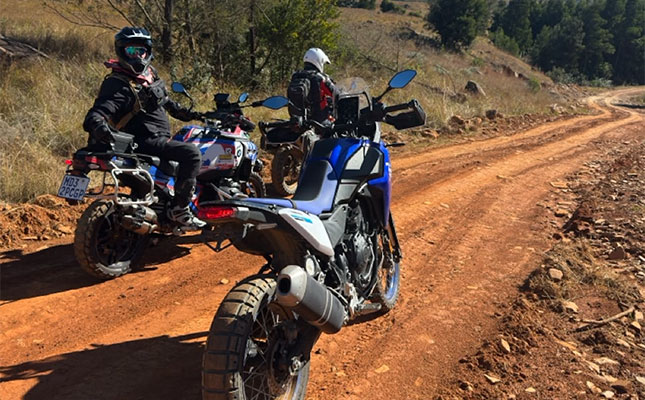
What began as a uniquely South African concept ultimately inspired the creation of the International GS Trophy, a competition that South Africa dominated for more than a decade. The event grew into the largest gathering of GS motorcycles anywhere in the world, creating friendships, adventures, and memories that are still discussed around campfires and coffee stops today.
For years, no other brand came close to matching the scale, enthusiasm and sense of community that emerged from these events. Then, just as enthusiasts believed the GS gatherings would continue indefinitely, they came to an end.
Everyone witnessed the gradual decline that followed, driven by changing priorities, economic realities, and social pressures. South African riders missed the events, but more importantly, they missed the people.
They also had to accept that they would no longer have a place in the International GS Trophy.
“But here’s the thing. The community never disappeared, the friendships remained. The passion remained. The stories certainly remained, and seemed to improve with every retelling,” Boshoff relates.
Community passion
Eventually, the community concluded that something this special was simply too valuable to fade away. That is what the 2026 Great African GS Challenge is all about: a return to the roots established in 2004.
“This year there will be no shift in focus and no external interference, just riders creating the kind of event that they actually want. It is about spending quality time with old friends and making new ones.
“It is about riding remarkable roads through spectacular scenery. It is about sharing experiences with people who understand exactly why a motorcycle parked next to a tent can feel like happiness,” says Boshoff.
The organisers have made participation straightforward. When entering, riders can choose between tent or chalet accommodation, and whether to ride to the event or transport their motorcycles by trailer.
Participants are welcome to arrive on a GS, KTM, Honda, Harley-Davidson or any other roadworthy motorcycle with a valid licence disc and a sense of adventure. The motorcycle is simply the ticket to entry.
“Our goal is to create the environment. The community will do the rest,” says Boshoff.
Come and experience this memorable event at the Country Trax Academy in Amersfoort, and rediscover what made the original gatherings legendary.
One may also find themselves potentially reconnecting with old friends, as well as making new ones.
Most importantly, remind yourself why adventure riding captured your imagination in the first place.
“The Great African GS Challenge is back. And this time, it belongs to the community.
“Book now. The stories won’t tell themselves,” concludes Boshoff.