
For decades, success in cattle farming was often associated with bigger-framed animals, maximum output and intensive supplementation. The assumption was straightforward: more kilograms meant more profit. But that thinking is beginning to shift.
Across many of South Africa’s beef-producing regions, rising feed costs, recurring drought cycles, pressure on grazing resources and tighter margins are forcing producers to reassess the economics of cattle farming. Increasingly, the focus is moving from output alone to profitability per hectare, reproductive efficiency, and resilience under difficult conditions.
In this environment, the Boran breed is gaining traction. Not simply because of the multimillion-rand prices achieved in elite auction rings, but because it is reshaping how many producers think about profitable beef production under African conditions.
While elite genetics have generated headlines, breeders argue that the breed’s greatest economic strength lies elsewhere. It is its ability to remain productive, fertile and efficient under extensive systems where input costs and environmental pressure can quickly erode margins.
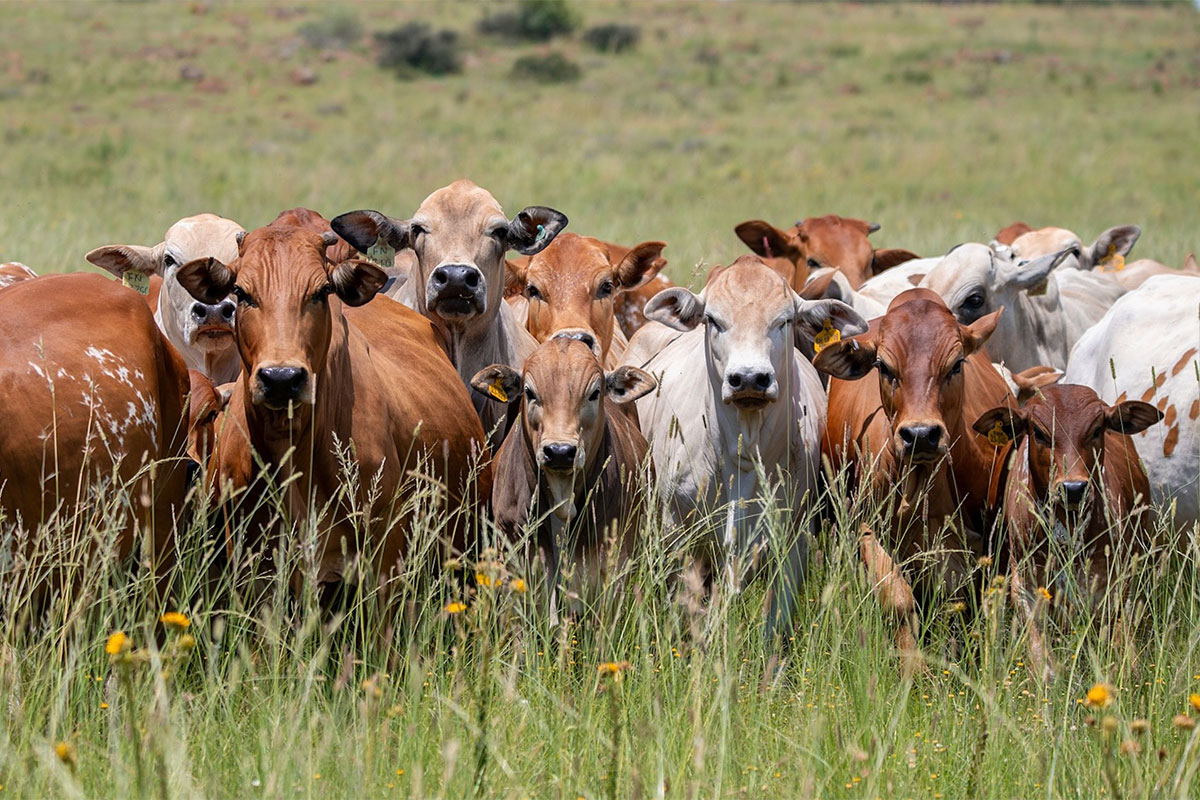
Having evolved under African conditions over more than a thousand years, the Boran is increasingly being recognised as a breed suited to modern regenerative, grass-fed and lower-input farming systems, where profitability depends less on feeding animals through difficult seasons and more on consistent performance off veld.
Breed aligned with changing production realities
The Boran’s growing popularity reflects broader changes taking place within the livestock industry.
Where producers once prioritised frame size and growth rates above all else, there is now greater emphasis on traits that directly influence long-term profitability – fertility, longevity, adaptability and maintenance costs.
Originally developed under harsh East African conditions, the Boran has proven well suited to South Africa’s extensive grazing systems, particularly in areas characterised by variable rainfall, heat stress and lower-quality veld.

For many producers, the appeal of the breed begins with economics rather than aesthetics. A productive cow is ultimately measured by whether she calves consistently, rears a healthy calf and maintains body condition without excessive supplementation. Breeders argue that this is where the Boran distinguishes itself.
According to industry information, the breed’s economic strengths include: high fertility, strong maternal ability, tick and parasite resistance, efficient veld utilisation, early maturity and longevity, and lower maintenance requirements.
These characteristics translate into fewer interventions, reduced feed costs and more reliable herd performance under extensive conditions.
“The Boran can produce high-quality beef with relatively low input costs, even under difficult and challenging conditions,” Gerrit Potgieter, president of the Boran Society of South Africa, told Farmer’s Weekly.
Why fertility matters more than size
For many Boran breeders, fertility remains the single most important driver of profitability. A cow that calves every year and successfully rears a calf contributes more to herd profitability than an animal requiring repeated supplementation or management interventions.
This is particularly important during drought years, when poor fertility can quickly reduce income while increasing costs.
The Boran cow is recognised for strong maternal performance, with breeders highlighting good udder structure, milk production, and protective mothering behaviour as key advantages. Smaller calf size at birth also contributes to ease of calving and fewer calving-related losses, reducing labour requirements and veterinary intervention.
Under veld conditions, calves commonly wean at around 50% – and often more – of the dam’s body weight, a figure frequently cited by breeders as an indicator of production efficiency.
In practical terms, this means producers are able to market strong calves while maintaining cow condition under extensive systems.
For commercial farmers working with fluctuating rainfall and grazing pressure, this consistency often matters more than headline production figures.
Lower input costs improve margins
The Boran’s ability to maintain condition under challenging environments has become increasingly important as feed costs continue to rise.
Rather than depending heavily on supplementation, the breed is recognised for its ability to utilise natural veld efficiently while maintaining reproductive performance.
This contributes to lower operating costs through: reduced supplementary feeding, lower dipping and veterinary costs, better utilisation of grazing resources, reduced management pressure, and longer productive lifespan of breeding animals.
Resistance to ticks and parasites also reduces dependence on chemical interventions, an advantage for producers seeking to contain input costs or operate under regenerative grazing systems.
The breed’s grazing and browsing ability allows producers to make use of a wider range of veld conditions, improving carrying efficiency in extensive operations.
For many farmers, profitability increasingly depends on controlling expenditure rather than chasing maximum output. That shift has strengthened interest in cattle capable of performing under pressure rather than only under ideal conditions.
Remaining in the value chain improves resilience
Potgieter says profitability increasingly depends on how long producers remain part of the value chain.
“There is a common perception that feedlot involvement is essential for sustainability, but this is another perception that needs to change. Boran farmers can improve net profitability by growing out bull calves on the veld before finishing them in a feedlot. However, the longer-term objective should be to finish and slaughter their own bull calves.”
According to Potgieter, producers who remain involved beyond the weaner phase are often better positioned to absorb fluctuations in market and production conditions because they retain a greater share of value within the chain.
“By staying involved in the value chain, farmers increase the resilience of their cattle enterprises to fluctuating market and production conditions,” he says.
Industry figures indicate that the top 10% of producers generate close to R1 000 more profit per large stock unit (450kg) than the average producer because they remain involved in the value chain for longer.
Climate pressure changes buying decisions
Demand for Boran cattle has strengthened in many drought-prone regions of the country, including Limpopo, North West, the Northern Cape, Free State and parts of the Eastern Cape. Here, climate variability has forced producers to think differently about herd composition and risk.
Rather than prioritising maximum growth alone, producers are increasingly seeking cattle capable of maintaining fertility and body condition during difficult seasons.
“There has been a noticeable shift towards buyers prioritising fertility, adaptability and lower-input production,” says Potgieter.
Elite auction prices only part of the story
The Boran has also attracted attention for exceptional prices achieved within the elite stud market. Auction performance over the past three years illustrates sustained demand for premium genetics, particularly among breeders focused on improving herd quality.
The market has increasingly separated into two distinct segments: commercial production animals and elite genetic animals. Commercial bulls generally sell between R50 000 and R170 000, while elite stud bulls regularly achieve between R250 000 and R800 000. Exceptional genetics have exceeded R1 million.
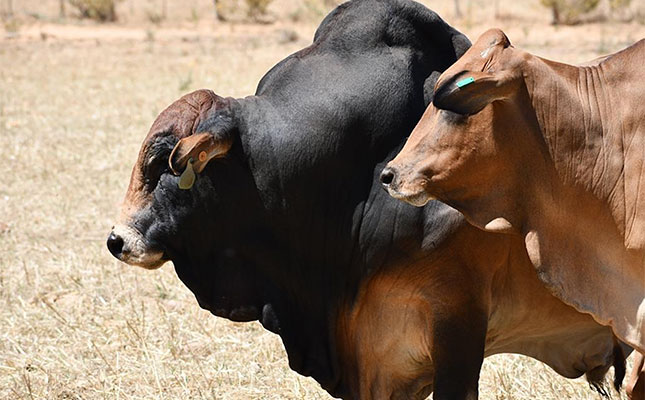
Some of the most notable sales include: R8 million for a bull in 2024, R3,5 million for a bull in 2023, and R2 million for a bull in 2025. Strong demand has also been recorded in female categories. In 2024, a pregnant heifer sold for R2,11 million, while a cow-and-calf package achieved R2,2 million. These prices position elite Boran genetics among the most valuable cattle in South Africa’s stud industry.
However, breeders caution against confusing elite auction prices with everyday profitability. Commercial Boran cattle have remained relatively stable and accessible, with returns more closely linked to reproductive efficiency, calf survival and lower production costs than headline sale figures.
Crossbreeding strengthens commercial value
The Boran’s influence extends beyond purebred herds. Increasingly, commercial producers are using Boran genetics in crossbreeding systems aimed at improving herd efficiency and resilience.
The breed is widely used to improve: fertility, tick resistance, feed efficiency, longevity, maternal performance, and weaning performance.
Its genetic composition is regarded as particularly effective in producing hybrid vigour, especially under extensive conditions where environmental stress exposes weaknesses in less-adapted cattle.
The Boran’s moderate frame size also reduces maintenance requirements relative to larger-framed breeds, allowing producers to carry animals more efficiently under limited grazing conditions.
Regenerative systems create new opportunities
Interest in regenerative and grass-fed beef systems has further strengthened the Boran’s appeal. The breed’s grazing and browsing behaviour makes it suited to rotational and strip-grazing systems where veld management and soil recovery are priorities.
For producers focused on reducing feed inputs and improving grazing efficiency, cattle that can perform off veld without intensive supplementation are increasingly attractive.
Boran beef is also gaining recognition for meat quality characteristics associated with grass-fed systems, including tenderness, fine grain and marbling. Temperament adds another practical advantage. Breeders describe the Boran as calm and manageable, reducing handling pressure under extensive conditions.
Changing perceptions about profitability
Rather than producing the biggest animal at the highest cost, many producers are asking a different question: which animal leaves the greatest margin once feed, labour, veterinary costs and environmental risk are accounted for?
Potgieter argues that profitability depends on managing the production system as a whole rather than focusing only on sale price. Producers who remain involved in the value chain for longer, whether by backgrounding cattle on veld, feedlot finishing, or ultimately slaughtering their own animals, are often better positioned to absorb market shocks and improve margins.
“The most profitable producers are not necessarily those producing the biggest animals. They are often the ones managing costs effectively and retaining value for longer,” says Potgieter.
Outlook for the sector
The outlook for the Boran sector remains positive, supported by increasing demand for climate-resilient cattle, expanding crossbreeding programmes and greater interest in lower-input production systems.
Commercial prices are expected to remain stable, while elite genetics may continue to experience periods of volatility linked to investor demand and speculative buying.
The breed’s combination of fertility, adaptability and production efficiency positions it well within a beef industry increasingly shaped by climate pressure and cost management.
Positioned for long-term profitability
The Boran sector has evolved beyond a purely stud-driven market and is increasingly recognised as a practical option for profitable beef production under African conditions.
Its value lies not only in elite genetics, but in its ability to deliver consistent reproductive performance, efficient veld utilisation and lower-input production.
For many producers, that combination is reshaping long-held assumptions about what profitable cattle farming in South Africa should look like, shifting the focus from maximum output to sustainable margins, resilience and long-term efficiency.