
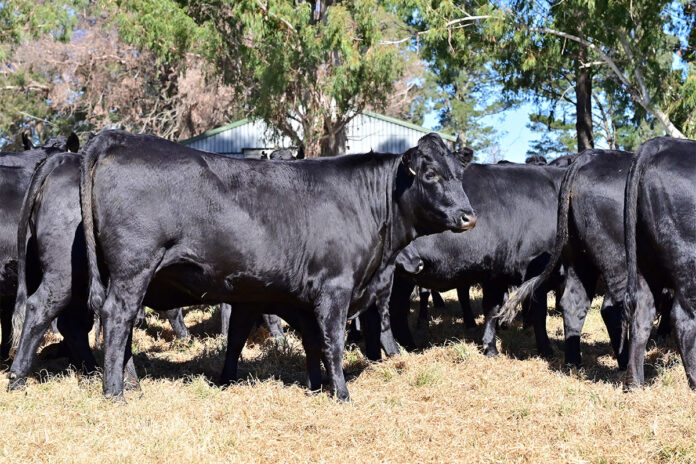
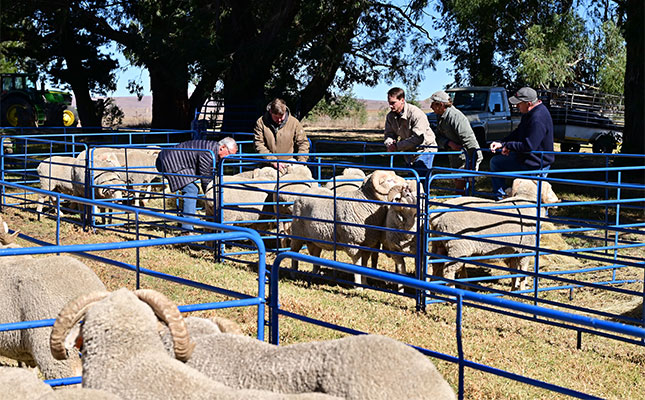
Budler shared this message during a Drakensberger information day hosted by brothers Rodney and Leonard Neuman on their farm Newlands near Vrede in the Free State. The event attracted Drakensberger breeders and enthusiasts from across the country and provided an opportunity for producers to gain practical insights into cattle selection and long-term herd value.
Fundamentals of profitability
Using Drakensberger cattle in a demonstration pen, Budler walked producers through the traits he believes form the foundation of functional efficiency and sustainable returns.
At the heart of his presentation was the argument that fertility remains the single most important profit driver in any cattle operation. While growth, muscle, and carcass characteristics do have economic value, they become largely irrelevant if a herd lacks the reproductive performance needed to sustain profitability.
“Cattle need to be able to eat, walk, and reproduce,” Budler explained.

The ability to eat begins with the animal’s basic skeletal structure. Budler emphasised the importance of a strong jaw and a wide muzzle, which not only improve grazing efficiency but also indicate genuine skeletal strength and width.
Meanwhile, locomotion is determined by the integrity of the feet, legs, and overall skeletal structure.
Ultimately, reproductive performance is influenced by hormonal balance, reproductive organs, and the expression of secondary sexual characteristics.
Balance and longevity
According to Budler, functional efficiency depends on balance, which manifests itself in several ways. Physiological balance refers to the correct proportions between body parts, while endocrinological balance reflects the efficient functioning of hormone-producing glands.
Hormonal balance is visible in the phenotype of the animal, with bulls displaying masculinity and power, and females exhibiting femininity and refinement.
He described fertility as the result of hormonal balance combined with high inherent body condition. Easy-fleshing cattle that maintain condition under commercial production systems are generally more fertile and productive than animals requiring continual nutritional support to perform.
Longevity was another recurring theme throughout his presentation. Budler pointed out that replacement females represent a substantial investment long before they generate income.
“A cow under four years old is still paying off her student loan and only starts producing after that,” he added.
For this reason, structural soundness is critical. Traits such as strong feet, a durable skeletal structure, and functional udders all contribute to a longer productive life. The longer a female remains productive within the herd, the lower the replacement cost and the greater the return on investment.
Budler cautioned against becoming overly focused on maximum performance figures at the expense of balance. He argued that the livestock industry often rewards extremes when it should be striving for optimum performance.
“In other words, the bull with balance is simply a really good average bull, with not too much of anything but enough of everything,” he explained.
Don’t chase extremes
This philosophy extends to the use of performance data. While Budler acknowledged the value of estimated breeding values and expected progeny differences, he advised breeders to avoid chasing extreme figures.
Rather than selecting aggressively for traits such as high growth, high milk production, or excessive muscle expression, he recommended focusing on balanced animals while selecting for fertility-related traits, particularly fat cover and scrotal circumference.
At the same time, breeders should guard against undesirable extremes that may negatively affect fertility and adaptability. Budler warned that continual selection for production traits without considering functional efficiency often leads to increased energy requirements, which are frequently antagonistic to fertility.
A key distinction he drew was between maternal and terminal breeding objectives. In maternal breeding programmes, profitability is driven primarily by adaptability, functional efficiency, fertility, and longevity. Growth, muscle, milk production, and marbling remain important, but these are turnover traits rather than profit traits.
Without a solid foundation of adaptability and reproductive performance, production traits alone cannot build a sustainable cow herd. Budler said every breeding decision should be guided by three factors: objectives, resources, and environment. Failure to align these factors significantly increases the likelihood of disappointing outcomes.
He also stressed the value of what he termed “production-based culling”. This involves selecting replacement females and breeding bulls from cow families that have consistently met production criteria over multiple generations. Such criteria include fertility, age at first calving, intercalving period, weaning performance, cow–calf efficiency, and the ability to calve unassisted under commercial conditions.
By retaining cattle from families that consistently meet these requirements, producers can rapidly build herds that are more uniform, profitable, and better adapted to their production environments.
Sexual dimorphism
Another important concept discussed was sexual dimorphism. Budler argued that fertile, well-balanced cattle should display clear visual differences between males and females. Where breeding programmes focus excessively on growth and carcass traits, these differences often diminish. Bulls become less masculine, females less feminine, and fertility can suffer as a result.
In contrast, cattle selected for hormonal balance and inherent body condition tend to mature earlier and display stronger reproductive performance.
Skeletal design
The discussion also explored the structural characteristics that contribute to longevity and functionality.
Budler explained that the foundation of every productive animal is its skeleton. The structure begins at the nose and extends to the tail switch, and understanding skeletal design is essential when selecting profitable cattle.
A properly angled shoulder allows an animal to carry its head naturally and move efficiently. Excessively straight shoulders restrict movement and place additional pressure on the feet, ultimately compromising longevity.
Similarly, correct hip-to-pin angle contributes to calving ease, flexibility, and overall soundness. Good chest width and rib shape support rumen capacity, while skeletal balance throughout the body promotes efficiency and durability.
Excessive bone, Budler stressed, can be as problematic as insufficient bone. In very coarse animals, fertility is often sacrificed, while overly refined cattle may lack durability. Once again, balance remains the key consideration.
An animal that appears comfortable, moves freely, and demonstrates flexibility through its skeleton is more likely to remain productive for an extended period.
“Don’t compromise on structural soundness, ever. There is profit in longevity,” he advised.
Coat and pigmentation
Budler also touched on the characteristics of cattle adapted to tropical and subtropical environments. He noted the advantages associated with Bos indicus influence, including improved heat tolerance, increased sweat gland activity, sebum production that assists in repelling insects, and the ability to effectively remove flies through skin movement.
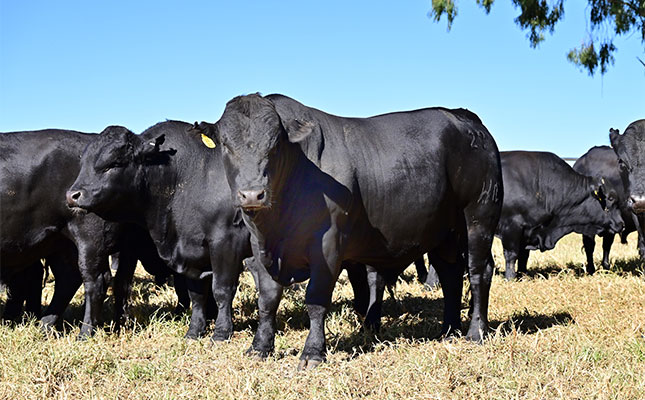
Pigmentation around the eyes also plays an important role in protecting cattle against harsh ultraviolet radiation, while coat characteristics contribute to heat management under challenging environmental conditions.
Key breeding bull characteristics
When discussing breeding bulls, Budler once again returned to the importance of balance and functionality.
A breeding bull should display masculinity, structural integrity, and reproductive soundness. Sexual organs must be symmetrical, properly suspended, and capable of effective thermoregulation.
Budler cautioned against excessively tight sheaths and stressed the importance of scrotal design in maintaining fertility.
Ultimately, his message to Drakensberger breeders was straightforward. While genetic evaluations, performance data, and modern breeding technologies all have their place, they should never replace the trained eye of a stockman.
“If your eye is tuned to functional efficiency, then phenotype is paramount,” Budler concluded.
For him, the most profitable cattle aren’t necessarily the biggest, heaviest, or most extreme animals. They’re the cattle that remain fertile, functional, and productive year after year, converting available resources into sustainable profit while thriving in their production environment.