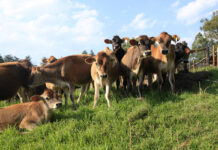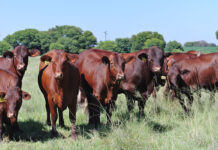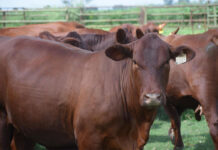

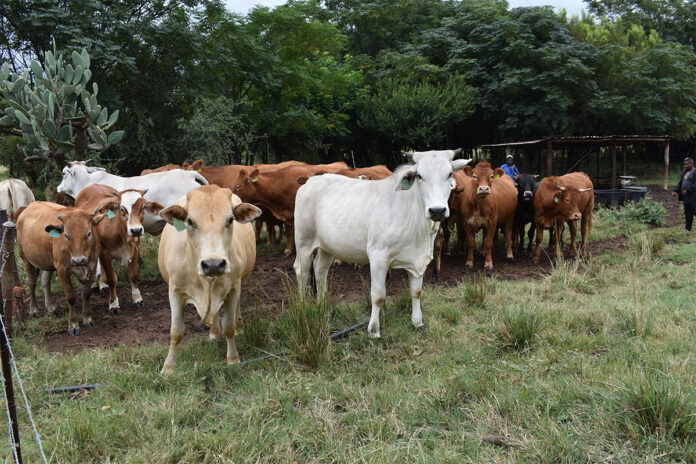
On a modest 25ha grazing property north of Pretoria, Sibonele Gumede begins and ends every day with his cattle. He is a husband and father of three, and by profession he is a radiographer. But beyond the demands of his full-time career, Gumede is steadily building a Limousin stud that reflects a deep passion for cattle breeding and a firm belief in the breed’s potential for South African beef production.
His young stud, Sibonele Gumede Limousins, based in Haakdoornboom in Pretoria North, may still be small in numbers, but the ambition behind it is anything but modest.
“I cannot let a day go by without checking on my animals. Even with a full-time job, the cattle are always on my mind,” says Gumede.
For him, Limousins represent more than just another beef breed. They symbolise a long-term vision built around productivity, efficiency and the satisfaction of breeding animals that perform under the challenging conditions of the South African Highveld.
A breed with global credentials
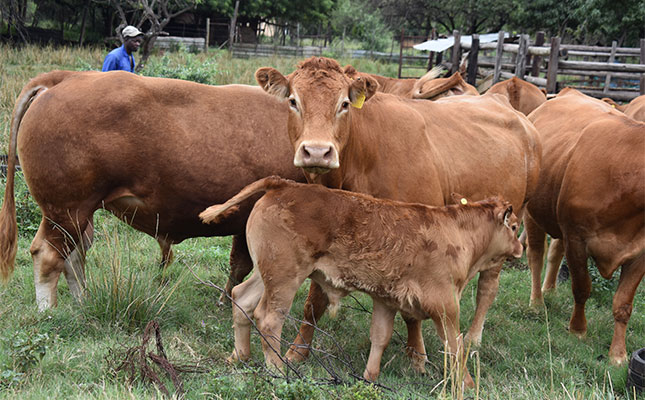
The Limousin breed originated in the Limousin region of France and has grown into one of the world’s most widely used beef breeds. Known for its striking golden-red coat and exceptional muscling, the breed has gained international popularity for its ability to produce high-yielding, lean carcasses while maintaining efficiency under a wide range of farming conditions.
In South Africa, Limousins have increasingly become a preferred breed for both stud and commercial producers due to several key characteristics:
- Exceptional muscular development and carcass yield;
- Strong feed conversion efficiency;
- Calving ease and relatively small birthweights;
- High fertility and maternal ability;
- Adaptability to extensive grazing systems; and
- Calm temperament, which simplifies handling.
These traits make the breed particularly attractive for farmers looking to maximise productivity per hectare while controlling input costs. For Gumede, these advantages became clear the moment he encountered his first Limousin bull.
A chance encounter that changed everything
Gumede did not start his farming journey with Limousins. His original commercial herd consisted of Simmentaler, Brahman and Simbra cattle. Like many new producers, he began with crossbreeding in order to develop a productive herd suited to his grazing conditions.
But a single incident changed his trajectory. “My bull injured himself and I had to start looking for a replacement,” he recalls.
During that search, he came across photographs of a Limousin bull online belonging to breeder John Davenport of Devlan Limousins, whose farm lies about an hour from Johannesburg on the banks of the Vaal Dam.
“I saw this big bull on the Internet and immediately made an enquiry,” says Gumede.
When Davenport invited him to view the animal in person, Gumede travelled to the farm. The visit proved pivotal.
“I was so impressed with the animal that I fell in love with the Limousin breed.”
Soon afterwards, he purchased his first Limousin bull for R50 000, a significant investment for a new breeder.
However, the early excitement was short-lived.
A difficult start
The bull arrived on Gumede’s farm in early January 2025. Tragically, less than two months later, the animal died.
“That was very difficult for me. I almost cried, and I almost quit,” he says.
For many first-time breeders, such a loss might have ended the dream. But the support of experienced breeders proved critical.
Gumede phoned Davenport, who encouraged him not to give up and urged him to attend an upcoming auction to continue building his herd. Taking the advice to heart, Gumede attended the sale and purchased both a heifer and another bull.
This second bull proved to be a turning point.
“He performed very well and gave me excellent offspring, especially females,” says Gumede.
The quality of the calves convinced him that Limousins were the right direction for his operation.
“That bull made me decide to add more Limousins to my herd.”

Building a young stud herd
Today, Gumede owns eight Limousin animals, seven of which are registered as stud cattle.
His breeding programme includes two bulls from respected South African genetics: Devlan Limousins, and La Rhone Limousins, a well-established stud near Tulbagh in the Western Cape, operating for more than two decades. By combining these bloodlines, Gumede hopes to develop a strong genetic base for his emerging stud.
“I realised that I needed top genetics,” he explains.
His two bulls differ in type, a strategy that allows him to balance traits within the herd.
“The bull from John is a big-framed animal, while the bull from La Rhone is medium-framed,” he says. “That gives me the opportunity to rotate bulls and improve the genetics.”
The next generation of calves from both bulls is expected between October and December. For a breeder still in the early stages of building a herd, each calf represents an important step forward.
The muscularity that defines the breed
The first trait that captivated Gumede was the breed’s striking muscling. “The muscularity is amazing. Even the calves show it very early,” he says.
Within weeks of birth, Limousin calves begin developing the characteristic muscle curves that have made the breed famous.
“You can already see them building muscle after just two weeks,” Gumede explains.
This rapid muscle development translates into higher carcass yields, one of the reasons Limousins are widely used in crossbreeding programmes worldwide. Even when crossed with other breeds, Limousin genetics tend to improve carcass conformation, meat yield, and growth rates.
For commercial producers, this means more kilograms of beef produced from the same grazing resources.
Productivity improvements in the commercial herd
Although Gumede’s stud herd is still small, the Limousin bulls have already had a noticeable impact on his commercial cows. Since introducing Limousin genetics, he has observed several improvements:
- Calving ease;
- Larger weaning weights;
- Better demand from feedlots (higher price per kilogram);
- Higher-quality replacement heifers;
- Improved milk production; and
- Higher fertility.
“The calving rates have been tremendous,” he says. In one breeding group, he recorded a 100% calving rate within a single month, with calves achieving impressive weaning weights. For many farmers, these improvements alone justify the use of Limousin bulls in crossbreeding systems.
Feed efficiency and growth
One of the most attractive features of Limousins is their ability to convert feed efficiently into muscle. “They grow very fast compared to my other cattle,” says Gumede. The animals are kept in an extensive grazing system and are grassfed with lick supplementation.
Cows have continuous access to production and conditioning licks, which provide the minerals and nutrients necessary to maintain body condition throughout the year.
“They graze on the veld and then come back to take the lick and drink water,” he explains.
Despite this relatively simple feeding system, the animals maintain strong growth rates and body condition, a key advantage for producers trying to keep feed costs as low as possible.
Adaptation to the Highveld
Limousins have proved themselves to be particularly well suited to the Highveld environment. “The bull from the Western Cape adapted exceptionally well,” says Gumede.
Even when servicing both stud and commercial cows, the bulls maintain body condition and fertility. The cows also perform reliably under extensive conditions.
“They maintain good body scores and give me calves every year.”
This combination of fertility and adaptability is one of the reasons why Limousins have become popular in many parts of Southern Africa.
Temperament that makes farming easier
For Gumede, temperament was another deciding factor when choosing the breed. Because he runs the operation largely on his own, manageable animals are essential.
“I do everything myself because I am still building the herd,” he explains.
Limousins are known for their docile and calm temperament, making them easier to handle than some other beef breeds.
“The bulls are very placid. You can walk in among them and even stroke them,” says Gumede.
This temperament reduces labour requirements and minimises stress during handling, transport or veterinary procedures.
Farming with limited land
Although Gumede’s ambitions are large, his current resources are limited. He farms on 25ha of rented grazing land, divided into three camps. The camps allow him to practise rotational grazing, moving cattle from one camp to another so the veld can recover.
“Rotation helps the grass recover and keeps the veld healthy,” he says.
The property is supplied with water from a borehole.
Based on the available grazing, Gumede estimates the land could support roughly 40 animals, meaning expansion will eventually require additional land. For now, careful herd management is essential.
Learning from mentors
One of the most important lessons Gumede has learned is the value of mentorship. Experienced breeders such as Davenport and the team at La Rhone have played a major role in guiding him.
“They really supported me and I am eager to learn more from them,” he says.
His advice to other new breeders is simple: “Find one or two mentors that you trust and take their advice. Don’t try to listen to too many people.”
Mentorship can help newcomers navigate complex issues such as breeding selection, herd management, genetic evaluation, and marketing strategies.
For Gumede, these relationships have been invaluable.
The importance of genetics
Genetics remain at the heart of his breeding philosophy.
“When I buy animals, I look for strong masculinity in the bulls and fertility in the females,” says Gumede.
Structural correctness is equally important. Animals must be able to reproduce efficiently, adapt to the environment, and remain productive for many years.
Gumede also believes in the importance of performance data.
“If you cannot measure it, you cannot improve it,” he says.
Performance data, such as weights, fertility and growth rates, allows breeders to compare animals objectively and track genetic progress over time. As his herd expands, Gumede hopes to incorporate more data-driven selection into his breeding programme.
A memorable trip to the Cape
One of the highlights of Gumede’s journey so far was attending the La Rhone Limousin auction in Tulbagh in August last year. For a new breeder, the experience was an eye-opener.
“The animals there were of such high standard,” he recalls.
Seeing the quality of cattle being produced reinforced his belief that investing in strong genetics is worthwhile. “If you invest in good Limousins, you will get your investment back.”
Advice for new Limousin breeders
For farmers considering entering the breed, Gumede recommends starting modestly.
“I would say start with five pregnant females,” he advises.
Those cows will produce the first generation of calves, which can then be used to expand the herd.
A young bull calf can be raised and eventually sold, generating capital to purchase additional females.
Patience is essential. “Passion and patience are very important,” he says.
Breeding cattle is a long-term endeavour that requires careful planning and perseverance.
Limousins and sustainable farming
Beyond productivity, Gumede believes that Limousins can play a role in sustainable farming systems.
Rotational grazing allows cattle to stimulate plant growth while returning nutrients to the soil.
“The cattle regenerate the soil naturally,” he says.
Proper grazing management can improve soil carbon levels, enhance grass recovery, and increase carrying capacity over time.
For producers facing rising input costs and environmental pressures, these practices are becoming increasingly important.
A dream still in the making
Despite the progress he has made, Gumede considers his stud as only the beginning of his journey.
“I am still building,” he says.
His long-term dream is to own a larger farm with a substantial Limousin herd producing high-quality breeding stock and beef animals.
Artificial insemination may eventually become part of the programme, allowing him to access international genetics and further improve the herd.
“With modern technology, it is easier than ever to access top genetics,” he says.
For now, however, the focus remains on steady growth and careful selection.
Why Limousins are gaining momentum
For Gumede, the case for Limousins comes down to three key traits: muscularity, temperament, and fertility.
“These animals give small calves and calving is easy. You do not have to struggle or pull calves. This ease of calving reduces stress for both animals and farmers.”
Combined with rapid growth and efficient feed conversion, the breed offers strong economic potential.
“It’s a stress-free calving season,” he says.
Passion driving progress
Standing in the veld watching his cattle graze, Gumede reflects on how far his Limousin journey has already taken him.
What began as a search for a replacement bull has grown into a passionate commitment to a breed that he believes has enormous potential in South Africa.
Even after long days at work, he still makes time to walk among his cattle, checking calves and admiring the animals that are slowly building his dream.
“I just love these animals,” he says.
For Gumede, Limousins are not simply livestock, but rather the foundation of a future he is determined to build, one calf at a time.