
A newborn calf that gets to its feet and starts suckling is a reassuring sight. But watching it feed cannot tell a producer how much colostrum it has consumed, how rich that colostrum is in antibodies or how effectively those antibodies have been absorbed.
This means even an apparently healthy calf could have less protection against disease than the producer realises, according to Dr Ryan Davies, a Wales-based veterinary consultant who provides technical consulting services to the Saskatoon Colostrum Company (SCCL).
Speaking at the World Wagyu Conference at Cavalli Estate near Somerset West in the Western Cape, Davies stressed that producers needed to identify potential problems from birth. Waiting for weakness or poor performance could mean missing the short window in which the calf can absorb colostral antibodies into its bloodstream.
Getting that first feed right therefore begins before calving, with attention to the cow’s health and nutrition, followed by prompt assessment of the newborn calf and the quality and quantity of colostrum it receives.
Why the first feed matters
Newborn calves arrive without circulating maternal antibodies to protect them against infection. They depend on colostrum, the cow’s first milk after calving, to acquire this early protection.
Colostrum is packed with antibodies, most notably immunoglobulin G (IgG). Once consumed, these antibodies pass through the calf’s intestinal lining into the bloodstream, providing what is known as passive immunity.
But antibodies are only part of the story. Davies explained that colostrum is also a concentrated energy source, with substantially more fat than ordinary milk. This helps the calf regulate its body temperature and maintain blood sugar levels in its earliest hours.
It also delivers essential vitamins and minerals, including vitamins A, D and E, whose transfer across the placenta is limited.
Colostrum further supports gut development. Prebiotics feed beneficial bacteria, helping them compete with harmful microbes. Growth factors such as insulin-like growth factor 1 (IGF-1) support maturation of the intestinal lining, while components such as lactoferrin and lysozyme provide antimicrobial protection.
Together, these components make colostrum both a shield against infection and a nourishing first feed.
However, the window for absorbing antibodies into the bloodstream is short. Davies stressed that uptake was greatest immediately after birth and declined rapidly thereafter. Calves should therefore receive their first colostrum feed as soon as possible, ideally within one to two hours.
By about 24 hours, the gut’s ability to absorb antibodies into the bloodstream has largely closed. Colostrum can still provide nutrients and support gut health after this, but feeding more will no longer correct low blood antibody levels through intestinal absorption.
Making the most of those first hours therefore requires preparation before calving, starting with the cow that will supply the colostrum.

Start with the cow
The dam’s health, nutrition and comfort during late pregnancy influence her ability to provide enough good-quality colostrum.
Producers need to address illness promptly and ensure that pre-calving diets meet the cow’s nutritional requirements. Poor nutrition can compromise colostrum production and quality, leaving the calf at a disadvantage before it takes its first drink.
Heat stress during late pregnancy can also affect both sides of the process. Davies explained that it could reduce the dam’s colostrum quality and the newborn calf’s ability to absorb antibodies.
He advised producers to work with their veterinarians on suitable vaccination programmes. Where appropriate vaccines were available, vaccination before calving could increase antibodies in the colostrum against particular diseases.
Measure colostrum quality
Even with good pre-calving management, colostrum quality can vary between cows. Testing helps producers establish the antibody concentration of the feed available to the calf.
Davies recommended using a Brix refractometer. Both optical and digital instruments measure solids in colostrum, producing a reading that can be used to estimate IgG concentration.
Conversion figures in his guideline showed that colostrum measuring about 21–22% Brix contained roughly 50g IgG/litre or more, while readings of 28% or higher indicated about 90–100g/litre or more.
For example, two litres containing 50g IgG/litre would supply 100g of antibody. The same volume containing 100g/litre would deliver twice as much.
These are field estimates, with some variation expected. For Wagyu producers, Davies recommended a minimum reading of 24% Brix to indicate high-quality colostrum.
Keeping records of these readings also provides feedback on the feeding and management of pregnant cows. Repeated poor results should prompt investigation into the animals concerned and their health, nutrition and exposure to stress.
Identify at-risk calves
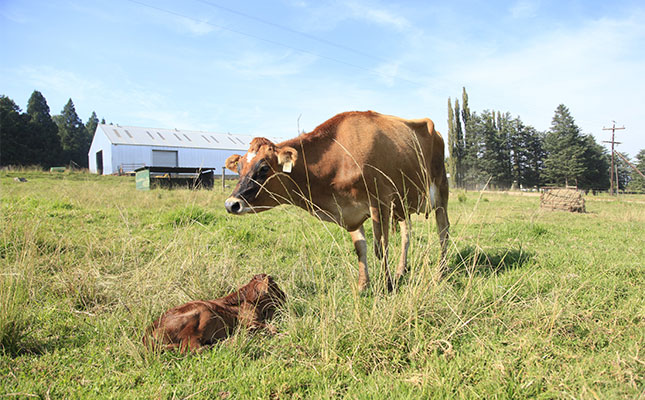
Good-quality colostrum is only useful if the calf receives it promptly. Once a calf is born, producers therefore need to assess its vigour: is it alert, how quickly does it stand, and can it find the udder and suckle?
Davies emphasised that calves born to heifers, those delivered after prolonged labour, and calves that were weak or slow to stand needed extra attention.
Calving difficulty did not necessarily mean a producer had assisted with delivery. Prolonged labour alone could leave the calf distressed and less able to get up and feed promptly.
In heifers, the challenge could also lie with the dam. An inexperienced mother might not accept her calf or stand quietly enough for suckling.
Low birth weight was another warning sign. Davies’s Wagyu guideline identified calves weighing 20kg or less as a risk group, although producers of other breeds needed to consider birth weight in the context of their cattle.
Embryo transfer calves also warranted closer attention, as factors such as gestation length, birth size, calving difficulty and colostrum quality in recipient cows could compromise their start.
Allowing the cow to lick her calf helped stimulate it. Where this was limited, rubbing and drying the calf could support circulation and encourage feeding.
“You can’t wait until day two or three when they’re starting to show poor performance,” Davies said.
Ensure the calf drinks enough
How much colostrum is enough, and does the answer differ for Wagyu calves?
Davies explained that the traditional benchmark, developed in the US dairy industry in the early 1980s, was a minimum blood serum concentration of 10g IgG/litre at 24 hours of age. This threshold was linked to reduced disease and mortality in dairy calves.
Subsequent Japanese research, however, indicated that Wagyu calves needed a higher minimum of about 20g IgG/litre to achieve comparable protection.
These figures describe antibody concentrations in the bloodstream, rather than the volume of colostrum fed. Reaching the target depends on the volume consumed, its antibody concentration and how efficiently the calf absorbs those antibodies.
As a practical guide, Davies advised feeding Wagyu calves colostrum equivalent to about 10% of birth weight, or roughly three litres for a 30kg calf. The antibody concentration determines how much IgG that feed supplies.
Manual feeding makes volume easier to measure, but intake is harder to judge in suckling calves. Where intake is uncertain, especially in vulnerable calves, producers should act promptly.
Clean, good-quality colostrum from a disease-free source could be used for supplementation. Where this was unavailable, Davies discussed SCCL colostrum replacer as an option for high-risk calves.
He cited a Japanese study in a full-blood Japanese Black herd where half the calves received about one litre of replacer at birth, in addition to suckling their dams.
The supplemented calves recorded higher serum Brix readings than those receiving no supplement. Unlike the colostrum readings used to assess feed quality, these readings were taken from blood serum and used as an indirect measure of antibody transfer.
The benefit was herd-specific, Davies cautioned, and did not imply that every calf required supplementation.
The aim was to provide additional antibodies and energy while allowing the calf to continue suckling and bonding with its dam.
Keep it clean
Colostrum quality and intake are important, but contamination and stress can undermine antibody absorption.
Davies explained that colostrum’s rich nutrient content made it an excellent medium for bacterial growth. A high bacterial load could damage the intestinal lining, reduce antibody absorption and increase disease risk.
Producers therefore needed to maintain hygiene throughout collection, storage and feeding. Containers, bottles, teats and other feeding equipment should be thoroughly cleaned between uses to avoid contaminating the next feed.
A good colostrum Brix reading was no substitute for these precautions. It estimated antibody concentration, but did not establish whether the feed was free of harmful bacteria.
Heat, cold and calving difficulty could also reduce absorption, making suitable shelter and calm handling important for newborn calves.
Check whether the programme works
Even when these measures are in place, one question remains: did enough antibodies actually reach the calf’s bloodstream?
Testing colostrum estimates the quality of the feed available. Blood testing helps establish whether quality, intake, timing and absorption together delivered the intended protection.
Davies encouraged producers to work with their veterinarians to test a sample of calves. This could reveal inadequate antibody transfer in animals that appeared healthy and help identify weaknesses in the feeding programme.
Sampling time affects the interpretation of results, so producers should agree with their veterinarians when to collect samples, which tests to use and how to assess the findings.
Blood testing cannot recover a missed opportunity for early antibody absorption, but it could show producers where to improve management for subsequent births.
“I’m not asking you to test every calf, but test some of them so that you can see where you are,” Davies said.