

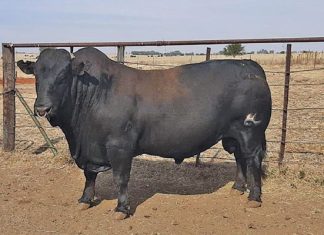
High-priced Drakensbergers
Drakensberger bulls have fetched spectacular prices on auction over the past few years. In this article, we list some of the highest prices registered.
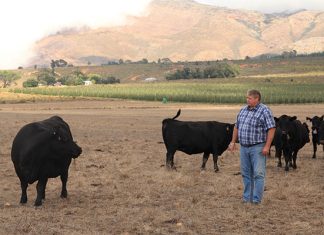
How Angus cattle add value to a fruit farm
The production of Angus cattle enables Western Cape farmer Gielie Geldenhuys to make use of land unsuitable for fruit or onion production. He spoke to Glenneis Kriel about his diversification enterprise.
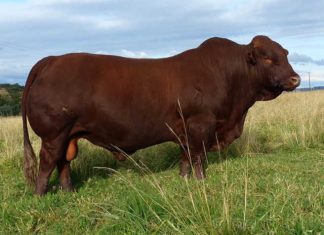
Bonsmaras that set bank-breaking records
Due to their popularity, Bonsmaras have fetched high prices at auctions for many years. In this article, we list some of the highest prices achieved at sales.
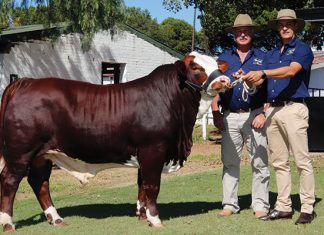
Fertility and meat quality: the traits driving the growing demand for Brafords
What do you get when you cross a Brahman with a Hereford? You get the Braford: a fertile animal with amazing mothering abilities that has a long life expectancy and produces a carcass that can be compared with South Africa’s best. Susan Marais travelled to Bethal in Mpumalanga to learn more about this exceptional breed from Gert van der Merwe and Johan de Jager, owners of the Bonheur Brafords stud.
South Devon cows and heifers: the central pillar of stud efficiency
The Roets family of the Eastern Cape’s Barkly East district has been associated with South Devon cattle for approximately 90 years. Yet it was only in 2017 that PD Roets registered a stud. Mike Burgess visited him to find out more about his commitment to the selective breeding of South Devons in this cold, mountainous area.
How to optimise beef cattle production
Optimisation of the environment is the single most important requirement for sustainable beef production, according to animal scientist Hennie Snyman. For that to happen, the implementation of precision farming principles is of the essence, he says.
‘FMD restrictions are late, but necessary’
Role players in the South African beef industry believe that, although they have come at a rather late stage in the game, the government-enforced restrictions on the movement of cattle in the country are imperative to the sector’s survival.
The cattle most at risk from lion attacks
In a recent study, researchers at the University of Pretoria attempt to explain why some types of cattle may be more likely to serve as prey for lions.
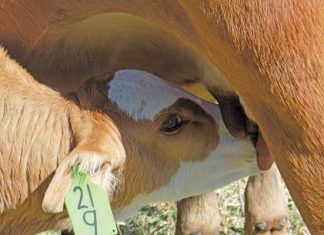
Raise weaning weights through good nutrition and fertility
Top-quality heifers and well-balanced nutrition form two of the most important cornerstones of effective red meat production, writes Henco Leicester, technical manager at Telwiedre, an animal feed manufacturer, in Heilbron. He explains the principles of heifer management and the role of lick supplementation.
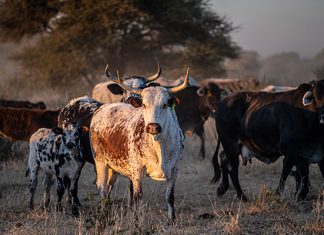
‘FMD still poses a major threat to SA livestock’
The spread of foot-and-mouth disease across South Africa will continue unrelentingly unless all industry players step up to the plate and do their part to control the disease as much as possible
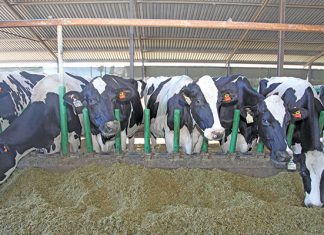
How a top dairy farmer is mitigating high input costs
JK Basson is a three-time winner of the ARC’s National Master Dairyman of the Year Award. He spoke to Glenneis Kriel about how he manages to survive in an industry plagued by rising production costs.
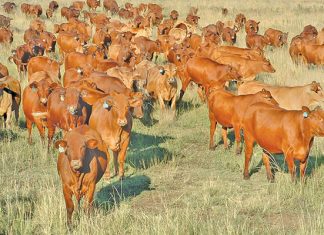
Your one-stop guide to BLUP breeding values
Frans Jordaan and Dr Ben Greyling of the Agricultural Research Council provide recommendations to help breeders apply good management and recording practices that can optimise their herds’ genetic evaluations.
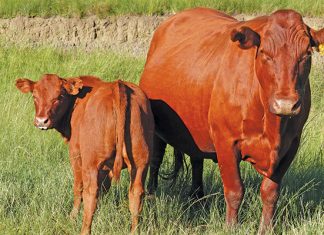
The rise of the Bonsmara in South Africa
The Bonsmara, which was developed in South Africa from the 1930s, was bred specifically for African conditions, and is the most dominant beef cattle breed in the country today. It has also spread to many other countries around the world. Louis Steyl, CEO of the Bonsmara Cattle Breeders’ Society of South Africa, spoke to Annelie Coleman about the development of the breed, and its future.
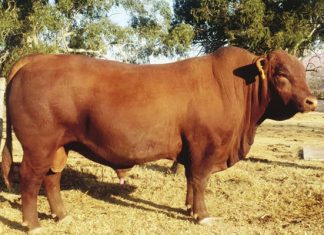
Maximising Brangus weaner growth with top-quality genetics
A successful commercial beef cattle enterprise is one that keeps cow mortalities to a minimum, while achieving maximum weaner growth. Rian van Wyk, who farms Brangus in Mpumalanga, spoke to Lindi Botha about his breeding philosophy.
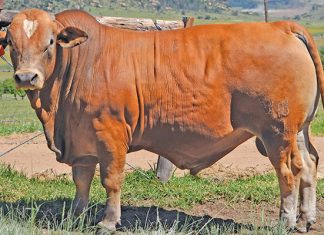
Genetics-based guidelines to buying a bull at an auction
Frans Jordaan and Dr Ben Greyling, researchers at the Agricultural Research Council, write about the importance of choosing bulls based on breeding and performance indices, rather than their visual appearance.
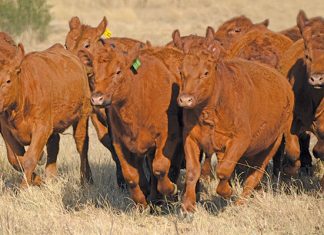
Performance testing for the commercial farmer
Frans Jordaan and Dr Ben Greyling of the Agricultural Research Council write about the important role that performance testing plays in increasing a commercial herd’s fertility and profitability.
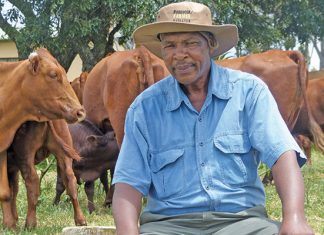
Top emerging beef farmer’s journey to success with Bonsmara
Desmond Siteti was named the Agricultural Research Council’s Eastern Cape Emerging Beef Farmer for 2021. Mike Burgess visited him and his Bonsmaras near Makhanda to better understand his journey to successful beef production.
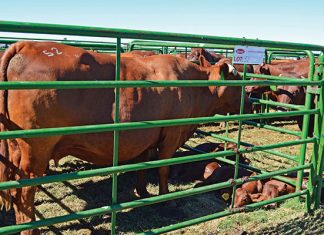
Group auctions: a great team brings great results
Group auctions are becoming increasingly common in South Africa’s beef cattle industry, where they are a benefit to both stud and commercial breeders. Members of the Valsrivier Bonsmara Breeders Group spoke to Annelie Coleman about the advantages of these events, and the need for smooth teamwork and shared values.
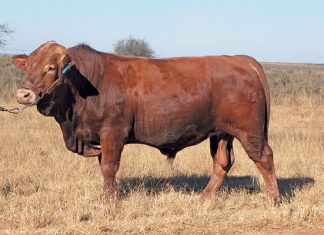
Is artificial insemination right for your farm?
Artificial insemination is a good way to improve your herd, as you can purchase top-quality genetics without having to buy in a bull, says Dr Ben Greyling, programme manager at the Agricultural Research Council.
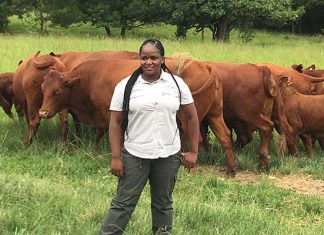
Young stud manager strives to be an icon
Jessica Phathela is the stud manager for Ntaba Nyoni Cattle, and is responsible for the care, breeding and administration of five herds. She aspires to be a role model for other women in the sector.
- ADVERTISEMENT -
- ADVERTISEMENT -
MUST READS
- ADVERTISEMENT -



