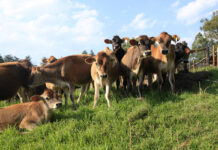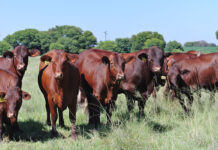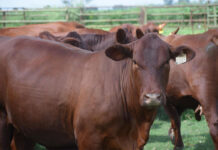
When Dr Oswald Jannasch bought his first farm near Polokwane in 1995, he initially kept crossbred cattle. It did not take long to realise that balancing a demanding medical career with livestock production required a different type of animal. For Jannasch, that reality shaped almost every farming decision he has made.
“If you have the type of work I have, you cannot get a message that a calf is stuck or that an animal is sick,” says Jannasch.
As a scientist by training, Jannasch approached the challenge methodically.
“I started reading about all breeds of cattle and it just came to be that the Nguni fitted in with my lifestyle,” explains Jannasch.
After visiting established Nguni breeders and studying the breed in more detail, he gradually replaced his existing cattle.
“I started buying these animals and I got rid of all my other cattle and I never looked back,” Jannasch recalls.
Built around the bushveld
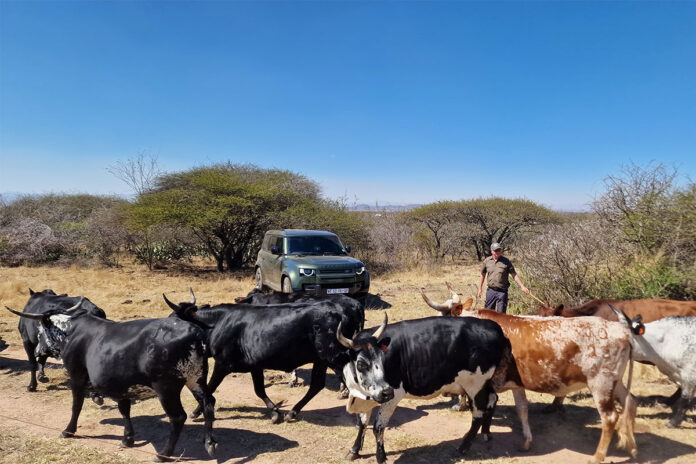
Jannasch farms approximately 500ha of mixed bushveld about 10km north of Polokwane. The area receives between 350mm and 450mm of rainfall annually and consists of mixed grasses, thornveld, and browse species.
What attracted him to the Nguni was its ability to utilise far more of the available vegetation than many conventional beef breeds.
“Because of the fact that it’s Ngunis, I can sustain about 150 head of cattle on this farm,” explains Jannasch.
The breed’s ability to both graze and browse provides an important advantage under local conditions.
“Because it is a browser as well as a grazer, it can utilise the farm to a much greater extent than the European-type cattle breeds,” Jannasch points out.
This wider feed base becomes particularly valuable during winter and dry periods when grazing quality declines.
Low maintenance, not neglect
Jannasch is quick to dismiss the perception that Ngunis require no management.
“People sometimes say the Nguni is an animal that you don’t have to look after. I think it’s a half-truth,” maintains Jannasch.
He stressed that successful farming still requires good husbandry and regular observation.
The difference, he said, is the level of intervention required. “You have to look after them much less,” he pointed out.
From a business perspective, that translates into lower costs.
“Anybody in business will tell you that the most important way to be profitable is to keep your maintenance as low as possible,” he maintains.
According to him, the Nguni remains exceptionally well-suited to extensive production systems.
“It is very well-suited without a lot of additional feed, medicines, or additional interventions. They are the animals that look after you,” he points out.
Less medicine, fewer problems
One of Jannasch’s earliest experiences with Ngunis left a lasting impression. When he bought his first animals, neighbouring farmers advised him to stock up on veterinary supplies.
“They told me I would need antibiotics, and eye ointments, and have all those things ready because animals get sick over weekends. After two years, I threw away the bottles and ointments unopened,” recalls Jannach.
Tick-borne diseases, mastitis, and many common cattle-health challenges are, according to Jannasch, far less common in Ngunis than in less-adapted breeds. “Mastitis is virtually unknown in the Nguni.”
The result is fewer veterinary interventions and lower health-related costs.
Fertility first
For Jannasch, fertility remains the foundation of a profitable beef enterprise.
“I think in extensive operations the Nguni is the most fertile animal, so fertility is the most important,” he says.
Cows are expected to calve regularly, maintain body condition, and raise a calf to weaning age or they are culled, according to Jannasch. “If we get animals that are not able to do that, they are the first on the slaughter list.”
Temperament is another important selection criterion.
“We don’t entertain any wild animals in our herd,” he says. The same applies to calving difficulties. “If you get that, those animals don’t go back to the herd.”
So, for Jannasch, fertility, functionality, and ease of management are inseparable.
Four calves in a lifetime
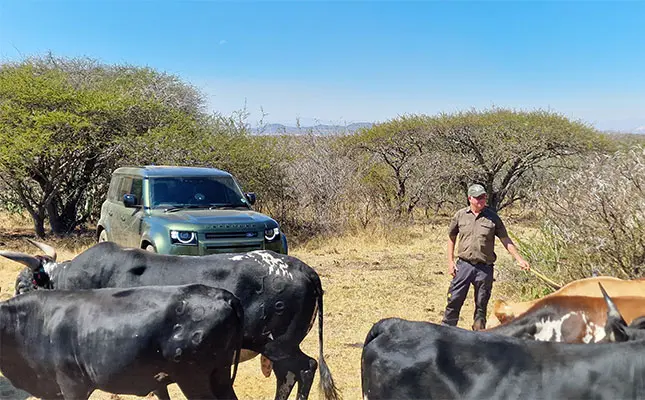
One statistic illustrates the breed’s calving ease particularly well. Over decades of farming, Jannasch can count the number of assisted births on one hand.
“In my whole time on the farm, I had four Nguni calves that I needed to pull,” he says.
For a producer who spent much of his life balancing farming with a medical career, that level of calving ease was invaluable. It reduced labour requirements, lowered veterinary costs, and allowed his farming enterprise to function efficiently without constant supervision.
Nature’s winter lick
Jannasch is particularly intrigued by one physiological trait of the breed.
According to him, Ngunis carry relatively high concentrations of urea in their blood, which is recycled back into the rumen and assists with the utilisation of poor-quality forage.
“It actually functions as an inborn winter lick,” he explains. Combined with the breed’s browsing ability, this allows cattle to maintain condition under difficult grazing conditions. He believes this partially explains why Ngunis often outperform expectations during droughts and periods of nutritional stress.
Value through quality beef
While stud breeding remains a central part of the Matla Nguni Stud operation, Jannasch has also developed a loyal market for Nguni beef.
He believes one of the breed’s most overlooked strengths is its eating quality. “Nguni meat is like drugs. We give them one packet for free; the next one is not for free,” jokes Jannasch.
The strategy often works. “They are then no longer customers, they are clients,” he adds.
According to Jannasch, consumers increasingly appreciate naturally produced, veld-reared beef raised with minimal inputs. “We produce something completely different from feedlots. We produce veld-reared beef.”
Looking beyond the farm gate
As president of the Nguni Cattle Breeders’ Society of South Africa, Jannasch has a broader perspective on the breed than most farmers.
He estimates that approximately 100 stud breeders collectively manage between 19 000 and 20 000 registered Nguni cattle nationwide. Beyond that, there may be between two and four million Nguni-type cattle across South Africa.
“The bulk of the animals lie within subsistence farming, and with commercial farmers who know and appreciate the resilience and ease of farming with Nguni cattle.”
Interest in the breed continues to grow. “People quite often start only with a few head of cattle and just try it out. Later on, they add some animals and at a later stage, they get rid of all the other animals and start only with Nguni animals,” notes Jannasch. One reason, he believes, is simple. “Now they have time for their family.”
Despite historic discrimination against the breed, he believes commercial realities are changing perceptions. “Even though there has been a lot of discrimination against the Nguni breed, these people end up with more net profit per hectare,” claims Jannasch.
Climate change, disease pressure and rising production costs are likely to reinforce that trend. “If you want hassles, you can farm with anything else. If you don’t want hassles, you farm with Ngunis.”
The best of the best
Jannasch believes the breed’s long journey through Africa tells the story of its resilience. “The Nguni has been in Africa for millennia.
As cattle moved south through the continent, they encountered droughts, parasites, predators and diseases, and animals unable to cope simply disappeared. “Those that ended up in South Africa are the best of the best.”
That process of natural selection, he believes, remains one of the breed’s greatest strengths.
“If I got the chance to start all over again, would I still farm with Ngunis? There is only one answer,” exclaims Jannasch. “It’s the only animal that I want to farm with!”