
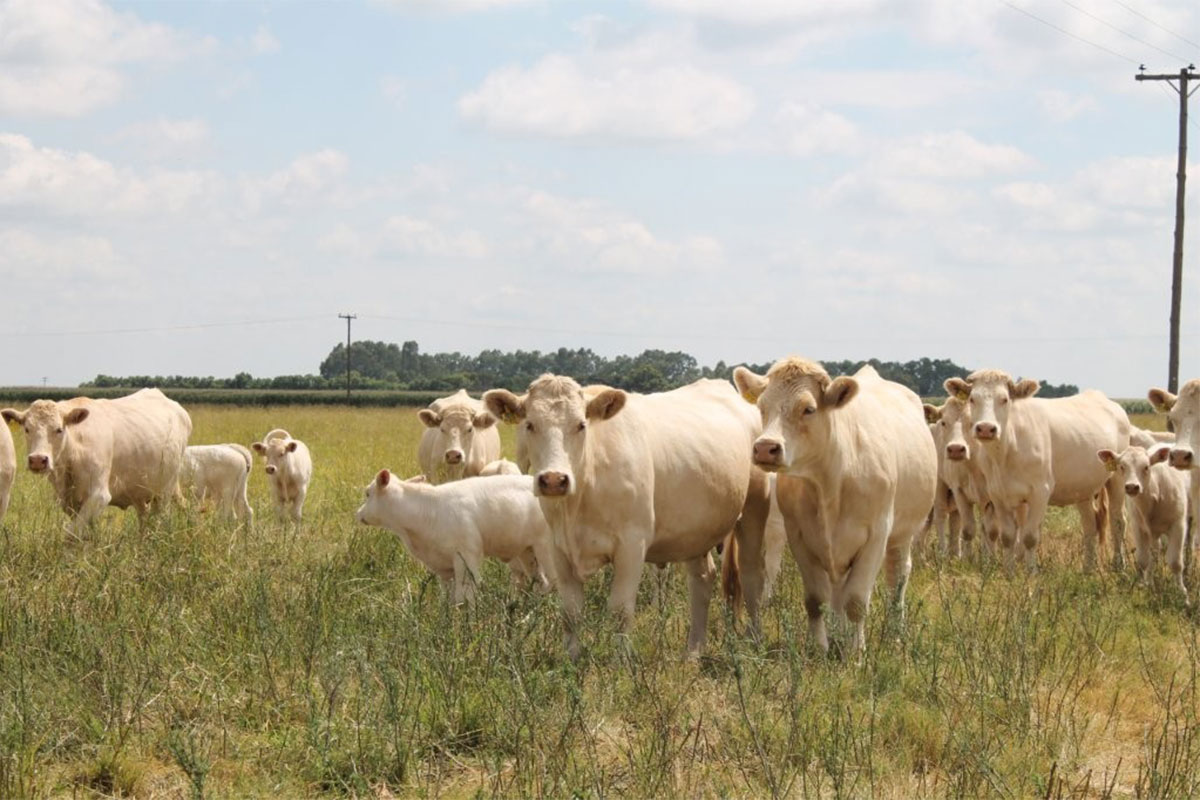
Speaking to Farmer’s Weekly at Nampo 2026, Stemmett said the Charolais is known for above-average growth and superior weaning weights.
“These attributes help to improve income and support the sustainability of red meat producers’ operations. The Charolais also reaches market weight early, allowing farmers to market them sooner and giving cows more time to recover before the next calving season,” he explained.
“Feedlots prefer Charolais calves because they produce more muscle and less fat. One of the biggest challenges in feedlots is cattle becoming too fat too soon. Charolais cattle continue building muscle for longer, while fat is deposited later, making them highly efficient and profitable in feedlot systems.”
Charolais in crossbreeding
According to Stemmett, Charolais cattle are widely used in crossbreeding programmes because of their strong hybrid vigour. Since the breed is genetically distinct from indigenous South African breeds, crossbred calves often show improved growth and performance.
The Charolais’ white colour is dominant, so many crossbred calves are also white. Charolais bulls also improve body shape and hide quality in crossbred calves, making them more acceptable to feedlots.
Adapted to African conditions
The Charolais originates from France and was first imported into South Africa in 1964. The first animals had very large frames, which caused challenges under African conditions.
Over time, South African breeders adapted it into a medium-frame animal without losing its desirable qualities. The breed also developed a shorter, smoother coat better suited to hot climates.
Its adaptability is underpinned by the fact that it occurs in all South African production regions, including the semi-arid and harsh conditions of the Kalahari.
Email the Charolais Cattle Breeders’ Society of South Africa at [email protected], or phone 051 410 0953.