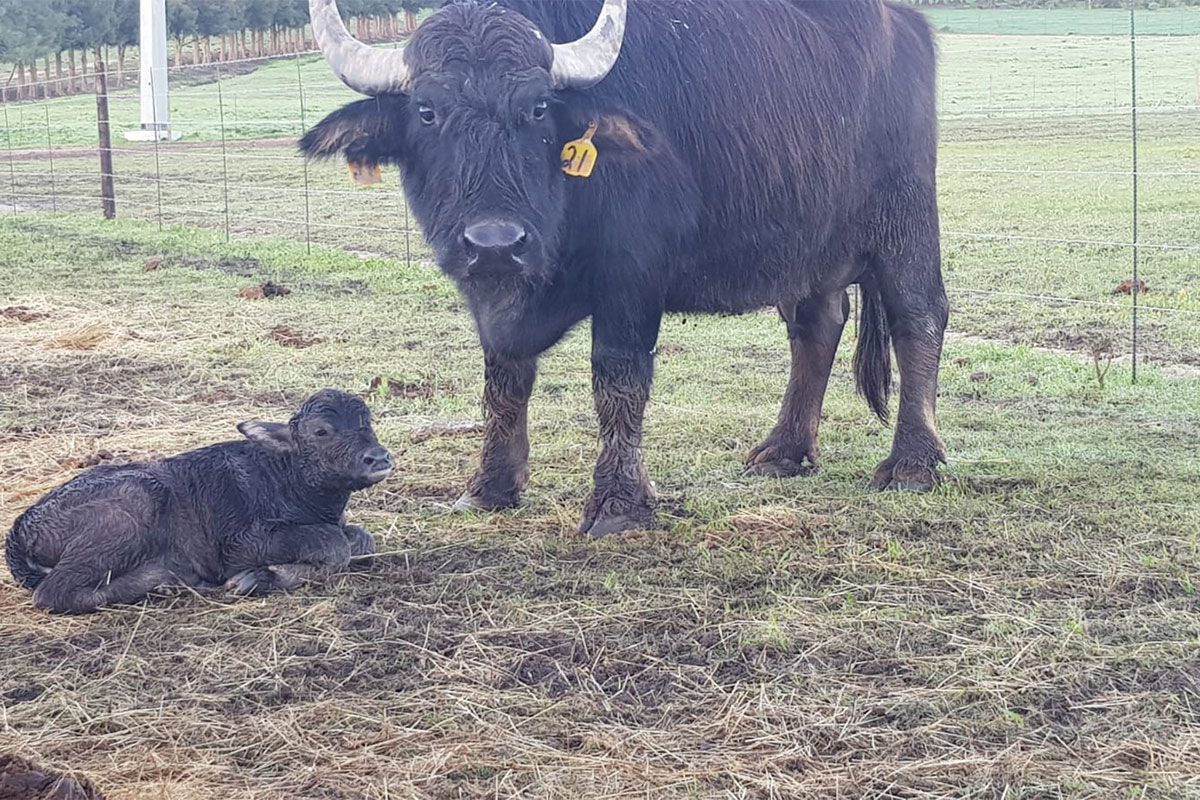
At Rietvlei, a sister farm of Babylonstoren, located in the lower part of the estate, Lambrechts breeds and farms water buffalo and produces gourmet products with their milk.
Water buffalo (Bubalus bubalis) are not indigenous to South Africa, but at Babylonstoren, these remarkable animals form part of a unique farming operation. The estate, already known for producing quail and duck eggs, rooibos tea, and olive oil, now also boasts water buffalo milk.
“Not many people can say they have a water buffalo dairy, and so far we’ve only received positive feedback,” says Lambrechts.
“We currently have about 300 buffalo on the farm, of which 125 are producing cows, and 65 are milked daily in the parlour.
“We milk only once a day, but the milk is of excellent quality because we prefer quality over quantity. Our main goal is to provide high-quality products to our customers, and the ‘farm to table’ principle is a priority for us.”
Rich milk
Water buffalo milk is richer in fat and protein than cow’s milk, giving it a fuller, creamier consistency. It is ideal for making cheese, yoghurt, and ice cream, and is also rich in calcium, magnesium, and phosphorus.
Because water buffalo milk is also lower in lactose, it is easier for many people to digest. Another advantage is that water buffalo cows have a longer lactation period and remain productive at an older age.

Lambrechts says Babylonstoren’s standout products are halloumi, mozzarella, and gelato (Italian ice cream).
“The gelato has a seasonal flavour each month. The blood orange gelato is my favourite,” he adds.
Artificial insemination programme
Excitement is building on the farm as Lambrechts begins a delicate artificial insemination (AI) programme. The plan is to start with the best cows, with Ortin, currently producing nearly 13,8ℓ of milk per day, selected as an egg cell donor. High-quality semen has already been imported from Italy for the process.
The AI process offers an opportunity to improve the gene pool. It has already been carried out on 15 buffalo using the latest instruments and technology.
The plan is to import another 300 straws of high-quality semen from Italy and artificially inseminate 100 buffalo over the next three years to establish an elite herd in South Africa.
A milking parlour with a difference
The milking parlour had to be specially reinforced with steel pipes, as the large animals can weigh between 650kg and 750kg. As they are not polled, it takes engineering ingenuity to keep the facility safe and sturdy.
All the buffalo are vaccinated against foot-and-mouth disease, and the farm has strict biosecurity protocols in place.
Classical music is played in the milking parlour, serving a dual purpose: it calms the cows and entertains the workers at the same time. Large fans have been installed for the buffalo, and special electronic scratching brushes have been added for them to rub against throughout the day.
“They can’t scratch behind their own ears, and they really enjoy the brushes,” Lambrechts explains.
Each buffalo is given a name and responds to it. Tourists even get the opportunity to choose names for new calves.
It is also a common sight to see two water buffalo, Buks and Sarel, being walked like pets and even rewarded with ice cream afterwards.
Buffalo that die are also used, as Lambrechts strongly supports the ‘nose-to-tail’ principle, meaning nothing is wasted. For example, the skulls are turned into intricate artworks, with patterns carved into the bone.
Lambrechts has been farming water buffalo for 16 years and says it is his great passion.
“I enjoy it every day, especially because they often plan my day for me. Water buffalo are very special to me because they are unique. We don’t follow trends; we are trendsetters!” he adds.
For more information email [email protected].