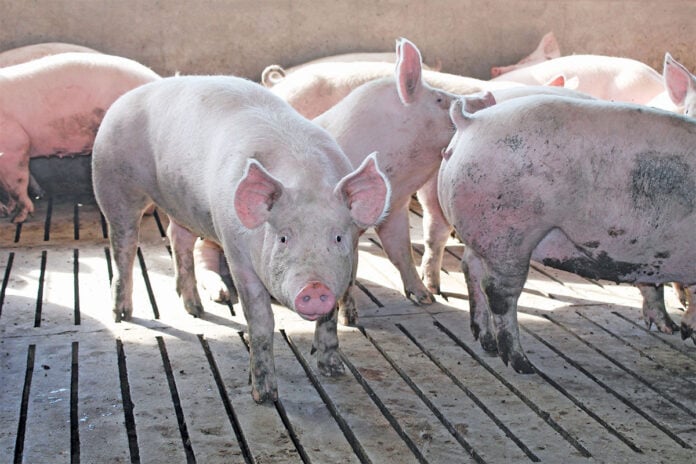
Feed conversion ratio (FCR) sits at the heart of commercial pig production efficiency, directly influencing cost/kilogram gained and overall system profitability. Yet achieving optimal performance is rarely about a single intervention. It depends on the interaction between nutrition, health status, environment, genetics and day-to-day management.
In South African production systems, where environmental stress and infrastructure constraints often add additional pressure, understanding these interactions becomes even more critical.
Under well-managed commercial South African conditions, realistic FCR targets are approximately 1,3 to 1,5 for weaners and 2,3 to 2,5 for overall grow-finish pigs. Top- performing commercial systems with strong genetics, good health status and controlled environments may even achieve better figures.
Cara Nel, monogastric development specialist at Vitam International, says producers who consistently achieve strong feed efficiency are typically those who monitor performance closely and respond early to subtle changes in production patterns, rather than waiting for obvious declines.
To maintain consistently good FCRs and prevent a drop, early detection is critical, as feed conversion problems usually develop gradually.
“One of the earliest indicators is increased feed intake without proportional growth, where pigs consume more feed, but fail to achieve expected weight gains. This typically shows up as a rising FCR before it becomes visible in production records,” explains Nel.
She says greater variation among pigs in a pen is another important warning sign.
“You may start to see a wider spread in weights within the same group, with some pigs pulling ahead while others fall behind. This unevenness is often linked to inconsistent feed access, feeder competition or suboptimal gut health, and it eventually drags down overall average daily gain.”
Health and environmental stressors also provide early clues. Even mild increases in coughing or digestive disturbances such as diarrhoea can indicate that pigs are under physiological pressure and not utilising feed efficiently. Heat stress further compounds this by reducing feed intake and masking underlying inefficiencies.
From a practical management perspective, Nel notes that excess feed accumulating under feeders suggests wastage rather than consumption, while wet pens and inconsistent manure quality often point to digestive imbalance or poor nutrient utilisation.
Environmental constraints
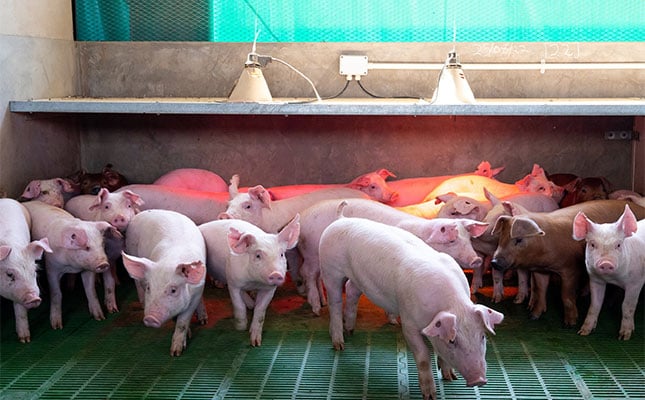
“Environmental constraints remain one of the most influential factors affecting FCR. Cold conditions force pigs to divert dietary energy towards maintaining body temperature, while heat stress reduces feed intake and increases maintenance energy demands.
“Ventilation problems, particularly elevated ammonia or carbon dioxide levels, also suppress appetite. High stocking density increases stress and disease transmission, while limited feed and water space leads to competition and uneven performance,” says Nel.
Temperature, ventilation and space are often underestimated drivers of inefficiency, particularly in older housing systems not designed for current production intensity.
Nel says that environmental stress is particularly significant in South Africa, where hot summers, older infrastructure, and limited insulation or ventilation capacity increase pressure on pigs.
“Rising litter sizes and higher numbers of piglets weaned have also pushed stocking densities in many systems beyond original design capacity.”
Nutrition-related challenges add another layer to achieving favourable FCRs. Variable raw material quality due to cost pressure, feed wastage from poorly adjusted feeders, and incorrect particle size all reduce efficiency.
Nel explains that feed that is too coarse limits digestibility, while overly fine feed can cause bridging or increase the risk of ulcers.
Water quality and flow rates are equally important, as poor access directly reduces both water and feed intake.
Health challenges are another driver of low FCRs. Subclinical respiratory and enteric disease divert nutrients away from growth and toward immune response, while gut disturbances such as diarrhoea reduce nutrient absorption.
Nel notes that these hidden challenges often explain why performance drops before any obvious clinical signs appear.
Nel states that while genetics play a role in FCR, the more common issue is the failure to align nutrition programmes with modern genetic potential.
“Genetics set the upper ceiling for performance, but management determines whether that potential is achieved. Even the best genetics and diets cannot compensate for poor ventilation, heat stress, overcrowding, disease pressure, or feeder mismanagement.”
Poor feed conversion
Farmers who suspect FCRs are dropping need to take a structured approach to determine the cause and remedy. This is since poor FCR is rarely driven by a single factor.
Nel advises farmers to first do a feed-related evaluation, looking at raw material quality, possible mycotoxin contamination, feed consistency, nutrient specifications and whether diets match growth stage and genetic potential. Changes in intake patterns can also signal early issues linked to health, palatability or environmental stress.
Management and environmental conditions should then be assessed, including feeder adjustment, feed wastage, water quality and flow rates, stocking density, ventilation, and temperature stability. Nel emphasises that even small inefficiencies in these areas can have a disproportionate effect on performance.
Production records can provide additional insight into where problems originate.
“Increasing weight variation among pigs in a pen, along with shifts in growth curves and rising mortality or morbidity, often indicate developing problems before clinical signs emerge.”
Nutritional pitfalls
Veterinary diagnostics are essential where disease is suspected, particularly for identifying subclinical respiratory or enteric challenges affecting gut integrity and nutrient utilisation.
“Ultimately, poor feed efficiency is usually the result of multiple interacting pressures rather than a single cause, requiring a holistic system-level assessment,” says Nel.
While feed cost pressure is a reality for farmers, Nel says that one of the most common mistakes farmers make is reducing nutrient density too aggressively to cut feed costs.
“This can disrupt amino acid balance and reduce dietary energy, increasing cost per kilogram gained rather than improving it. Farmers should instead focus on cost per kilogram gained rather than feed price per ton alone.”
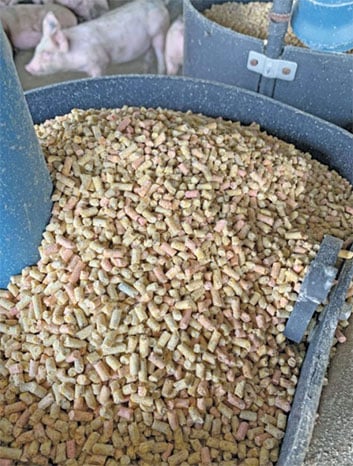
She highlights that poor particle size and inconsistent feed quality are also major issues. “Excessive fines or poor pellet quality directly increase feed wastage and reduce intake consistency.”
Inadequate nutritional adjustments during heat stress periods further undermine performance.
Farmers are advised to seek out knowledgeable nutritionists to develop feeding strategies that balance cost and performance.
“A nutritionist who is actively involved on-farm and able to physically assess how dietary changes influence pig growth and performance is essential for making practical adjustments and optimising results,” says Nel.
Raw material procument
For commercial producers who manufacture their own feed, raw material procurement is one of the most critical factors to consider.
Nel notes that if raw materials are purchased at high prices, it becomes extremely difficult to reduce feed costs without compromising diet quality or performance.
When formulating diets, there are minimum inclusion levels for key nutrients that need to be maintained to support optimal performance.
“While there is flexibility within certain ranges, formulations can be adjusted according to the specific objectives of the farm, as each producer has different production goals and priorities they aim to achieve.
“Rather than focus on least-cost formulation, nutritionists should look at formulating diets according to the producer’s needs and production objectives, while achieving the best possible cost per ton without unnecessarily compromising quality. It is important to recognise, however, that as diets become progressively cheaper, trade-offs in ingredient quality and overall nutritional value often become unavoidable.”
Practical strategies include formulating on digestible amino acids rather than crude protein, implementing ingredient quality control systems, monitoring cost per kilogram gained, adjusting nutrient density according to health and environmental conditions, and using enzymes, probiotics and highly digestible ingredients strategically.
FCRs should be monitored frequently to detect any problems before they escalate. Nel notes that the frequency of monitoring will vary depending on the farm system, level of record-keeping, and production goals.
“There is no single correct approach, but consistency is key. Common practices include measuring FCR weekly at pen or house level, calculating it at the end of each production phase, or assessing it per batch at marketing.
“Some producers also choose to track FCR more frequently, for example at each diet change, which can provide useful insight into how feed transitions impact performance, or if the diet provided during that phase is delivering the intended outcomes.”
What is most important is not necessarily how often FCR is measured initially, but that a system is in place. Once baseline data is consistently captured, producers can refine their approach and identify the monitoring strategy that best supports decision-making on their specific unit.
The nutrients that matter most
Further to feed quality, there are also essential nutrients that pigs need to maximise feed conversion. This includes amino acids, which need to be carefully balanced to achieve efficient growth.
Nel notes that lysine is the primary limiting amino acid in pig diets due to its key role in lean tissue deposition. “Optimal efficiency depends on aligning standardised ileal digestible (SID) lysine with dietary energy so amino acids are directed towards protein deposition rather than wasted.
“Equally important is maintaining the correct SID lysine ratios with other essential amino acids, particularly methionine, cysteine, threonine, tryptophan, valine, and isoleucine.
“These amino acids must be supplied in balanced proportions relative to lysine, as deficiencies in any one of them will limit protein synthesis, even if lysine itself is adequate.”
Mineral balance also supports performance, particularly the calcium-to-available phosphorus ratio for skeletal development and electrolyte balance during heat stress. When these ratios are incorrect, protein deposition efficiency declines and maintenance energy demands increase.
Since nutrient requirements change rapidly as pigs grow, phase feeding is essential to align feed composition with what pigs need at a specific age.
Aligning diets with these changing requirements improves nutrient utilisation, reduces nitrogen excretion, and lowers cost per kilogram gained, as expensive nutrients such as amino acids are not over- supplied for longer than necessary.
Nel, however, notes that the effectiveness of phase feeding depends on how it is applied.
“Many production systems still use too few feeding phases, which leads to either nutrient oversupply in early stages, or deficiencies in later growth, both of which reduce efficiency.
“On the other hand, increasing the number of phases does not automatically improve performance. If phase changes become too frequent or poorly managed, it can create operational complexity, increase the risk of feed handling errors, and reduce consistency in feeding practice.
“The most effective systems therefore aim for a practical balance – typically using three to five well-designed feeding phases that meaningfully match changes in growth physiology, rather than excessive segmentation. In this way, phase feeding becomes both biologically precise and economically efficient, without adding an unnecessary management burden,” says Nel.
Adapting to modern genetics
While advancement in pig genetics have brought about improved FCRs, Nel notes that environment and management still carry the most weight in determining FCR.
“Genetic variation in feed efficiency exists, but among modern commercial lines it is relatively small due to strong selection for lean growth and efficiency. Differences are more often expressed through how well genetics perform under different environmental, health and management conditions.
“Greater variation appears when comparing modern commercial crossbreds with pure lines or older genetics, which generally show lower efficiency and slower growth. Overall, performance depends heavily on how well genetics are supported through nutrition, health and environmental management,” adds Nel.
Modern high-performing genetics require precise nutritional and management support, particularly in digestible amino acid supply relative to energy intake. SID lysine-to-energy ratios, ideal amino acid balance, digestibility, and phase feeding are critical for optimal performance.
Because these pigs have extremely high metabolic demands, they are also less tolerant of nutritional inconsistencies, environmental stress, overcrowding, poor feeder management, or health challenges.
Small inefficiencies that may previously have had minimal impact can now result in measurable reductions in performance.
Precision feeding
A range of emerging technologies and precision production systems are showing strong potential to improve feed efficiency and overall production performance in modern pig units.
Nel notes that such systems are part of the broader shift toward precision livestock farming and data-driven nutrition management, where real-time information is used to optimise decision-making.
Nel lists key technologies that include precision feeding systems, which adjust nutrient supply based on growth stage or even individual animal requirements, helping to improve nutrient efficiency and reduce wastage.
“Automated feed intake monitoring systems provide continuous data on consumption patterns, allowing early detection of deviations linked to health, stress, or management issues.”
Water monitoring systems are also increasingly important, as water intake is closely linked to feed intake and overall metabolic function.
The strongest gains are not driven by any single technology, nutrient or intervention, but by how consistently all elements of the production system work together.
Sustained performance depends on aligning health, environment, nutrition and management in a way that allows modern genetics to express their full potential under commercial conditions.
For more information, email Cara Nel at [email protected].