
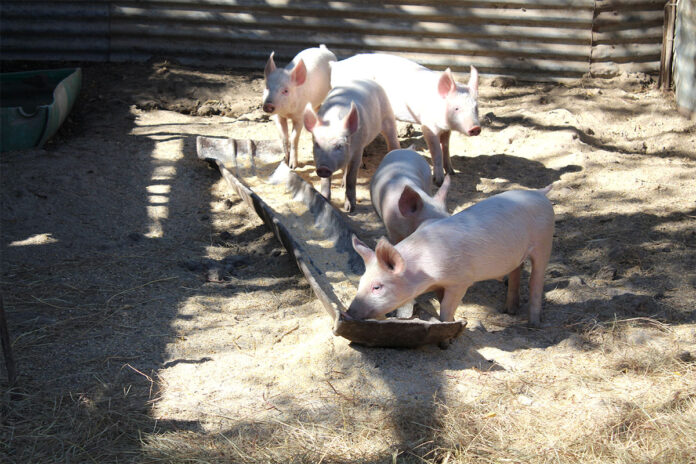
Pig farming has become increasingly popular in small-scale farming operations, but often farmers do not consider the important dietary needs of these relatively scientifically complex animals.
The following information regarding the dietary needs of the different classes of pigs does not constitute exact diets, but rather outlines the basic needs and factors you should be considering.
Feeding a pig just bran or unbalanced swill or scraps will seldom result in decent growth rates and healthy animals. Poor diets can expose pigs to various diseases or to opportunistic infections that can occur due to compromised immunity.
Basic Feed Needs for Piglets Before Weaning
- Main job: Get them eating solids early so weaning isn’t a shock.
- Feed: Sweet, milky ‘creep feed’ in small amounts from seven days old.
- Key point: They won’t eat much, but it trains their gut.
Weaners: three to 10 weeks old
- Main job: Keep them alive and growing after losing their mother’s milk.
- Feed: Best quality feed on the farm. High protein, easy to digest.
- Key point: Stress kills weaners. Keep them warm and dry, and feed them small meals often. Provide ad-lib feed and good quality water.
Problem if wrong: Diarrhoea, thin pigs, and deaths.
Growers: 10 weeks to 70kg
- Main job: Build muscle and frame quickly.
- Feed: Good quality grower meal. Still fairly high protein.
- Key point: Let them eat as much as they want. This is where you make money on growth.
- Problem if wrong: Slow growth means more days eating and less profit.
Finishers: 70kg to slaughter
- Main job: Put on weight cheaply without getting fat.
- Feed: Cheaper feed than growers. Less protein, more maize and energy.
- Key point: This is about 60% of your feed bill. Don’t waste money here.
- Problem if wrong: Over-fat pigs result in penalties at abattoir.
- Gilts: Young females before first litter
- Main job: Grow big and strong, not fat.
- Feed: Like finisher feed, but limit it. Control the amount.
- Key point: Fat gilts don’t breed well and can develop leg problems.
- Special trick: Feed extra for two weeks to increase litter size.
Pregnant Sows
- Main job: Keep condition, grow foetuses, and don’t get fat.
- Feed: Cheaper, bulky feed with lots of fibre. Fill them up but limit energy intake.
- First three months: Only 2kg/ day if the sow is in good condition.
- Last month: Bump to 3kg/day as the piglets grow rapidly during this period.
- Key point: Fat sows have birthing problems and often crush piglets.Thin sows give small litters.
- Problem if wrong: Small litters, weak piglets, hungry sows fighting.
Lactating Sows With piglets
- Main job: Produce lots of milk without losing too much weight.
- Feed: Best feed on the farm, as much as she can eat.
- Key point: One sow with 12 piglets can need 8kg/day. If she doesn’t get it, she will lose condition.
- Problem if wrong: Sows become thin, don’t come on heat again, and may produce smaller litters.
Boars
- Main job: Stay fit and keen to work, not fat and lazy.
- Feed: Similar to pregnant sow feed. About 2,5kg/day.
- Key point: Fat boars have poor sperm and won’t mount. Thin boars lack energy.
The more pigs are growing or milking, the better feed they need. Weaners and lactating sows need top quality feed. If they just need to maintain condition, feed can be cheaper and intake limited.
If drinking is slow or compromised, it jeopardises your entire operation. Check water supplies daily.
This advice is solely about nutrition considerations, but the animal health dimension of your farming operation is also important.
This includes factors such as vaccinations, iron injections for young piglets, deworming, and biosecurity measures.
Shane Brody is involved in an outreach programme aimed at transferring skills to communal farmers.