

Caxton Magazines


Advice about borrowing money
With farming profitability under pressure, it often happens that a farmer works all year to produce a crop to sell, but at the end of the season does not have enough money to repay the production loan.
Saving a community’s chicken farm
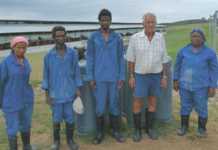
A six-year-old, municipal-funded, community-based broiler project near East London in the Eastern Cape has struggled to survive due to poor management and chronic theft. But it achieved a R26 000 profit in the first production cycle after Red Crest Farms, one of the biggest commercial broiler producers in the region, took over the management of the project,
Drought-proof Ngunis
You have to confront sentiment about your livestock head-on when faced with drought, says Trenly Spence, a Nguni stud breeder and holistic cattleman who has weathered 25 months of drought in the Karoo. Heather Dugmore reports.
All that is green may not be healthy grazing
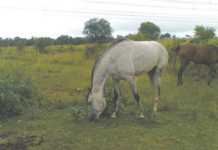
The seeds of Datura species can cause fatal impaction colic, warns Dr Mac.
It’s a tough road for vegetable farmers
Dear Bruce Roberts-Baxter, Your chillingly accurate letter to Farmer’s Weekly for the issue 26 February 2010, captures the plight of many farmers setting out to make a living from farming.
Pravin’s budget: a successful balancing act
Finance minister Pravin Gordhan has managed to balance income and expectations with his first budget, albeit without mentioning agriculture.
Here’s an opportunity to farm in Africa
Thanks to an established South African-based farming company, adventurous local farmers can now broaden their horizons with an opportunity to farm in other African countries.
A cutting edge agricultural information system for KwaZulu-Natal
The KZN Department of Agriculture, Environmental Affairs and Rural Development’s Bioresource Programme lays a firm foundation for improved farm decision making, reports Lloyd Phillips.
State to sieze SA’s land?
Though Government has assured farmers and other stakeholders that it doesn’t plan to nationalise farmland, its written policy implies otherwise. The consequences would be disastrous, writes Frans Cronje, deputy CEO at the South African Institute of Race Relations. This independent think-tank that has produced cutting-edge research and policy critiques on South Africa since 1929.

Nice horse, pity about the rider
Competitive behaviour is human nature. Deep inside all riders, there is a desire to compete in shows. You polish yourself and your horse, you practise until you’re sure that you’re ready.
Growing your own seedlings
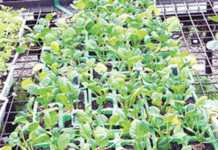
If you don't want to buy seedlings from a commercial nursery, you can grow your own. If they are successful, you could maybe even sell them.
Pigeon points champions
Pigeons are judged on the quality and consistency of their races, writes Thomas Smit.
How to transplant seedlings
Last week we discussed planting seed directly into the ground. While this works for some plants, for most it's better if the seed is first planted in seedling trays or containers.
Planting seeds – part 1
Now that you are done with preparing your beds and ready to plant, you have to decide how you want to go about planting your seeds.
Jump for joy!
Any horse person will tell you about the hours of laughter that you'll get out of sharing jump stories. Go to the Sappi horse trials and you will notice how difficult it is to find a spot next to the water jump.
Buying a good ram
Fertile, good-quality sheep are key to better production, healthy lambs and high-quality meat. Since one ram mates with up to 40 ewes in a season, and its genetics make up half of the lamb flock, a good ram is very important. Buy the best ram you can afford, from a reputable breeder that you trust.
Preparing a vegetable plot
Preparing a vegetable plot can be hard work, but it's rewarding when you harvest your first crop.
How chickens can fertilise your crops
Chicken manure can add many nutrients to your soil, and works better than most other manures.
Wagyu Cattle: Producing Kobe beef at R1 500/kg
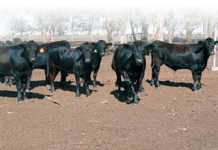
Brian Angus is the owner of the first and largest herd of Japanese Wagyu cattle in South Africa. He desired to introduce South African gourmets to locally-produced Wagyu beef.
- ADVERTISEMENT -
- ADVERTISEMENT -
MUST READS
- ADVERTISEMENT -



