

Planting a crop and not controlling stem borers may seem counterintuitive, but it is exactly what is necessary to protect insect-resistant technology in maize, cotton and soya beans.
To protect the long-term effectiveness of Bacillus thuringiensis (Bt) technology in maize, cotton and soya beans, South African producers are urged to improve compliance with refuge planting requirements to slow down the build-up of insect resistance to the technology. This call came at an information session on insect resistance management hosted by Bayer earlier this month.
Bt genes most commonly used
Professor Johnnie van den Berg, director of EntoAgri, emphasised that responsible technology use and collaboration across the agriculture value chain are essential to sustaining the benefits of genetically modified (GM) maize.
Farmers face the dual challenge of achieving high yields while protecting the environment and remaining profitable.
Insect-resistant traits or products that are commercially available on the market today are mostly derived from genes obtained from bacteria, the most common being Bacillus thuringiensis (Bt). These Bt-derived genes produce various crystalline proteins (called “Cry” proteins), which are ingested by the larvae of target pests. In their crystalline form, these proteins are inactive.
After ingestion, the proteins are solubilised due to the high pH in the insect gut, and they become active. They bind to specific receptors on the gut wall of the target insect, causing lesions that lead to death as the gut contents and haemocoel contents mix.
Increase in biotech crops
The global adoption of biotechnology in agriculture is characterised by a significant increase in the use of genetically modified crops. The adoption of biotech crops has seen remarkable growth, with a staggering 191,7 million ha of biotech crops planted across 26 countries by 17 million farmers by 2018. This represents an approximately 113-fold increase in area since their commercial introduction, with an accumulated global area reaching 2,5 billion ha.
By 2025, nearly half of the agricultural land cultivating genetically modified crops worldwide was used for soybeans, making them the most prevalent crop for GM adoption based on land use. Maize is second on the list. This reflects the widespread trust farmers place in biotech crops.
However, pests exposed to pesticides and Bt proteins can and will eventually develop resistance to them.
“This is not strange or surprising, since continued exposure to an insecticidal substance in insect populations will ultimately lead to a portion of the insect population developing resistance,” Van den Berg explained.
Insect resistance challenges
Insect resistance, as with the development of resistance in any other organism, is about the changes that occur in the genetics of the target insect population. Each individual in the population experiences the same selection pressures, but they react differently depending on their individual genetic make-up.
However, should one or two individuals in a pest population survive exposure to the Bt protein and mate, their offspring would also be resistant, and the pest population would rapidly become resistant to the specific trait.
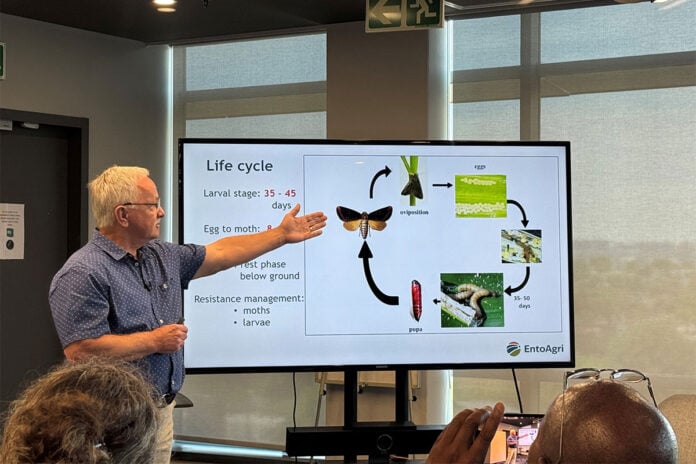
“Resistance is a natural evolutionary process in which insects carrying resistance genes survive and reproduce, gradually increasing the proportion of resistant individuals in a population. It takes, on average, about 6,6 years for a population to develop resistance,” Van den Berg noted.
He stressed, however, that it is not the Bt maize hybrid or technology that is becoming less effective or not working, but rather the insect that has developed resistance. Van den Berg cited research that shows that Bt maize delivered an average annual yield gain of some 11% over the past 20 years, with aggregate income benefits of R21 billion for South African maize farmers.
In addition, he pointed out, the technology has also contributed to reduced insecticide use. Over a 15-year period, approximately 21 million ha were not sprayed, resulting in a significant environmental benefit by lessening the exposure of beneficial insects to broad-spectrum insecticides.
The importance of creating refugia
The challenge, Van den Berg said, was to get all stakeholders to work towards a common goal.
Integrated Pest Management (IPM) is a strategy that focuses on the long-term prevention of pests and their damage through a combination of techniques such as regular crop scouting, crop rotation, biological control, targeted chemical control, habitat management, and the use of genetically modified organisms (GMOs) and resistant crop varieties.
Managing resistance in insect pests in insect-resistant crops is an important part of Integrated Pest Management practices. Insect Resistance Management employs the use of refuge fields to build up populations of susceptible pests, and where compliance is high, the risk of resistance development is greatly reduced.
Planting refugia is important, but equally important is planting them in the correct manner. According to CropLife SA, the following aspects are important:
- The refuge hybrid must have the same maturity as the hybrid containing the Bt trait.
- The refuge hybrid must be planted within seven days of planting the hybrid containing the insect resistance trait.
- The refuge hybrid must be planted and managed in the same way as the hybrid containing the insect resistance trait.
- Refugia must be at a distance of 400 m or less from the field planted to the traited hybrid.
- Neighbouring farmers planting non-GMO maize do not qualify as a refuge.
- The refuge should be a minimum of six rows, except for smallholder farmers, where six rows may exceed a 5% refuge area.
- Refuge areas should be positioned such that at least two borders of the field containing the traited product are adjacent to the refuge.
Francois Wolvaardt, DEKALB seed and trait business portfolio manager for Africa, supported the importance of refuge compliance, noting that new traits are on the horizon and that, until they become commercially available, the current traits should be protected.
“With approximately 80% of the country’s maize hectares planted with products offering insect control or herbicide tolerance, it clearly shows that farmers in South Africa rely on biotechnology to support crop production.”
Wolvaardt emphasised that sufficient refuge planting is one of the most important actions farmers can take to protect the value these technologies provide.
“Farmers must treat refuge planting as a necessary part of their production plans rather than an optional activity. Consistent compliance across farming operations can help slow resistance development and extend the useful life of Bt maize technology.”