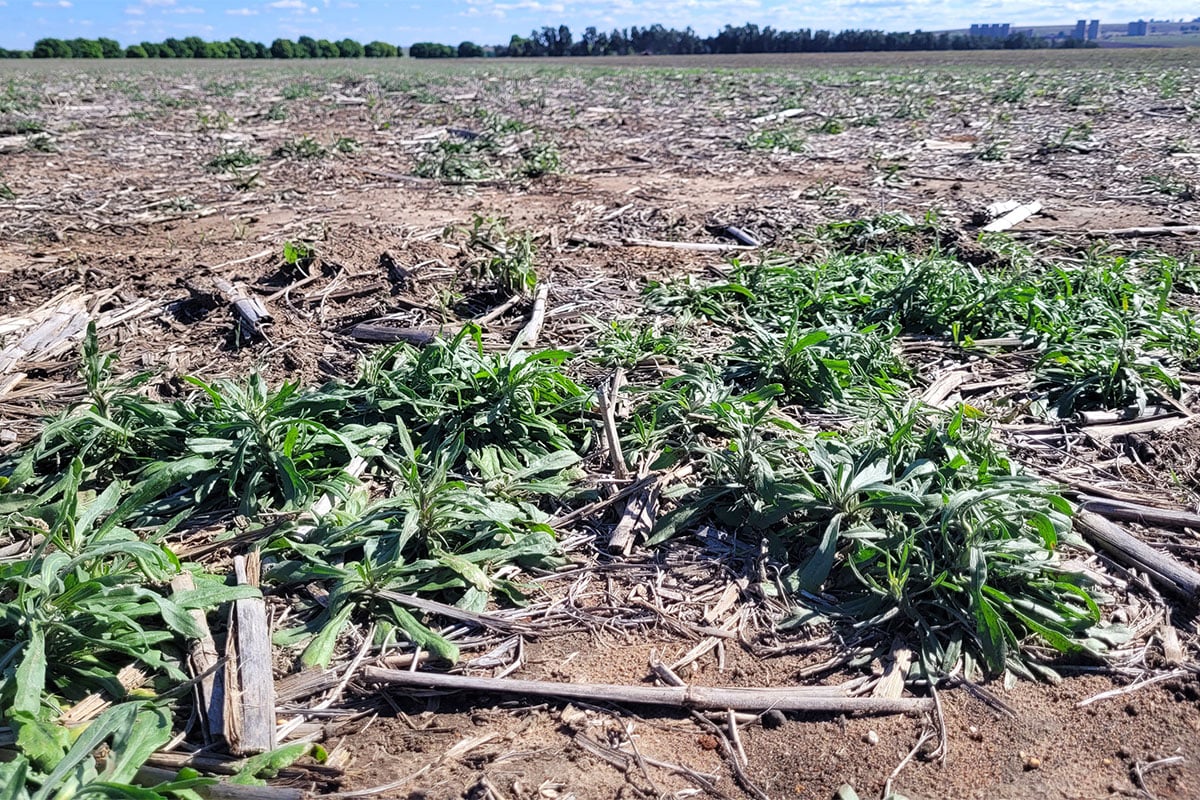
A herbicide application that leaves a few weeds standing might seem like a minor setback. But those survivors could be the beginning of a much bigger problem, one that becomes increasingly difficult and expensive to control with every growing season.
Across South Africa, herbicide resistance is becoming a growing concern, particularly in no-till grain operations where farmers rely on chemical weed control. Common pigweed, Palmer amaranth, ryegrass and fleabane are among the species already showing resistance, while other weeds are emerging as potential threats.
Weeding out the herbicide -resistant plants
Palesa Mmereki, a molecular biologist at the Agricultural Research Council (ARC), explains that resistance develops through natural selection.
“When a herbicide is repeatedly applied, most susceptible weeds die, but individual plants with genetic characteristics that allow them to survive may remain. These survivors reproduce, passing their resistance to subsequent generations until an increasing proportion of the population can withstand the herbicide. The result is a weed population that can survive a herbicide dose that would normally kill plants of the same species.”
Professor Juan Vorster from the University of Pretoria and co-leader of the South African Herbicide Resistance Initiative, adds that the genetic characteristics of certain weed species make them particularly troublesome.
“However, farming practices also play a significant role. Overreliance on glyphosate, limited herbicide rotation and production systems that depend almost entirely on chemical weed control are contributing to the problem.”
Although herbicide resistance is increasingly evident in South African fields, the full extent of the problem remains uncertain. Vorster points out that, of the 49 countries in sub-Saharan Africa, only three have reported cases of herbicide resistance. The first report dates back almost 40 years, with subsequent cases reported sporadically.
He believes the shortage of specialised weed scientists researching herbicide resistance means the available data probably underestimates the true extent of the problem.
In South Africa, however, several resistance hotspots have already been identified, with different weed species dominating particular production regions.
Summer grain regions
Vorster notes that common pigweed (Amaranthus hybridus) is among the most concerning weeds in the summer rainfall regions.
“Glyphosate-resistant populations have been identified around Winterton and Bergville in KwaZulu-Natal, with the problem extending beyond these areas.
“In Gauteng, Mpumalanga and the Free State, populations resistant to glyphosate and acetolactate synthase (ALS)-inhibiting herbicides are becoming increasingly problematic. Delmas, Standerton, Reitz, Heilbron and Bethlehem are among the most affected production areas. Resistance is particularly evident in maize, soya bean, dry bean and sunflower fields.”
Glyphosate belongs to Herbicide Resistance Action Committee (HRAC) Group 9, while ALS inhibitors fall into Group 2. These group numbers identify herbicides according to their modes of action, or the processes they disrupt within a plant.
Resistance to atrazine, a Group 5 herbicide, was already identified in 1990 and is now appearing again.
Another troublesome species is Palmer amaranth (Amaranthus palmeri), which is concentrated mainly in the Northern Cape, North West and Limpopo.
Glyphosate resistance is the primary concern, particularly in cotton production, although the weed also affects maize and soya beans.
Vorster warns that herbicide-resistant Amaranthus populations are spreading rapidly, making these species a priority for surveillance and control.
Winter rainfall regions
In the Western Cape’s cereal-producing regions, Vorster says that ryegrass (Lolium species) presents a different challenge. “The weed is particularly troublesome in wheat production, although it also affects canola and other crops, and appears to be spreading beyond its established areas. Resistance to glyphosate and paraquat (Group 22) is among the problems identified in ryegrass.”
Mmereki notes that wheat monoculture has contributed to increasing weed seedbanks, creating conditions in which weed populations can persist despite repeated control measures. “The problem extends beyond the weeds visible above ground. Ryegrass produces seeds that fall onto the soil, where some germinate under suitable conditions while others remain dormant.
“Consequently, removing the weeds currently growing in a field does not necessarily eliminate the population. Seeds already present in the soil can produce new infestations in subsequent seasons.”
Widespread and emerging threats
Fleabane or horseweed (Conyza bonariensis) is another concern across South Africa, with glyphosate-resistant populations already documented.
Vorster also identifies grass weeds such as feathertop grass (Chloris virgata) as emerging threats that warrant closer attention.
While farmers are reporting reduced effectiveness of several other herbicides, he cautions that poor control does not automatically mean resistance has developed. Resistance must be established through controlled testing.
One of the greatest difficulties in managing resistant weeds is their capacity to reproduce and spread before farmers recognise the problem. Vorster says resistance can develop in as few as three generations under certain conditions. He refers to an experiment in the US in which Amaranthus plants developed resistance after exposure to sublethal herbicide doses through spray drift.
“Similar conditions can occur along field boundaries, where weeds receive herbicide drift rather than a full application. Once resistant plants survive, their seeds can spread through several routes. Harvesters can transfer resistant weed seed between fields and farms, while mud on vehicles can carry seed to new locations. Depending on the species, birds and livestock can also contribute to dispersal,” Vorster explains.
Mmereki notes that wind can also spread weed seed and that South Africa currently has no phytosanitary regulations specifically addressing the movement of agricultural machinery between farms to mitigate this challenge.
But the most significant danger may be allowing resistant weeds to reproduce within the field. Vorster explains that approximately 80% of Amaranthus seed can germinate in the first year, while seeds can remain viable for up to three years. A single plant can produce between 300 000 and 400 000 seeds. This means that even a small number of surviving plants can rapidly replenish the soil seedbank and establish a much larger infestation.
The implications for weed management are considerable. Preventing seed production is just as important as killing the weeds already growing in the crop.
Recognising resistance before it spreads
Early detection gives farmers a much better chance of bringing resistant populations under control. According to Vorster, one of the clearest warning signs is when some weeds survive an application while others of the same species, growing in the same area, die. These survivors may initially appear as isolated patches within a field.
However, he cautions that application problems must first be considered.
“Spraying weeds at the correct growth stage is essential, as plants that have grown too large may survive an application even when they are not resistant.”
If resistance is suspected, laboratory testing can help establish whether a population has developed the ability to survive a particular herbicide. Traditionally, this involves collecting seed from suspected resistant plants, growing it under controlled greenhouse conditions and applying different herbicide doses to assess the plants’ responses.
Mmereki says this process can take six to eight weeks.
“Although greenhouse testing remains important, the delay presents a challenge because surviving weeds may continue growing and producing seed while farmers wait for confirmation.”
Molecular testing offers a faster alternative for certain resistance mechanisms. Unlike greenhouse tests, which assess how plants respond to herbicides, DNA-based tests look for known genetic mutations associated with resistance.
However, Mmereki explains that not all resistance mechanisms can currently be detected using molecular techniques.
“In particular, reliable genetic markers for non-target-site resistance are not yet available in South Africa. This form of resistance involves mechanisms other than changes to the herbicide’s specific target within the plant. Consequently, greenhouse testing remains necessary to detect resistance that molecular tests cannot identify.”
New testing tools offer hope
Improving the speed and accuracy of resistance detection is a major objective of the Herbicide Action and Resistance Platform (HARP), launched in South Africa in 2026. The initiative brings together Grain SA, the University of Pretoria, Stellenbosch University, the University of the Free State, the ARC and CenGen to strengthen resistance surveillance and management.
Elsabet Wessels, acting chief scientist at CenGen, explains that the organisation is developing DNA-based testing services to identify known mutations associated with herbicide resistance.
The first phase involves implementing a testing panel developed by the University of Pretoria for common pigweed and Palmer amaranth. The panel helps distinguish between Amaranthus species and identifies known mutations associated with resistance to glyphosate and ALS-inhibiting herbicides.
A second phase, subject to funding, will focus on ryegrass, including resistance associated with glyphosate, ALS inhibitors and acetyl-CoA carboxylase (ACCase) inhibitors, which belong to Group 1.
Fleabane species are also being considered for testing targeting mutations associated with glyphosate and ALS resistance.
Wessels says molecular testing can provide results within two weeks when a known mutation is responsible.
Importantly, young plants can be tested before they produce seed, provided that suitable, correctly preserved samples are submitted. A single leaf sample can also be screened for mutations associated with resistance to multiple herbicide groups.
However, Wessels stresses that genetic testing is not a complete replacement for conventional methods.
“New or previously unidentified mutations, as well as resistance arising through entirely different mechanisms, such as non-target-site resistance, will not be detected by the genetic tests and will need to be confirmed phenotypically by other HARP partners.”
By combining genetic and greenhouse testing, HARP aims to build a clearer understanding of where different forms of resistance are occurring. High-throughput testing will allow large numbers of samples from different regions to be screened, potentially identifying emerging hotspots before resistant populations become widespread.
A national database and map of confirmed resistance could eventually help farmers and advisers make more informed weed-control decisions.
Breaking the resistance cycle
While improved diagnostics offer valuable opportunities, the foundation of resistance management remains good farming practice. Vorster emphasises that farmers should regularly inspect fields for weeds that survive herbicide applications. Surviving plants should be removed and burned rather than left in the field, where they may still contribute seed to the soil.
Rotating herbicides with different modes of action is particularly important. Farmers should pay attention to HRAC group numbers rather than merely changing product names, as different products may contain active ingredients that act on the same target.
Herbicide mixtures can also form part of an effective management programme.
Mmereki recommends an integrated approach combining crop rotation, herbicide rotation, pre- and post-emergence weed control and consistent field scouting.
“Diversifying cropping systems can reduce reliance on the same herbicide groups, whereas repeated maize and soya bean rotations or monocultures can create difficulties, particularly where glyphosate and ALS resistance are already present.”
Cover crops offer another means of suppressing weeds. Vorster identifies cereal cover crops, including sorghum, as potentially useful.
“Maintaining a competitive crop can also help limit weed establishment, although the approach must account for the biology of the particular weed. Amaranthus, for example, competes aggressively for nitrogen so increasing nitrogen availability can benefit the weed more than the crop.”
Mmereki adds that for farmers practising no-till or reduced tillage, the challenge is especially important. “These systems offer benefits such as reduced soil erosion and improved moisture retention, but their greater reliance on herbicides increases the importance of using different control strategies.”
Once resistance is confirmed, Vorster says affected populations can sometimes be brought under control, particularly when detected early, although doing so may be expensive. The objective is to prevent surviving plants from continually replenishing the seedbank.
Mmereki believes a better understanding of weed seed longevity, dormancy and emergence under South African conditions is essential to developing effective long-term strategies.“Knowing how quickly a seedbank can be depleted when plants are prevented from producing new seed would help farmers plan control programmes over several seasons.”
The success of resistance management depends on detecting problems early, preventing seed production and reducing the selection pressure that allows resistant weeds to dominate.
For farmers, it is important to understand that a handful of surviving weeds should never be dismissed as insignificant. Those plants may be the warning that a much more costly battle is beginning.