Wheat production is struggling to keep pace with projected global demand. With a growing world population, food demand is expected to increase by around 60% by 2050, while yield growth is slowing in many regions, due in part to climate change.
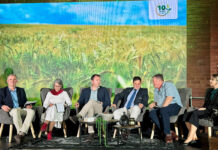
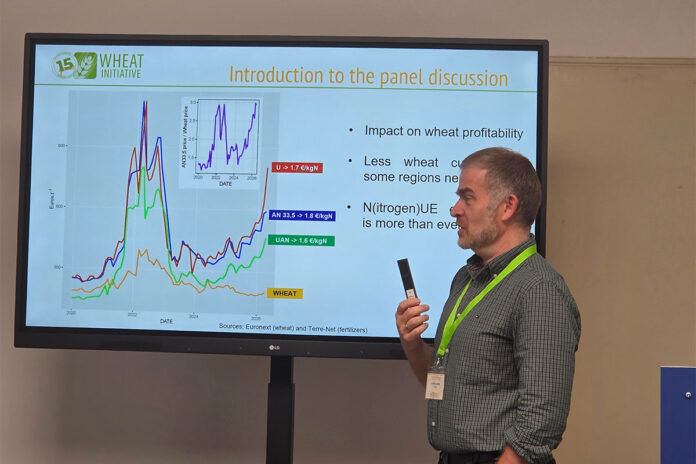
The annual meeting of the Expert Working Group (EWG) on Nutrient Use Efficiency in Wheat, held during the congress, which took place from 25 to 29 May, brought together not only members of the working group but also others with an interest in the future of wheat in global food systems.
Close to 800 leading researchers, policymakers, and representatives from the global wheat industry gathered to advance international collaboration and innovation in wheat science.
According to Wessels, one question stood out: how can wheat production remain resilient as fertiliser prices continue to rise?
Sharing research information is beneficial
The meetings of the Wheat Information Committees prior to the congress play an important role in supporting the dialogue between researchers, policymakers, and stakeholders and help to align and leverage efforts at the global level.
The discussions during the EWG highlighted the importance of shared scientific knowledge, long-term investment into collaborative research infrastructures, and coordination to strengthen resilient and sustainable global wheat production systems.
“The fact that South African wheat production is facing a reality that is different from most countries in the discussion hall was clear. Locally, we don’t just bear the cost load of expensive nitrogen fertilisers; we also compete directly against global markets on grain price and volumes. This double exposure makes the NUE (nutrient-use efficiency) conversation timely and urgent,” Wessels said.
However, he emphasises that NUE is not a standalone solution.
“NUE stands at the intersection of the interaction between genetics, environment, and management. Of these three, the environment is often the dominant force. Variables such as early rainfall after application, the timing of split fertilisation, and temperature during key growth stages all have an influence. These variables behave differently in the Western Cape or the Free State compared with the UK, the Punjab [in India], or Western Australia.”
According to Wessels, the following aspects stood out during an EWG workshop:
- The source and management of fertiliser are important. The right approach in one country may be the completely wrong approach in another.
- The environment drives NUE more than is often acknowledged. Post-application rainfall, the timing of application, and seasonal variability can override even the best agronomic plan.
- Breeding goals for wheat are more complex than simply looking at yield. In bread wheat, it is not just about tons per hectare and protein content but also the quality of the protein that is directly determined by nitrogen.
Locally anchored research is needed
These realities aren’t just conference-room theory. This was clearly visible in Italy during a technical tour and visit to Società Italiana Sementi, a leading wheat breeding and seed company that develops and markets a wide range of wheat products, as part of the pre-conference workshop.
According to Wessels, the visit showed first-hand how strong the relationship between environmental conditions, cultivation decisions, and ultimate product performance is and how differently these factors manifest from region to region. For a South African visitor, the contrast with our own circumstances is stark and instructive.
Wessels explains that, according to South Africa’s wheat breeding requirements, there are several unique quality requirements that stand out.
“Although yield always remains the foundation, in South Africa it is only the starting point of a much stricter evaluation process.”
South Africa’s cultivar release system requires new wheat cultivars to meet a range of integrated quality values before they can be commercially released. These requirements are not arbitrary; they reflect the specific needs of the South African grinding and baking industry.

Protein quantity and quality are equally important. Gluten strength, which refers to the ability of the gluten network to retain gases during dough rising, determines bread volume and structure. Dough ductility (its stretchability before tearing), and the balance between strength and ductility, influence dough behaviour during mechanical processing.
Gluten quality correlates directly with baking and processing performance. A cultivar with excellent yield but a poor gluten profile will not pass the South African wheat cultivar release process, regardless of its agronomic performance. Bread volume remains the final measure of a cultivar’s suitability for the local market.
“This is where the NUE conversation in South Africa gets particularly complicated. Nitrogen doesn’t just drive yield; it drives protein content and gluten development. The challenge is to provide enough nitrogen for optimal protein formation and gluten quality without excessive application increasing costs and increasing environmental risk, in an environment where rainfall, soil type, and seasonal variability profoundly affect nitrogen uptake and utilisation,” says Wessels.
He adds that this triangle – yield, quality, and cost-effectiveness – is at the heart of South Africa’s NUE challenge.
“This challenge cannot be solved by directly applying research results from Europe or Australia. This requires locally anchored research, with cultivars bred for our conditions and quality standards that our market demands.”
Learn from the world, but adapt to local realities
“What really surprises me is a recurring sentiment from industry insiders – a kind of benchmark instinct: ‘Let’s see what they’re doing and replicate it.’ I understand the impulse, but I’ll push against it. The plan can be the same, but it needs a very different implementation strategy.
“South Africa absolutely needs to learn from global NUE research, but we need to filter every insight through our own soil types, rainfall patterns, market realities, and end-use quality requirements,” argues Wessels.
“The research gaps we identified in Italy point to real research opportunities – locally relevant, locally designed, and built around the unique pressures that South African wheat farmers face.”
What’s next?
According to Wessels, the outcome of the congress has confirmed that the world’s wheat researchers are serious about NUE.
“The solutions, however, need to be adapted to local circumstances. For Syngenta, this means research that respects our soil, our climate, our market, and our quality standards. The gaps have been identified.”
The opportunity is ours to take advantage of, he concludes.
For more information email Roean Wessels at [email protected], or visit wheatinitiative.org.