Latest articles
Getting a silage maize crop into the bunker chop-chop
In terms of its cost-benefit ratio, silage maize is arguably the best-value stored green feed for milk production systems in the KwaZulu-Natal Midlands. However, to maximise the nutritional quality and quantity of this crop, it is important to harvest and handle it at the correct time and in the correct way.

Vegan demand presents new opportunities for marginal sugar farmers
North American yellow field peas could be a lifeline for struggling sugar cane farmers. As an ingredient in tasty meat-replacement products, the future of this relatively unknown crop looks bright. Mark Hassenkamp, chief agriculture operations director at global plant-based food company LiveKindly, spoke to Lindi Botha about the advantages of yellow field peas over sugar cane, and why the crop is also superior to soya beans.
Climate-proof, no-till crop production in the maize triangle
Cocky Mokoka has been farming since 2007, but only started incorporating conservation agriculture principles to improve his soil in 2015. He spoke to Pieter Dempsey about the practices he implements on his 740ha farm.

New pumpkin variety set to make inroads into high-end market
The demand for convenient meals and easy-to-prepare vegetables is opening up marketing opportunities for the Hokkaido pumpkin, a newcomer to South Africa. Small, and with an edible peel, the variety holds much promise for expanding cucurbit cultivation. Lindi Botha spoke to Francois Steyn about farming the Hokkaido.

Helping small-scale farmers reach commercial status
Sinelizwi Fakade is a successful grain farmer in the Eastern Cape, but it is his passion for helping small-scale and subsistence farmers improve production that makes him particularly compelling, says Pieter Dempsey. He spoke to Fakade about his farming operation and his role in mentoring future farmers.
Chillies: a hot crop if you know what you’re doing
Diversifying with chillies has enabled Klein Karoo stone fruit farmer JD van Deventer to increase cash flow, use orchard space more efficiently, and mitigate the climate- and market-related risks associated with fruit production. He spoke to Glenneis Kriel.

Maize growing tips from a top new commercial farmer
Paulus Mosia from Edenville, Free State, a finalist for the 2019 Grain SA/ABSA/JohnDeere Financial New Era Commercial Farmer of the Year award, says that by using better inputs and improving production management, he increased his maize yield from 3,2t/ha to 5,2t/ha in just one year.

A thriving cabbage farm in the heart of Mbombela
Cabbage can be undemanding, provided the right checks and balances are put in place and the crop is managed meticulously. Lindi Botha spoke to farmer Bright Matimbe about producing healthy cabbage all year round in the Lowveld city of Mbombela.

Starke Ayres cabbage shines in winter planting programme
The Starke Ayres STAR 3316 cabbage cultivar has shown excellent growth and cold tolerance during a very cold winter in 2020. The company offers a range of cultivars for different harvesting periods.

Irrigated wheat: Conservation farming improves water usage and yield
South Africa’s water scarcity and the necessity to import well over one million tons of wheat annually mean that the country’s winter wheat growers increasingly have to optimise their water-use efficiencies. KwaZulu-Natal farmer Egon Zunckel spoke to Lloyd Phillips about his family’s own efforts to achieve higher wheat yield from less water.

‘Go after what you want’ – lessons from a young spinach farmer
Gauteng-based Gugulethu Mahlangu says volunteering for experienced vegetable farmers gave her the confidence to launch her own successful career in farming.

Making lucerne hay while maximising soil health
Free State irrigation farmer Freek Strauss grows lucerne for the local and export markets. At the same time, the crop improves the soil’s condition, thus increasing the yields of other crops in rotation.

All you need to know about cutworm control
The common cutworm is a prominent maize pest in South Africa. Professors Johnnie van den Berg and Hannalene du Plessis, researchers at North-West University’s Integrated Pest Management Research Group, provide some useful tips on identifying and controlling this pest.

Easy-to-grow brinjals ensure steady profits
Any farmer will tell you that there is no such thing as a perfect crop, as each has its own challenges. From a production point of view, brinjals are as easy as they come, but limited demand puts a brake on large-scale production. Theuns Kotzee, a director of AAL Boerdery
in Limpopo, explained to Lindi Botha how they manage this crop.

Speciality tomatoes succeed with fewer inputs
Simply Salads, a Mpumalanga-based grower of speciality tomatoes, is thriving in a tough market. The main reason for this, owner Peter Bakker and farm manager Charles Deane explained to
Lindi Botha, lay in the twin strategy of lowering inputs and maximising output.

Sugar cane speedlings: the fast-track solution to quality seed cane
Conventional stick seed cane, while long relied on as the source of plant material for commercial sugar cane crops, comes with unavoidable inefficiencies. Experts in seed cane propagation explain how the ‘speedlings’ concept provides an alternative, cost-efficient option that has already proven itself in South Africa’s demanding sugar cane farming industry.

Canola: the crop that requires perfect planning
Melt van der Westhuizen of Moorreesburg holds the South African record for the highest canola yield ever produced. He spoke to Glenneis Kriel about his production methods.

The effects of diplodia ear rot on maize
Diplodia ear rot is a notable maize disease in South Africa. Apart from causing severe damage to the crop, it can also produce a potentially fatal mycotoxicosis in cattle and sheep. It is therefore crucial that a maize producer be able to identify the disease, says Dr Belinda Janse van Rensburg, plant pathologist at the Agricultural Research Council’s Grain Crops Institute.

Nature-friendly farming reduces costs for potato farmer
Managing plant health and strict water monitoring have paved the way to success for AL 3 Boerdery in Dendron, Limpopo. CT van der Merwe spoke to Lindi Botha about the production practices that keep his farming business profitable.
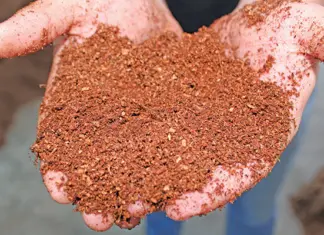
Growth mediums for greenhouse production
Greenhouse farming is an intensive, high-yielding operation. Using the correct growth medium forms the basis of the operation, and mistakes in this area can cost a farmer dearly, according to producers and experts. Lindi Botha looks at which mediums work best for different crops.