Farmers who are serious about the production of sunflower are considering Argentina as a country where they can seek knowledge from local farmers and industry experts with the aim of improving their own production.
Argentina is one of the frontrunners when it comes to sunflower production and is one of the world’s leading exporters of sunflower oil. In addition, the sector is characterised by a strong processing industry, with about 90% of the sunflower crop processed in oil extraction plants.
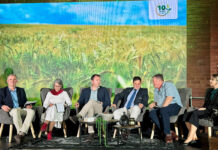
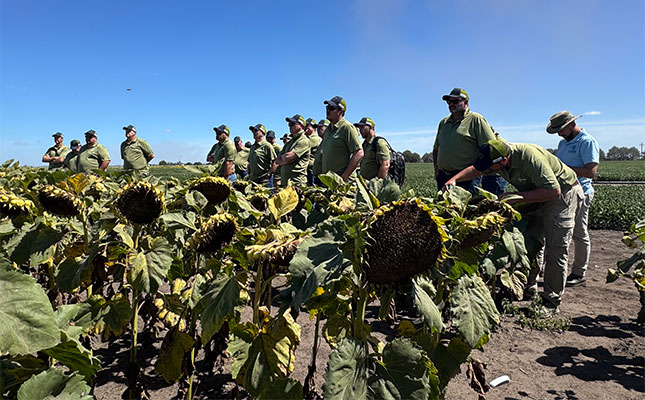
One of the first stops of the recent farmer study tour to the country was Syngenta’s experimental facility in Camet. Camet is a town in the province of Buenos Aires, about 5km north of Mar del Plata, and is home to one of Syngenta’s sunflower breeding facilities where hybrids are developed for Argentina, other South American countries as well as South Africa.
Apart from presentations focusing on breeding data, the group also experienced the practical side of research and breeding and was able to learn more about the beneficial attributes of the sunflower package that gave Syngenta and its related partners a majority market share in Argentina.

According to Ignato Nevaro, who leads the sunflower breeding programme at the Camet facility, the area planted to sunflower in Argentina grew over the past 10 years and currently the country is producing 2,7 million hectares of sunflower.
“The market is basically divided into two segments: 88% to 90% linoleic, and 10% to 12% oleic.”
Nevaro explains that sunflower production occurs in three production zones based on geography, climate, and rainfall.
“In Argentina, sunflowers are sown from north to south, as soil temperatures increase. The northern part is used for winter production while the southern and western parts for planting in spring. Planting starts towards the end of July in the northern region, and extends to mid-December or even later in the southern region. Harvesting is from mid to late October in the north, and mid to end of April in the south.”
According to Nevaro, the sunflower industry focuses a great deal on oil yield. Farmers receive a premium for oil percentages above a certain threshold.
“Farmers receive about a 2% bonus for each percentage point above 42% of oil concentration. The premium yield is calculated by multiplying the grain yield (kg/ha) with the crusher’s bonus factor. Thus a 52% oil concentration will realise a 20% yield bonus.”
The main advantage, Nevaro points out, is that the income derived from the oil content represents a nett income for farmers without transportation and commercialisation costs.
Charles Basson, who is in charge of Syngenta’s sunflower and maize product placements in Africa and the Middle East, says Syngenta focuses on the following traits in their global sunflower breeding programme:
- High oil content and yield: the idea is to opt for high oil content early in the breeding programme.
- Agronomic type: hybrids are planted over various environments and planting dates to evaluate plant height, the size of the head, standing ability, the angle of the sunflower’s head during ripening, as well as days to flowering and maturity. They also select for seed colour.
- Disease tolerance.
- Resistance to herbicides.
- Grain yield.
Seed production with a view to realising quality and affordability of seed.
Since Syngenta has acquired a number of companies involved in sunflower breeding over the years, it has a vast pool of genetics that can be tapped into when looking for specific and desired traits in the breeding programme, Nevaro explains.
“The good news is that farmers in South Africa also have access to the hybrids coming from the company’s global breeding programmes,” says Basson.
Benefit for SA farmers
With Syngenta’s extensive genetic pipeline, it is clear how South African farmers can benefit from access to Syngenta’s advanced sunflower breeding programme under the Sensako brand in South Africa. Understanding the breeding timeline for new product development is important.
According to Nevaro, line development takes three years with an additional three years for the evaluation of the identified hybrids. After this, pre-commercial trials to evaluate the material in commercial fields are conducted for two years.
“Only after eight years will a new hybrid be commercially launched,” he says.
Syngenta uses marker-assistant technology for breeding. This means that the breeders identify a DNA sequence that is close to a gene of agronomic interest.
Farmers can also gain access to Syngenta’s new herbicide-tolerant technology that could open the door to more cost-effective weed control in sunflower.
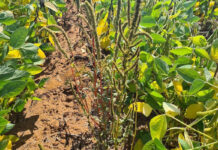
What has particularly impressed the farmers is developments around disease tolerance, especially with regard to Sclerotinia sclerotiorum, a plant disease that cause headaches at present in South Africa.
Additional research on hybrids
“The work being done with disease inoculations is exceptional and gives us peace of mind that the products offered to us broaden our options in the management of local diseases,” says Louis Heyns, a producer from Senekal in the eastern Free State.
“South African farmers have access to the Argentinian sunflower material that is backed by all the research. However, we are also conducting additional research to ensure we choose hybrids that are adapted to our local conditions,” adds Basson.
“The local Syngenta sunflower package consists of the Sensako hybrids SNK 270 CL, SNK 242 CL and SNK 441 CL, all of which have been selected from the Argentinian breeding programme. The great news is that the Syngenta pipeline offers high-performance hybrids with high oil content and the added benefit of flexibility and adaptability.”
SNK 441 CL (70 to 72 days to 50% flowering) provides farmers with an early planting date option, with SNK 270 CL (64 to 68 days to 50% flowering) and SNK 242 CL (62 to 64 days to 50% flowering) giving farmers more flexibility with early to late planting date options.
Sunflower has the potential to contribute to the farmer’s wallet, but unfortunately the crop is often simply used as a replacement crop when plantings become less optimal for other crops.
“However, with the right management practices and focus on oil content, sunflower can contribute to the overall profitability of summer grain producers’ businesses,” says Basson.
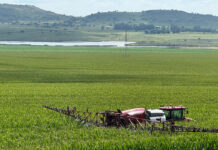
The group also visited the farm of sunflower farmer Robbie Cameron from Cameron Hnos S.A on the coastal belt near Necochea-Quequén to discuss and compare sunflower production strategies and methods.
For more information email Charles Basson at [email protected].