Latest articles
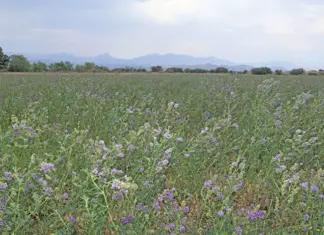
Boost your farm’s sustainability with the right crop rotation
Including more than three crops in a cash crop system may not only help increase yield, but significantly enhance the long-term sustainability of a farm. Dr Johann Strauss of the Western Cape Department of Agriculture spoke to Glenneis Kriel about the benefits of crop diversity.

Potato farmer’s virgin soil strategy to reduce disease risk
Potato production is a high-risk, high-reward industry. Farming seed potatoes is even more so. Sabrina Dean visited Gerhard Bruwer of Genade Boerdery in the Northern Cape to find out more about this component of the family farming operation.

The knapsack sprayer: still useful!
Recent years have seen the introduction of ever-more advanced crop sprayers, many of which are air-assisted to improve penetration into foliage.

A beginner’s guide to planting sweet potatoes
Sweet potatoes are so hardy and easy to grow that they could almost be classified as weeds! Even without optimal fertilisation and care, they produce reasonably well, unlike many other vegetable crops.

Tips for top-quality irrigation water for intensive cropping
Growers of irrigated crops need to have access to properly treated irrigation water. Mike Kruger, owner of Top Crop Nursery, explains how he uses flocculation and chlorination to maximise the safety of the water he sources from the nearby Umgeni River.

Dwarf avocado trees: low-maintenance, high-yielding orchards
As fruit farmers are pushed to produce more with less, so the trend towards dwarf trees has gained momentum. Dwarf avocado trees offer the benefits of a compact orchard and savings in labour and production costs. Lindi Botha spoke to farm manager Simon Dunshea in Mpumalanga.
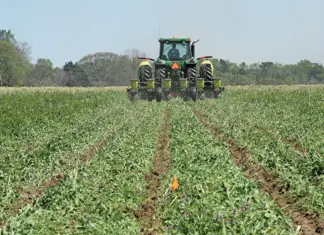
Learning about regenerative agriculture
The implementation of regenerative agriculture principles is allowing a growing number of farmers to reduce their inputs while producing similar or even better yields than they would have produced if they used conventional farming practices.
How to reduce the risk of viruses in capsicums
Seed is a potential source of viruses in capsicums. However, it is a rare occurrence these days, as seed producers are keen to protect their reputations and take stringent precautions to counter the problem.
A century of perfecting apple growing in the Langkloof
The Zondagh family farm apples and pears in the Eastern Cape’s fertile Langkloof Valley. During a media tour to Matt Zondagh Estate, hosted by Tru-Cape, the Zondaghs spoke to Jeandré van der Walt about sustainable farming practices and the importance of family.

Solving calcium deficiency for better-quality crops
Calcium is a challenging and intricate element to manage in a crop, but if its levels are not balanced, the quality and shelf life of produce are compromised. Lindi Botha spoke to Lindi Grobler, the owner of Agri-Alchemi, about solving calcium deficiency in tunnel crops.

How to achieve optimal maize production
Maize growers often have questions on to how to maximise their crop yield and the profitability of their enterprises. Grant Pringle, a product agronomist at Pannar Seed SA, gives expert, practical answers to some of the more common queries.

Novice tunnel farmer wins with hydroponics
Byron Booysen started farming only five years ago and now produces tomatoes and other crops in an undercover system on 1,9ha just outside Kraaifontein near Cape Town. Jeandré van der Walt visited him to find out how he got started, the lessons he has learnt, and the challenges he faces.

Expert tips to get the most from irrigated wheat
Irrigated wheat is grown by many South African grain farmers in rotation with summer grains such as maize and soya bean. André du Toit, a senior wheat breeder with Pannar Seed SA, shares his knowledge and experience on how farmers can maximise the productivity, and therefore profitability, of these wheat crops.

Watermelon planting tips
Many watermelon growers plant as soon as possible in the season so they can market the crop early, when prices are high.

High-tech solutions to manage weed resistance to herbicides
According to agronomy expert Leonard Oberholzer, weeds’ resistance to herbicides is expected to be one of the greatest threats to food production in years to come.

Pro tips from a 100-tunnel cucumber farmer
Tunnel production may seem a relatively simple and profitable way to farm, but it involves high capital costs and has a narrow margin of error. Nico Laubscher Jnr spoke to Glenneis Kriel about the lessons that he and his team have learnt at Alzanne, near Vredendal, over the years.

Well-managed soil: the key to high-yielding gold kiwifruit
Production of the long-term, high-yielding and high-value gold kiwifruit is still in its infancy in South Africa. An important lesson learned by local pioneering grower Peter Nicholson is to have healthy soils for strong vine growth and fruit set. He shares his tips with Lloyd Phillips.

Watch out for these common vegetable pests
Pests are an ongoing threat to vegetables, and need to be controlled effectively and timeously to prevent damage to the crop.
Macadamias take Hazyview vegetable farmer to the next level
Through perseverance and applying strict business principles, Elias Pangane proved that farming could produce a viable income for him. The Hazyview vegetable and macadamia farmer spoke to Lindi Botha about the success that comes from combining passion with grit.

New Harvest winner: from farmworker to farm owner
The 2018 Toyota South Africa New Harvest competition winner, Whernit Dirks, formerly worked as a general labourer on a farm in Piketberg. Today he farms wheat, barley, oats, rooibos and a flock of 900 Meatmasters on 1 700ha. He spoke to Jeandré van der Walt about his farming journey.