
On a smallholding, he is building a future entrenched in agriculture. His approach is rooted in consistency, and growing the business one small step at a time.
His journey into farming began in 2017 after completing matric, when he decided to pursue agriculture as both a livelihood and a long-term investment. What started as a modest venture soon evolved, not without setbacks, into a business that reflects his willingness to adapt and learn.
Central to his vision is a strong commitment to his community. Sewedi aims to expand his current 1ha operation to 8ha by 2028, with the goal of creating at least 30 jobs in an area where employment opportunities are scarce and many households rely on social grants. His sense of responsibility extends beyond business, and he regularly donates fresh produce to support families during funerals.
Looking ahead, he is also exploring ways to diversify, with plans to introduce moringa and develop value-added products over the next five to 10 years.
Building a business against the odds
Sewedi cites his grandmother as his inspiration to farm.
“She raised me, and most of what we ate came from our backyard where she had a food garden. She would sell excess produce and made a living from that.
“I took business studies in high school and saw an opportunity to combine this knowledge with farming knowledge I learnt from the grandmother to start farming on a bigger scale after school. Every bit of money I made from produce that I sold, I invested back into the business to expand production.”
After completing matric, Sewedi did a short course on farming. His aunt gifted him a pig which he raised, sold and bought three more pigs. He continued to expand the herd and by 2019 had five breeding sows and a boar. Since each sow could produce up to 30 piglets in a year, he was able to secure a contract to supply an abattoir with a steady supply of pigs.
However in 2020 feed prices increased drastically, while the meat price declined. Pig farming was no longer profitable and Sewedi decided to pivot to vegetable production.
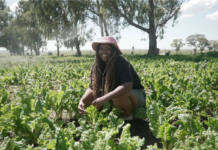
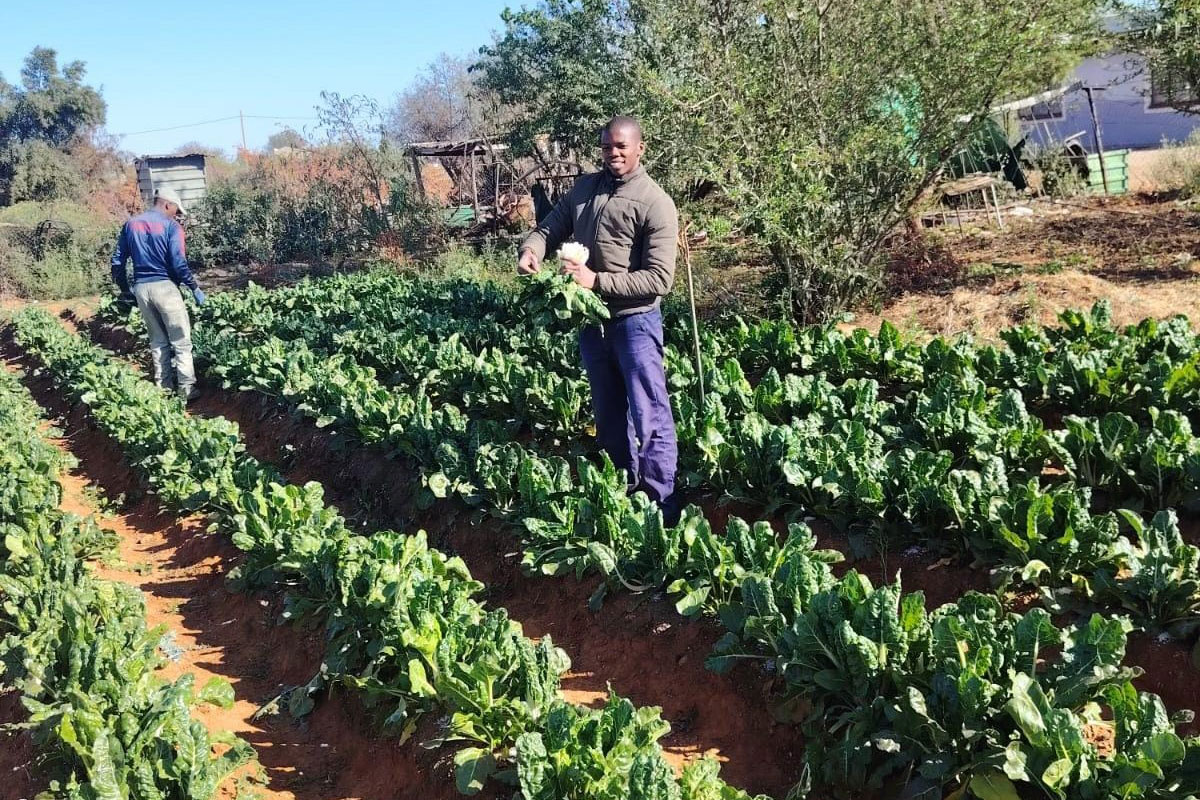
Today the main focus of Sewedi’s business is cabbage and spinach production, planting 7 000 seedlings of each per year. These crops are rotated on the 1ha field, with planting staggered so that there is continuously a crop available for harvest to provide continuous cashflow.
When Sewedi harvested his first cabbage crop he had yet to secure a market. He approached the Spar in Delareyville, but was told that the supermarket already had a cabbage supplier.
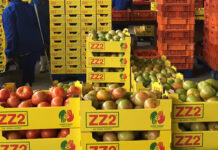
“But they said I should bring a few in anyway so they could see what it looked like. When they saw the high quality they were so impressed they placed a regular order. I still supply them with cabbage and spinach to this day.”
To keep quality high Sewedi scouts daily for pests. He follows a pest control programme relying on registered crop protection chemicals. He initially relied on natural home remedies but these were not sufficiently effective.
Sewedi notes that he is the first in his community to plant cabbage successfully commercially.
“Many have tried it but did not get good yields. When I first started my yields were not good either, but then I started applying adequate fertiliser and applying chemical pesticides. That boosted my yields and made cabbage viable.”

He notes that while the internet provides ample information, real wisdom comes from other farmers.
“Farmers talk from experience, so if you need advice, they are the ones to ask, not Google.”
Diversifying crop offerings and daily farmwork
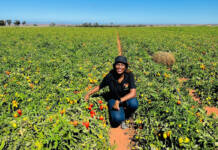
Spinach and cabbage are crops that can be planted year-round, providing steady cashflow. This year he intends to add chillies and butternut to the mix to diversify his offering.
Most of the work done on the farm is done manually as Sewedi does not own equipment. He hires tractors for land preparation from other farmers and also uses a hand hoe. He hires up to seven seasonal labourers to plant, weed and harvest the crops. The installation of drip irrigation has meant that irrigation is not labour intensive.
Although pigs are no longer part of the business, Sewedi still keeps livestock for meat production to aid cashflow. He keeps 17 cattle of mixed breeds, 27 Boer goats and three indigenous sheep.
Stock theft and facing the challenges
While a worthy part of the business, Sewedi notes that livestock theft is rife in the region so the herds are kept small to minimise risk.
“In 2023, I had over 50 goats but they were all stolen. I had just managed to replace them when they were stolen again. This time, the thieves left the gate open where the cattle were kept and they went into my spinach fields and ate the whole crop just as it was nearing harvest.”
Sewedi has not yet fully recovered from that financial loss, but he is adamant to keep forging ahead and make a success of the business. “I will never give up.”
Sewedi named his business Tsa Leruo Farms and Projects, after his son Leruo.
“He is my get-up-and-go, and the reason I keep pushing despite the challenges. There is so much joy in planting a crop, nurturing it, watching it grow and being able to sell it to make an income. I love farming despite it being so challenging and unpredictable. Farming is a profession of hope. You put a lot of money into the soil and pray that something will come of it.”
His advice to other farmers starting out: make room for disappointment.
“Not everything will always go according to plan. Don’t aim too high, but don’t give up. Be consistent in your efforts and pace yourself,” he says.
This is part of our 30 Under 30 segment.