
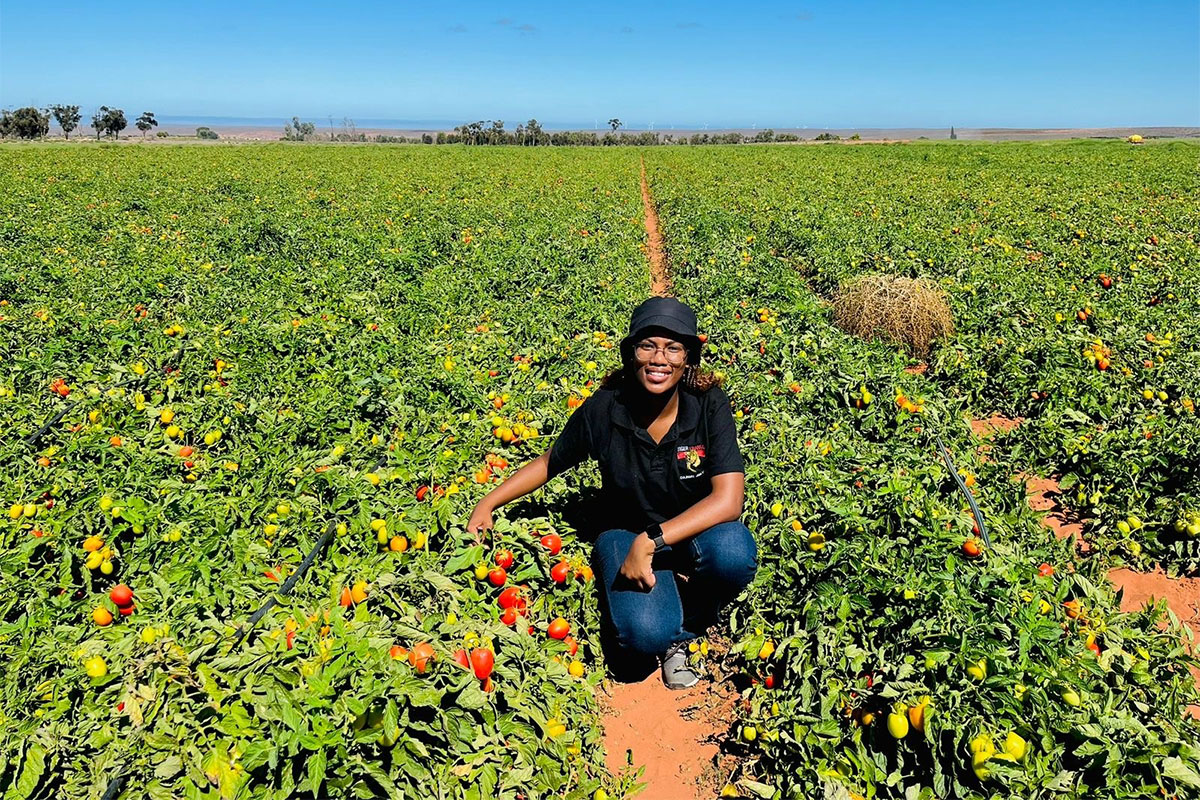
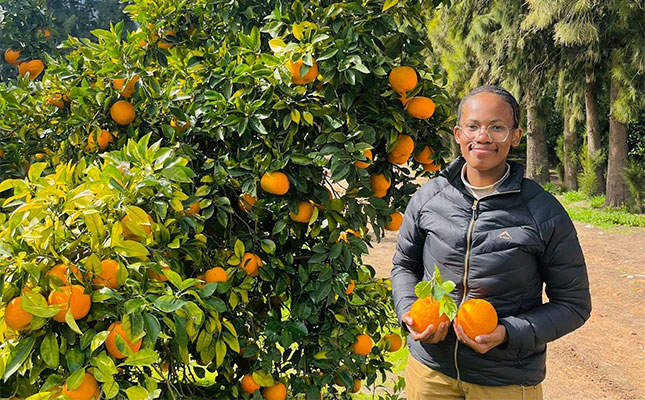
Working within the Western Cape’s horticultural sector in a large fast moving consumer goods (FMCG) environment, Poswa is based between primary agriculture and food manufacturing, managing sourcing strategies, supplier relationships, and supply continuity across fruit and vegetable value chains.
A personal and professional journey
“My journey into agriculture is both personal and professional. I was exposed to farming and gardening from a young age through my mother, who played a significant role in shaping my understanding of where food comes from and the discipline required to produce it. That early exposure grounded me in the realities of primary production and sparked a lasting interest in agriculture,” she says.
She says as her interest evolved, so did her understanding of the wider system behind agriculture. 
“Over time, I became increasingly interested in the systems that sit beyond the farm gate—how produce moves, how value is created, and how markets function. This led me to specialise in the horticultural sector, where I now focus on procurement within a large FMCG environment. The fast-paced nature of fresh produce, combined with its direct link to food security, makes it a particularly impactful space to work in.”
Aligning production with demand
Today, Poswa’s role means ensuring that agricultural production aligns with commercial demand in one of the most volatile categories in food systems.
“I am involved in the procurement of fruits and vegetables within a large FMCG environment, where my role sits at the intersection of agriculture and commercial operations. My responsibilities extend beyond sourcing, I am actively involved in aligning agricultural supply with manufacturing requirements, ensuring that raw materials meet the required quality, volume, and timing specifications.”
She says a significant part of her role is supplier engagement and relationship management.
“I work closely with growers and suppliers to understand their production cycles, capacity, and constraints, while also communicating business expectations around pricing, quality standards, and delivery timelines. This requires continuous coordination, particularly in a category as volatile and time sensitive as fresh produce.
“I am also involved in managing supply continuity, which includes monitoring seasonal availability, anticipating potential disruptions, and working proactively to mitigate risks. This often means making real-time decisions in response to changes in weather conditions, market pricing, or supply shortages.”
In addition, she tells Farmer’s Weekly, she contributes to pricing and cost management by tracking market movements and balancing input cost pressures from producers with internal cost-saving objectives. This, she says, requires a strong understanding of both agricultural economics and commercial priorities.
One of the most complex parts of her role, she explains, is balancing the realities of farming with the demands of large-scale commercial food systems.
“The relationship requires constant alignment and clear communication. Farmers operate within biological and environmental constraints, and their ability to remain viable depends on achieving sustainable profitability despite often inconsistent and unpredictable farming seasons. On the other hand, FMCG businesses are under pressure to manage costs efficiently, particularly in an environment of rising inflation and increasing food prices.”
She says her role is to bridge this gap ensuring that suppliers understand commercial expectations around quality, volumes, and timing, while also advocating for approaches that recognise the realities on the ground.
“It’s about finding a balance that supports continuity for farmers while maintaining efficiency and competitiveness for the business.”
Challenges of the FMCG environment
South Africa’s fresh produce supply chains remain highly exposed to external shocks, from climate variability to global trade shifts, she says, pointing out several challenges impacting the sector.
“Some of the key challenges include price volatility, climate variability, inconsistent supply, and logistical inefficiencies. Rising input costs particularly fuel and fertiliser continue to place significant pressure on producers, affecting both production planning and profitability,” she says.
“In addition, tariffs and shifting global trade dynamics influence market access and pricing, exposing growers to external risks beyond their control. Changes in global politics can directly impact export opportunities, competitiveness, and the stability of demand. There is also often a disconnect between production cycles and market demand, which places strain on both farmers and buyers. Managing these uncertainties while maintaining product quality, availability, and affordability is a continuous challenge across the value chain,” Poswa says.
Despite these challenges, Poswa believes strong partnerships remain the backbone of a resilient supply chain.
Creating viable systems
“Consistency comes from building strong supplier relationships and working with growers who prioritise quality and long-term planning, one would be surprised at how much suppliers can show up for you when supply is limited. Sustainability is supported through responsible sourcing, encouraging efficient farming practices, and maintaining transparency within the supply chain. It’s about creating systems that are viable for both the business and the producer.”
Supporting local producers, she adds, is central to long-term supply chain resilience.
“Supporting local growers is a high priority within my role, as it not only strengthens supply chain resilience but also plays a meaningful role in boosting the local economy. Sourcing locally allows for more reliable supply, shorter lead times, and better responsiveness to changes in demand, while also keeping value within the agricultural sector.”
Poswa says she prioritises building strong, long-term relationships with local suppliers by understanding their production capabilities, challenges, and growth potential.
“A key part of this is ensuring that suppliers feel supported and part of the business. This includes creating transparency around what we do, communicating any changes that may affect them, and aligning expectations on both sides. It is also about sharing relevant information back to the ground, whether it relates to market trends, demand shifts, or operational requirements, so that suppliers are better equipped to plan and adapt. Strong partnerships ultimately lead to a more stable, informed, and efficient supply chain.”
Global demand shifts and supply chain pressures
Poswa explains that she works in a sector undergoing rapid transformation, driven by global demand shifts and supply chain pressures.
“One of the most significant trends is the growing importance of export markets in driving the horticultural sector, particularly for high-value crops such as citrus, grapes, and avocados. Demand across regions like the EU, Asia, and the rest of Africa continues to shape production and pricing dynamics.”
She says at the same time, supply chain efficiency has become a focal point.
“Infrastructure constraints particularly around ports, cold chain management, and transport are increasingly affecting product quality, costs, and South Africa’s competitiveness in global markets. There is also heightened price volatility across fresh produce markets, with fluctuations driven by climate variability, input costs, and shifting demand patterns. In addition, growing scrutiny around market structure and competition is pushing the sector towards greater transparency and efficiency.
Overall, the industry is becoming more commercially driven and integrated, where market access, resilience, and supply chain performance are just as important as production itself.”
A multi-disciplinary approach
Speaking about her skills, she says working across agriculture, logistics, and corporate procurement requires a diverse skill set.
“Commercial awareness, relationship management, and the ability to think systemically have been essential. My role requires not only an understanding of agriculture, but also the ability to engage with broader disciplines such as supply chain, economics, finance, and logistics. This multidisciplinary approach is critical in making decisions that are both practical and commercially sound.”
She adds that strategic thinking is also key—being able to assess market conditions, anticipate risks, and align sourcing decisions with business objectives.
“This often requires balancing short-term operational needs with long-term sustainability across the value chain. Ultimately, it requires a willingness to continuously sharpen your depth and upskill. The industry is constantly evolving, and staying effective means being adaptable, informed, and able to operate across multiple areas of the business.”
Strengthening agricultural systems
Poswa says her long-term vision is strengthening the continent’s agricultural systems beyond individual transactions.
“My long-term vision is to play a strategic role in strengthening agricultural supply chains in Africa, particularly within the fresh produce sector. I am interested in driving more efficient, transparent, and sustainable systems that better connect producers to markets.”
For youngsters entering agriculture, her advice is: “Think beyond the farm gate.
“There are many opportunities in agriculture beyond primary production. My advice would be to build a strong understanding of the value chain and develop both technical and commercial skills. Be willing to start in operational roles, stay curious, and position yourself where you can see how decisions impact the broader system.”
This is part of our 30 Under 30 segment.