
Latest articles
How to reduce the risk of viruses in capsicums
Seed is a potential source of viruses in capsicums. However, it is a rare occurrence these days, as seed producers are keen to protect their reputations and take stringent precautions to counter the problem.

Watermelon planting tips
Many watermelon growers plant as soon as possible in the season so they can market the crop early, when prices are high.

Watch out for these common vegetable pests
Pests are an ongoing threat to vegetables, and need to be controlled effectively and timeously to prevent damage to the crop.
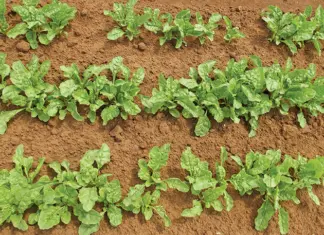
How to grow Swiss chard at home
Swiss chard can either be sown directly or transplanted. Both methods have their pros and cons.

Getting ready to plant cucurbits
Before planting a land to any of the cucurbits, you should kill off all broad-leaved weeds nearby, preferably well beforehand.

Adaptation key to vegetable farmer’s sustainable growth
Viking Farming near East London in the Eastern Cape is a small but intensive vegetable operation that supplies supermarkets and processors across the Eastern Cape and even the Western Cape. Mike Burgess visited Valhalla farm to better understand how owner Mike Pedersen-Horn has managed to build up this adaptable and profitable business over the past 20 years.

No-till: increasing soil organic content
With no-till farming, you need to try to gradually increase the organic content of the soil.

Beware of that foliar feed mixture!
Company representatives often bombard farmers with products claimed to increase yield at little cost.

The benefits of organic matter
When the soil contains sufficient organic material, farming becomes far easier and less risky. In contrast, in a chemically based system, the interaction between the minerals becomes critical and complex, and a farmer needs a great deal of experience and knowledge to get good results.

Growing a variety of soil microbes
Most farmers are aware that a healthy population of soil organisms is a good thing. What many don’t understand is that the number of soil organisms is directly related to their food source.

Hi-tech onion business delivering 200t a day!
Willem, Jaco and Kolver Mulke produce onions on a large scale near Douglas on the border between the Free State and the Northern Cape. Sabrina Dean visited their high-tech operation to find out how they have combined their efforts to ensure sustained growth for the future.

A guide to growing baby carrots
There’s always a market for baby vegetables, and carrots are no exception. In the past, top-shaped baby carrots were the most popular in the frozen range.

Carrots: get your numbers right!
Hot weather is unfavourable for carrot germination. Depending on the soil’s condition and structure, it also promotes the growth of soil fungus diseases, especially when heavy rain falls, as is common in the summer rainfall areas.

Preparing to plant carrots: seeds and soil
Carrots have a very deep root system and a mass of fine feeder roots.
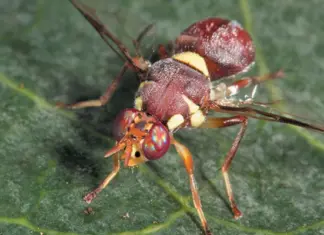
Dealing with pumpkin flies
Pumpkin flies, which are slightly larger than houseflies, are similar to the fruit flies so well-known to fruit farmers.

How to control cucurbit viruses
It is also important to control aphids as these are the primary vectors of viruses. Apart from spreading viruses, they are up to no good anyway!
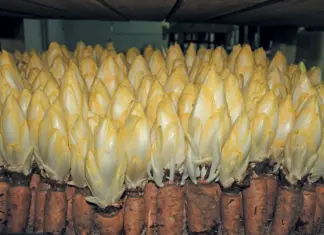
Witlof: a new entrant to SA’s leafy vegetables market
Witlof, also known as Belgian endive, is a notoriously difficult vegetable to grow, but Koue Bokkeveld grower Fanie van der Merwe has mastered the art, producing 1t of witlof a week. Jeandré du Preez visited him on his family farm, Bronaar, to discover how he does it.

Why pumpkins need space to grow
There is no one-size-fits-all recipe for growing pumpkins. This is especially true of spacing, where many factors have to be considered.

Learning about cucurbits
Cucurbits are a group of plants belonging to the gourd family (Cucurbitaceae). They include pumpkins and squashes (Cucurbita spp), melons (Cucumis melo), cucumbers (C. sativus) and watermelons (Citrullus lanatus).

Understanding genetic chimera in a crop
Farmers often draw my attention to ‘weird signs’ on a plant, fearing them to be the start of a devastating virus. A closer examination often reveals the cause to be genetic chimera, a harmless mutation that is likely to restrict growth only on the affected plant.